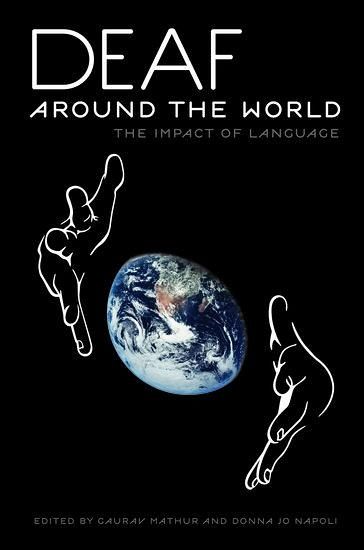
Deaf Around the World
The Impact of Language
Herausgeber: Mathur, Gaurav; Napoli, Donna Jo
Deaf Around the World
The Impact of Language
Herausgeber: Mathur, Gaurav; Napoli, Donna Jo
- Broschiertes Buch
- Merkliste
- Auf die Merkliste
- Bewerten Bewerten
- Teilen
- Produkt teilen
- Produkterinnerung
- Produkterinnerung
The articles in Deaf around the World offer an introduction to deaf studies and the study of signed languages.
Andere Kunden interessierten sich auch für
AnonymAlabama Institute for the Deaf and the Blind13,90 €
Johann Conrad AmmanThe Talking Deaf Man A Method Proposed, Whereby He Who is Born Deaf, May Learn to Speak17,99 €
Gallaudet University ArchivesNineteenth Annual Report of the Columbia Institution for the Deaf and Dumb for the Year Ending June 30, 187611,90 €
Hiram Phelps ArmsThe Intermarriage of the Deaf12,90 €
Language Development in Children111,99 €
James Ernst GallaherRepresentative Deaf Persons of the United States of America21,90 €
Nicola BurgerThe Educational Experiences of Deaf Adolescents in South Africa39,99 €-
-
-
The articles in Deaf around the World offer an introduction to deaf studies and the study of signed languages.
Produktdetails
- Produktdetails
- Verlag: Oxford University Press
- Seitenzahl: 418
- Erscheinungstermin: 1. Dezember 2010
- Englisch
- Abmessung: 229mm x 152mm x 25mm
- Gewicht: 675g
- ISBN-13: 9780199732531
- ISBN-10: 0199732531
- Artikelnr.: 34440617
- Herstellerkennzeichnung
- Libri GmbH
- Europaallee 1
- 36244 Bad Hersfeld
- gpsr@libri.de
- Verlag: Oxford University Press
- Seitenzahl: 418
- Erscheinungstermin: 1. Dezember 2010
- Englisch
- Abmessung: 229mm x 152mm x 25mm
- Gewicht: 675g
- ISBN-13: 9780199732531
- ISBN-10: 0199732531
- Artikelnr.: 34440617
- Herstellerkennzeichnung
- Libri GmbH
- Europaallee 1
- 36244 Bad Hersfeld
- gpsr@libri.de
Gaurav Mathur is Assistant Professor of Linguistics at Gallaudet University. Donna Jo Napoli is Professor of Linguistics at Swarthmore College.
* Acknowledgements
* Introduction: Why go around the deaf world? Gaurav Mathur and Donna
Jo Napoli
* 1.: Sign Languages: creation, context, form
* 1: Sign language geography Carol A. Padden
* 1 Response: Some observations on research methodology in
lexicostatistical studies of sign languages James Woodward
* 2: Two types of nonconcatenative morphology in signed languages
Gaurav Mathur and Christian Rathmann
* 2 Response: Some observations on form-meaning correspondences in two
types of verbs in ASL Paul Dudis
* 3: Sources of handshape error in first-time signers of ASL Deborah
Chen Pichler
* 3 Response: Modality and language in the second language acquisition
of American Sign Language Russell S. Rosen
* 4: Getting to the point: How a simple gesture became a linguistic
element in Nicaraguan signing Ann Senghas and Marie Coppola
* 4 Response: A point well taken: On the typology and diachrony of
pointing Roland Pfau
* 5: Acquisition of topicalization in very late learners of LIBRAS:
Degrees of resiliency in language Sandra K. Wood
* 5 Response: A critical period for the acquisition of a theory of
mind? Clues from homesigners Cyril Courtin
* 6: Interrogatives in Ban Khor Sign Language: A preliminary
description Angela M. Nonaka
* 6 Response: Village sign languages - A commentary Ulrike Zeshan
* 7: Sign language humour, human singularities, and the origins of
language Donna Jo Napoli and Rachel Sutton-Spence
* 7 Response: Gesture first or speech first in language origins? Adam
Kendon
* 2.: Social Issues/ Civil Rights
* 8: Best practice for collaborating with deaf communities in
developing countries Amy Wilson and Nickson Kakiri
* 8 Response: Deaf mobilization around the world: A personal
perspective Yerker Andersson
* 9: HIV/AIDS and the Deaf Community: A Conversation Leila Monaghan and
Deborah Karp
* 9 Response: HIV AIDS and Deaf communities in South Africa: A
conversation John Meletse and Ruth Morgan
* 10: The language politics of Japanese Sign Language (Nihon Shuwa)
Karen Nakamura
* 10 Response: Pluralization: An alternative to JSL hegemony Soya Mori
* 11: Social Situations and the Education of Deaf Children in China Jun
Hui Yang
* 11 Response: Social situations and the education of deaf children in
India Madan M. Vasishta
* 12: Do deaf children eat deaf carrots? Paul Scott
* 12 First Response: "We're the same, I'm Deaf, you're Deaf, huh!"
Donna West
* Introduction: Why go around the deaf world? Gaurav Mathur and Donna
Jo Napoli
* 1.: Sign Languages: creation, context, form
* 1: Sign language geography Carol A. Padden
* 1 Response: Some observations on research methodology in
lexicostatistical studies of sign languages James Woodward
* 2: Two types of nonconcatenative morphology in signed languages
Gaurav Mathur and Christian Rathmann
* 2 Response: Some observations on form-meaning correspondences in two
types of verbs in ASL Paul Dudis
* 3: Sources of handshape error in first-time signers of ASL Deborah
Chen Pichler
* 3 Response: Modality and language in the second language acquisition
of American Sign Language Russell S. Rosen
* 4: Getting to the point: How a simple gesture became a linguistic
element in Nicaraguan signing Ann Senghas and Marie Coppola
* 4 Response: A point well taken: On the typology and diachrony of
pointing Roland Pfau
* 5: Acquisition of topicalization in very late learners of LIBRAS:
Degrees of resiliency in language Sandra K. Wood
* 5 Response: A critical period for the acquisition of a theory of
mind? Clues from homesigners Cyril Courtin
* 6: Interrogatives in Ban Khor Sign Language: A preliminary
description Angela M. Nonaka
* 6 Response: Village sign languages - A commentary Ulrike Zeshan
* 7: Sign language humour, human singularities, and the origins of
language Donna Jo Napoli and Rachel Sutton-Spence
* 7 Response: Gesture first or speech first in language origins? Adam
Kendon
* 2.: Social Issues/ Civil Rights
* 8: Best practice for collaborating with deaf communities in
developing countries Amy Wilson and Nickson Kakiri
* 8 Response: Deaf mobilization around the world: A personal
perspective Yerker Andersson
* 9: HIV/AIDS and the Deaf Community: A Conversation Leila Monaghan and
Deborah Karp
* 9 Response: HIV AIDS and Deaf communities in South Africa: A
conversation John Meletse and Ruth Morgan
* 10: The language politics of Japanese Sign Language (Nihon Shuwa)
Karen Nakamura
* 10 Response: Pluralization: An alternative to JSL hegemony Soya Mori
* 11: Social Situations and the Education of Deaf Children in China Jun
Hui Yang
* 11 Response: Social situations and the education of deaf children in
India Madan M. Vasishta
* 12: Do deaf children eat deaf carrots? Paul Scott
* 12 First Response: "We're the same, I'm Deaf, you're Deaf, huh!"
Donna West
* Acknowledgements
* Introduction: Why go around the deaf world? Gaurav Mathur and Donna
Jo Napoli
* 1.: Sign Languages: creation, context, form
* 1: Sign language geography Carol A. Padden
* 1 Response: Some observations on research methodology in
lexicostatistical studies of sign languages James Woodward
* 2: Two types of nonconcatenative morphology in signed languages
Gaurav Mathur and Christian Rathmann
* 2 Response: Some observations on form-meaning correspondences in two
types of verbs in ASL Paul Dudis
* 3: Sources of handshape error in first-time signers of ASL Deborah
Chen Pichler
* 3 Response: Modality and language in the second language acquisition
of American Sign Language Russell S. Rosen
* 4: Getting to the point: How a simple gesture became a linguistic
element in Nicaraguan signing Ann Senghas and Marie Coppola
* 4 Response: A point well taken: On the typology and diachrony of
pointing Roland Pfau
* 5: Acquisition of topicalization in very late learners of LIBRAS:
Degrees of resiliency in language Sandra K. Wood
* 5 Response: A critical period for the acquisition of a theory of
mind? Clues from homesigners Cyril Courtin
* 6: Interrogatives in Ban Khor Sign Language: A preliminary
description Angela M. Nonaka
* 6 Response: Village sign languages - A commentary Ulrike Zeshan
* 7: Sign language humour, human singularities, and the origins of
language Donna Jo Napoli and Rachel Sutton-Spence
* 7 Response: Gesture first or speech first in language origins? Adam
Kendon
* 2.: Social Issues/ Civil Rights
* 8: Best practice for collaborating with deaf communities in
developing countries Amy Wilson and Nickson Kakiri
* 8 Response: Deaf mobilization around the world: A personal
perspective Yerker Andersson
* 9: HIV/AIDS and the Deaf Community: A Conversation Leila Monaghan and
Deborah Karp
* 9 Response: HIV AIDS and Deaf communities in South Africa: A
conversation John Meletse and Ruth Morgan
* 10: The language politics of Japanese Sign Language (Nihon Shuwa)
Karen Nakamura
* 10 Response: Pluralization: An alternative to JSL hegemony Soya Mori
* 11: Social Situations and the Education of Deaf Children in China Jun
Hui Yang
* 11 Response: Social situations and the education of deaf children in
India Madan M. Vasishta
* 12: Do deaf children eat deaf carrots? Paul Scott
* 12 First Response: "We're the same, I'm Deaf, you're Deaf, huh!"
Donna West
* Introduction: Why go around the deaf world? Gaurav Mathur and Donna
Jo Napoli
* 1.: Sign Languages: creation, context, form
* 1: Sign language geography Carol A. Padden
* 1 Response: Some observations on research methodology in
lexicostatistical studies of sign languages James Woodward
* 2: Two types of nonconcatenative morphology in signed languages
Gaurav Mathur and Christian Rathmann
* 2 Response: Some observations on form-meaning correspondences in two
types of verbs in ASL Paul Dudis
* 3: Sources of handshape error in first-time signers of ASL Deborah
Chen Pichler
* 3 Response: Modality and language in the second language acquisition
of American Sign Language Russell S. Rosen
* 4: Getting to the point: How a simple gesture became a linguistic
element in Nicaraguan signing Ann Senghas and Marie Coppola
* 4 Response: A point well taken: On the typology and diachrony of
pointing Roland Pfau
* 5: Acquisition of topicalization in very late learners of LIBRAS:
Degrees of resiliency in language Sandra K. Wood
* 5 Response: A critical period for the acquisition of a theory of
mind? Clues from homesigners Cyril Courtin
* 6: Interrogatives in Ban Khor Sign Language: A preliminary
description Angela M. Nonaka
* 6 Response: Village sign languages - A commentary Ulrike Zeshan
* 7: Sign language humour, human singularities, and the origins of
language Donna Jo Napoli and Rachel Sutton-Spence
* 7 Response: Gesture first or speech first in language origins? Adam
Kendon
* 2.: Social Issues/ Civil Rights
* 8: Best practice for collaborating with deaf communities in
developing countries Amy Wilson and Nickson Kakiri
* 8 Response: Deaf mobilization around the world: A personal
perspective Yerker Andersson
* 9: HIV/AIDS and the Deaf Community: A Conversation Leila Monaghan and
Deborah Karp
* 9 Response: HIV AIDS and Deaf communities in South Africa: A
conversation John Meletse and Ruth Morgan
* 10: The language politics of Japanese Sign Language (Nihon Shuwa)
Karen Nakamura
* 10 Response: Pluralization: An alternative to JSL hegemony Soya Mori
* 11: Social Situations and the Education of Deaf Children in China Jun
Hui Yang
* 11 Response: Social situations and the education of deaf children in
India Madan M. Vasishta
* 12: Do deaf children eat deaf carrots? Paul Scott
* 12 First Response: "We're the same, I'm Deaf, you're Deaf, huh!"
Donna West