Andere Kunden interessierten sich auch für
 Realistic Philosophy Defended in a Philosophic Series21,99 €
 The World As Imagination43,99 €
 The Philosophy of Disenchantment17,99 €
 Aphorisms and Reflections From the Works of T. H. Huxley17,99 €
 Dynamic Psychology20,99 €
 Annotated Bibliography of the Writings of William James15,99 €
 Life Thoughts, Gathered From the Extemporaneous Discourses of Henry Ward Beecher22,99 €



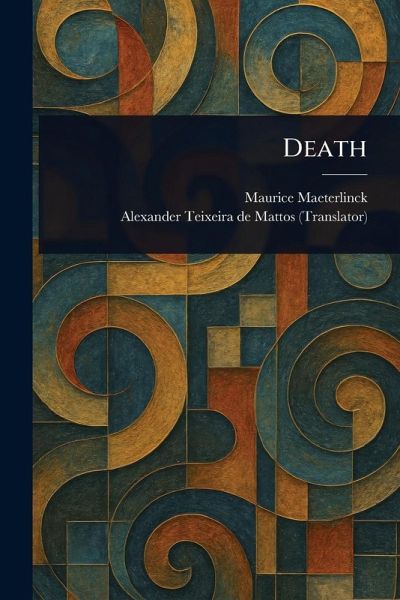
Maurice Maeterlinck's "Death" delves into the profound questions surrounding mortality, offering a philosophical exploration of death's meaning and place in human understanding. This thought-provoking work examines spiritualism and ethics related to the end of life, inviting readers to contemplate the nature of existence beyond the physical realm. Maeterlinck approaches a difficult subject with a sensitive and reasoned approach. Exploring themes relevant across generations, "Death" remains a vital contribution to philosophical discourse. It provides ample room for contemplation on the afterlife and the human condition. This meticulously prepared print edition allows readers to engage with Maeterlinck's insights in a tangible and enduring format, continuing a long tradition of thought and consideration around this sensitive, important topic. This work has been selected by scholars as being culturally important, and is part of the knowledge base of civilization as we know it. This work is in the public domain in the United States of America, and possibly other nations. Within the United States, you may freely copy and distribute this work, as no entity (individual or corporate) has a copyright on the body of the work. Scholars believe, and we concur, that this work is important enough to be preserved, reproduced, and made generally available to the public. We appreciate your support of the preservation process, and thank you for being an important part of keeping this knowledge alive and relevant.
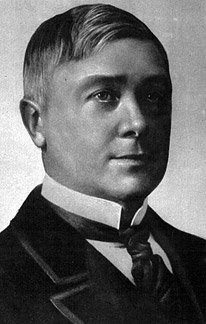
Belgian dramatist, poet, and writer Maurice Maeterlinck (1862-1949) wrote in French. He was raised in Ghent, Belgium, and completed his legal studies there before starting to write. Maeterlinck played a significant role in the Symbolist movement, which favored the use of symbols and suggestions above more conventional forms of poetry and literature. The Intruder (1890) and The Blind (1890), two of his first plays, were regarded as breakthrough examples of Symbolist theatre. The drama "The Blue Bird" (1908), which examines themes of happiness and the quest for purpose in life, is Maeterlinck's most well-known composition. Because the play was so popular, it has been transformed into a wide variety of media, including a silent film in 1918 and an animated picture in 1976. Maeterlinck was not just an accomplished dramatist but also a prolific author who covered a broad variety of subjects, such as mysticism, the nature of consciousness, and the philosophy of science. In "The Intelligence of Flowers," his most well-known work, he addresses the notion that plants and flowers possess a certain level of awareness and intellect. The Nobel Prize in Literature was given to Maeterlinck in 1911, making him the first Belgian to do so. His writings had a profound impact on the development of contemporary play and literature, and his theories on consciousness and the natural world are being researched and discussed today.