- Gebundenes Buch
- Merkliste
- Auf die Merkliste
- Bewerten Bewerten
- Teilen
- Produkt teilen
- Produkterinnerung
- Produkterinnerung
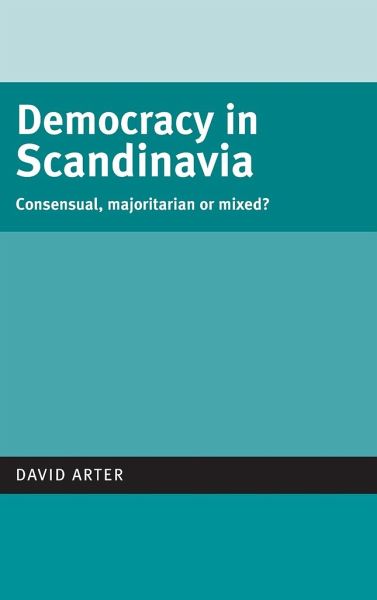
This book breaks new ground in challenging the established status of the Scandinavian countries as consensual democracies
Andere Kunden interessierten sich auch für
David ArterScandinavian politics today104,99 €
Noralv VeggelandDemocratic Governance in Scandinavia42,99 €
Noralv VeggelandDemocratic Governance in Scandinavia57,99 €
Bertel NygaardHistory and the Formation of Marxism83,99 €
Robert A. SaundersGeopolitics, Northern Europe, and Nordic Noir168,99 €
Marco NilssonJihadism in Scandinavia83,99 €
Christine IngebritsenScandinavia in World Politics47,99 €-
-
-
This book breaks new ground in challenging the established status of the Scandinavian countries as consensual democracies
Produktdetails
- Produktdetails
- Verlag: Manchester University Press
- Seitenzahl: 304
- Erscheinungstermin: 1. Oktober 2006
- Englisch
- Abmessung: 240mm x 161mm x 21mm
- Gewicht: 622g
- ISBN-13: 9780719070464
- ISBN-10: 0719070465
- Artikelnr.: 22565508
- Herstellerkennzeichnung
- Libri GmbH
- Europaallee 1
- 36244 Bad Hersfeld
- gpsr@libri.de
- Verlag: Manchester University Press
- Seitenzahl: 304
- Erscheinungstermin: 1. Oktober 2006
- Englisch
- Abmessung: 240mm x 161mm x 21mm
- Gewicht: 622g
- ISBN-13: 9780719070464
- ISBN-10: 0719070465
- Artikelnr.: 22565508
- Herstellerkennzeichnung
- Libri GmbH
- Europaallee 1
- 36244 Bad Hersfeld
- gpsr@libri.de
David Arter holds the First Chair of Politics at the University of Aberdeen
1. Analysing the Nordic region: a block of distinctive consensus model
democracies? 2. Preferential list voting systems in Denmark, Finland and
Sweden: a challenge to the party democracy model? 3. The Scandinavian party
system(s) since 1970: less unidimensional and less distinctive? 4. The
strength of social democracy on mainland Scandinavia: continued dominance
or incipient decomposition? 5. The diversity of coalition types and the
frequency of minority governments: a distinctively Scandinavian form of
parliamentarism? 6. Corporatist interest group systems: (still) a
distinctive Scandinavian trait? 7. A common denominator between Westminster
and the Nordic region? The growing importance of the office of Prime
Minister 8. The state of Scandinavian democracy: democracy "in a state"? 9.
Analysing parliamentary opposition parties: both policy actors and policy
arenas? 10. Policy-making in the Finnish and Swedish opposition parties 11.
The 2003 midsummer bomb and the centre party's 'decisive action strategy' A
case of office-seeking with a capital 'O' 12. Minority government, shifting
majorities and multilateral opposition: Sweden in the new millennium
Conclusion. Democracy in Scandinavia: consensual, majoritarian or mixed?
democracies? 2. Preferential list voting systems in Denmark, Finland and
Sweden: a challenge to the party democracy model? 3. The Scandinavian party
system(s) since 1970: less unidimensional and less distinctive? 4. The
strength of social democracy on mainland Scandinavia: continued dominance
or incipient decomposition? 5. The diversity of coalition types and the
frequency of minority governments: a distinctively Scandinavian form of
parliamentarism? 6. Corporatist interest group systems: (still) a
distinctive Scandinavian trait? 7. A common denominator between Westminster
and the Nordic region? The growing importance of the office of Prime
Minister 8. The state of Scandinavian democracy: democracy "in a state"? 9.
Analysing parliamentary opposition parties: both policy actors and policy
arenas? 10. Policy-making in the Finnish and Swedish opposition parties 11.
The 2003 midsummer bomb and the centre party's 'decisive action strategy' A
case of office-seeking with a capital 'O' 12. Minority government, shifting
majorities and multilateral opposition: Sweden in the new millennium
Conclusion. Democracy in Scandinavia: consensual, majoritarian or mixed?
1. Analysing the Nordic region: a block of distinctive consensus model
democracies? 2. Preferential list voting systems in Denmark, Finland and
Sweden: a challenge to the party democracy model? 3. The Scandinavian party
system(s) since 1970: less unidimensional and less distinctive? 4. The
strength of social democracy on mainland Scandinavia: continued dominance
or incipient decomposition? 5. The diversity of coalition types and the
frequency of minority governments: a distinctively Scandinavian form of
parliamentarism? 6. Corporatist interest group systems: (still) a
distinctive Scandinavian trait? 7. A common denominator between Westminster
and the Nordic region? The growing importance of the office of Prime
Minister 8. The state of Scandinavian democracy: democracy "in a state"? 9.
Analysing parliamentary opposition parties: both policy actors and policy
arenas? 10. Policy-making in the Finnish and Swedish opposition parties 11.
The 2003 midsummer bomb and the centre party's 'decisive action strategy' A
case of office-seeking with a capital 'O' 12. Minority government, shifting
majorities and multilateral opposition: Sweden in the new millennium
Conclusion. Democracy in Scandinavia: consensual, majoritarian or mixed?
democracies? 2. Preferential list voting systems in Denmark, Finland and
Sweden: a challenge to the party democracy model? 3. The Scandinavian party
system(s) since 1970: less unidimensional and less distinctive? 4. The
strength of social democracy on mainland Scandinavia: continued dominance
or incipient decomposition? 5. The diversity of coalition types and the
frequency of minority governments: a distinctively Scandinavian form of
parliamentarism? 6. Corporatist interest group systems: (still) a
distinctive Scandinavian trait? 7. A common denominator between Westminster
and the Nordic region? The growing importance of the office of Prime
Minister 8. The state of Scandinavian democracy: democracy "in a state"? 9.
Analysing parliamentary opposition parties: both policy actors and policy
arenas? 10. Policy-making in the Finnish and Swedish opposition parties 11.
The 2003 midsummer bomb and the centre party's 'decisive action strategy' A
case of office-seeking with a capital 'O' 12. Minority government, shifting
majorities and multilateral opposition: Sweden in the new millennium
Conclusion. Democracy in Scandinavia: consensual, majoritarian or mixed?