

Andere Kunden interessierten sich auch für
 Demons35,99 €
 The Grand Inquisitor16,99 €
 The grand inquisitor9,00 €
 The Grand Inquisitor26,99 €
 Polzunkov16,99 €
 A Little Hero16,99 €
 White Nights and Other Short Stories20,99 €







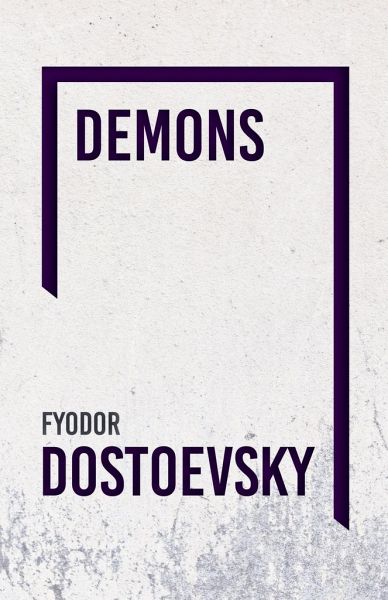
¿Demons¿ is a 1872 novel by Russian writer Fyodor Dostoevsky. It is considered one of his four masterpieces written after his return from Siberian exile, together with ¿Crime and Punishment¿ (1866), ¿The Brothers Karamazov¿ (1880), and ¿The Idiot¿ (1869). A work of a political and social satire, this psychological drama represents a warning of the potentially devastating results of the nihilism that was becoming prevalent in Russian politics and morality during the 1860s. In the story, a fictional town is reduced to anarchy when it becomes the centre of an attempted revolution, masterminded by one Pyotr Verkhovensky. Fyodor Mikhailovich Dostoevsky (1821 ¿ 1881) was a Russian novelist, essayist, short story writer, journalist, and philosopher. His literature examines human psychology during the turbulent social, spiritual and political atmosphere of 19th-century Russia, and he is considered one of the greatest psychologists in world literature. A prolific writer, Dostoevsky produced 11 novels, three novellas, 17 short stories and numerous other works. His novella ¿Notes from Underground¿ (1864) was among the first existentialist works of literature.