
Andere Kunden interessierten sich auch für
 The Data Flow Map22,99 €
 China Conference on Knowledge Graph and Semantic Computing and International Joint Conference on Knowledge Graphs65,99 €
 Database Systems for Advanced Applications62,99 €
 Semantic Systems. The Power of AI and Knowledge Graphs38,99 €
 Web3 Development with Angular46,99 €
 Data Fabric and Data Mesh Approaches with AI46,99 €
 Management of Digital EcoSystems65,99 €






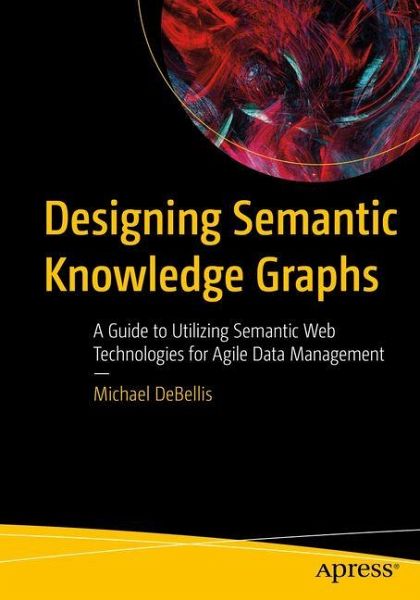
Semantic Web technologies such as OWL, RDF/RDFS, SPARQL, SHACL, and SWRL offer powerful tools for managing data in more flexible, meaningful, and scalable ways. As organizations increasingly adopt modern data architectures like Data Mesh, Data Fabric, and Data Lakes, Semantic Knowledge Graphs can serve as a unifying layer making data easier to integrate, validate, and reason over.
Yet many teams hesitate to adopt these technologies, often viewing them as overly complex or academic. This book aims to change that perception by showing how these tools can be used practically and effectively in real-world systems. From constraint validation to domain modeling to query and inference, you'll learn how Semantic Web standards can help you work with messy, evolving, and interconnected data.
Designing Semantic Knowledge Graphs is a hands-on guide for software engineers, architects, and data professionals who want to design and build semantic models that align with modern enterprise needs. You'll learn how to bridge domain models with real data, create agile ontologies that evolve with your systems, and automate the transformation of existing data sources into knowledge graph form. Along the way, you ll explore ontology design patterns, leverage validation rules with SHACL, and integrate your knowledge graph with tools like LLMs and SPARQL for powerful query and reasoning capabilities.
All techniques are illustrated using free and widely used tools like Protégé and the community edition of AllegroGraph.
You Will:
Learn how Semantic Web standards like OWL, RDF, SPARQL, SHACL, and SWRL fit into modern data architectureUnderstand techniques for modeling domains that balance top-down structure with bottom-up data realities
Yet many teams hesitate to adopt these technologies, often viewing them as overly complex or academic. This book aims to change that perception by showing how these tools can be used practically and effectively in real-world systems. From constraint validation to domain modeling to query and inference, you'll learn how Semantic Web standards can help you work with messy, evolving, and interconnected data.
Designing Semantic Knowledge Graphs is a hands-on guide for software engineers, architects, and data professionals who want to design and build semantic models that align with modern enterprise needs. You'll learn how to bridge domain models with real data, create agile ontologies that evolve with your systems, and automate the transformation of existing data sources into knowledge graph form. Along the way, you ll explore ontology design patterns, leverage validation rules with SHACL, and integrate your knowledge graph with tools like LLMs and SPARQL for powerful query and reasoning capabilities.
All techniques are illustrated using free and widely used tools like Protégé and the community edition of AllegroGraph.
You Will:
Learn how Semantic Web standards like OWL, RDF, SPARQL, SHACL, and SWRL fit into modern data architectureUnderstand techniques for modeling domains that balance top-down structure with bottom-up data realities