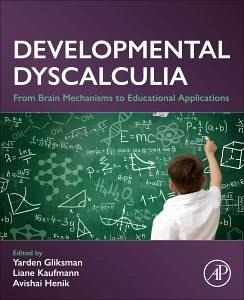
Developmental Dyscalculia: From Brain Mechanisms to Educational Applications presents research with a domain-general approach. It examines issues in the fields of numerical and non-numerical cognitive domains, neuro- mechanisms, and pedagogic issues to pave the way to a bridge between lab research, daily life, and curriculum applications, with a goal of finding a pathway to early diagnosis and interventions of developmental dyscalculia. It will be of interest to researchers with interests in cognitive neuroscience and education, to contribute fruitful discussions between education and neuro-cognition.¿…mehr
Developmental Dyscalculia: From Brain Mechanisms to Educational Applications presents research with a domain-general approach. It examines issues in the fields of numerical and non-numerical cognitive domains, neuro- mechanisms, and pedagogic issues to pave the way to a bridge between lab research, daily life, and curriculum applications, with a goal of finding a pathway to early diagnosis and interventions of developmental dyscalculia. It will be of interest to researchers with interests in cognitive neuroscience and education, to contribute fruitful discussions between education and neuro-cognition.¿
Dr. Yarden Gliksman is a faculty member in the Behavioral Sciences department at Ruppin Academic Center. She is a cognitive psychologist and an expert in learning disabilities. She has a strong background in basic and applied sciences, and over 15 years of hands-on experience in the fields of education, teacher training and learning disabilities diagnosis and interventions, specifically in the field of numerical cognition and developmental dyscalculia. She serves as an ad-hoc reviewer of peer-revied journals.
Inhaltsangabe
Section 1 - Theoretical models for DD 1. Domain general and mathematical difficulties 2. An operational definition of math learning disability and dyscalculia in the framework of the CHC model of cognitive abilities and the Concordance-Discordance Model of SLD identification Section 2 - DD and other cognitive domains 3. The role of language in developing mathematics and mathematical difficulties 4. The role of working memory in developmental dyscalculia 5. Developmental Dyscalculia and Math Anxiety Section 3 - Educational implications and treatment 6. Helping students with mathematics difficulties to succeed in word problems; or: Promoting word problem-solving among students with mathematics difficulties 7. Educational needs of children with dyscalculia 8. Diagnosing and supporting children with difficulties in learning mathematics - a mathematics education perspective 9. Examining the performance of dyscalculic learners in a curriculum-based mathematics assessment Section 4 - DD and inter and intra subjects’ variability 10. Intra and inter subject variability in mathematical learning difficulties 11. Profiles of developmental dyscalculia 12. Individual differences in arithmetic: implications for dyscalculia 13. Association between math and executive functions Section 5 - Neural correlates of DD 14. How brain imaging findings may inform theoretical concepts of developmental dyscalculia 15. Cerebellum, mathematics and developmental dyscalculia 16. Behavioral genetics, molecular genetics and genetic syndromes 17. Dyscalculia and the brain 18. Neurobiological underpinnings of developmental dyscalculia
Section 1 - Theoretical models for DD 1. Domain general and mathematical difficulties 2. An operational definition of math learning disability and dyscalculia in the framework of the CHC model of cognitive abilities and the Concordance-Discordance Model of SLD identification Section 2 - DD and other cognitive domains 3. The role of language in developing mathematics and mathematical difficulties 4. The role of working memory in developmental dyscalculia 5. Developmental Dyscalculia and Math Anxiety Section 3 - Educational implications and treatment 6. Helping students with mathematics difficulties to succeed in word problems; or: Promoting word problem-solving among students with mathematics difficulties 7. Educational needs of children with dyscalculia 8. Diagnosing and supporting children with difficulties in learning mathematics - a mathematics education perspective 9. Examining the performance of dyscalculic learners in a curriculum-based mathematics assessment Section 4 - DD and inter and intra subjects’ variability 10. Intra and inter subject variability in mathematical learning difficulties 11. Profiles of developmental dyscalculia 12. Individual differences in arithmetic: implications for dyscalculia 13. Association between math and executive functions Section 5 - Neural correlates of DD 14. How brain imaging findings may inform theoretical concepts of developmental dyscalculia 15. Cerebellum, mathematics and developmental dyscalculia 16. Behavioral genetics, molecular genetics and genetic syndromes 17. Dyscalculia and the brain 18. Neurobiological underpinnings of developmental dyscalculia
Es gelten unsere Allgemeinen Geschäftsbedingungen: www.buecher.de/agb
Impressum
www.buecher.de ist ein Internetauftritt der buecher.de internetstores GmbH
Geschäftsführung: Monica Sawhney | Roland Kölbl | Günter Hilger
Sitz der Gesellschaft: Batheyer Straße 115 - 117, 58099 Hagen
Postanschrift: Bürgermeister-Wegele-Str. 12, 86167 Augsburg
Amtsgericht Hagen HRB 13257
Steuernummer: 321/5800/1497
USt-IdNr: DE450055826