Gastroesophageal reflux is one of the most common maladies of mankind. Approximately 40% of the adult population of the USA suffers from significant heartburn and the numerous antacids advertised incessantly on national television represents a $8 billion per year drug market. The ability to control acid secretion with the increasingly effective acid-suppressive agents such as the H2 blockers (pepcid, zantac) and proton pump inhibitors (nexium, prevacid) has given physicians an excellent method of treating the symptoms of acid reflux.Unfortunately, this has not eradicated reflux disease. It has…mehr
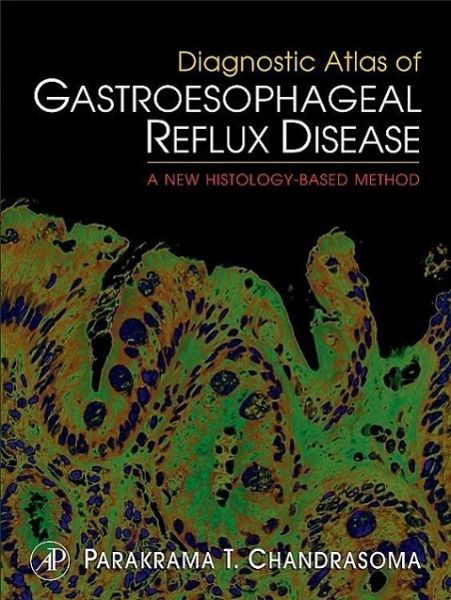
Gastroesophageal reflux is one of the most common maladies of mankind. Approximately 40% of the adult population of the USA suffers from significant heartburn and the numerous antacids advertised incessantly on national television represents a $8 billion per year drug market. The ability to control acid secretion with the increasingly effective acid-suppressive agents such as the H2 blockers (pepcid, zantac) and proton pump inhibitors (nexium, prevacid) has given physicians an excellent method of treating the symptoms of acid reflux.Unfortunately, this has not eradicated reflux disease. It has just changed its nature. While heartburn, ulceration and strictures have become rare, reflux-induced adenocarcinoma of the esophagus is becoming increasingly common. Adenocarcinoma of the esophagus and gastric cardia is now the most rapidly increasing cancer type in the Western world.At present, there is no histologic test that has any practical value in the diagnosis of reflux disease. Theonly histologic diagnostic criteria are related to changes in the squamous epithelium which are too insensitive and nonspecific for effective patient management. It is widely recognized that columnar metaplasia of the esophagus (manifest histologically as cardiac, oxyntocardiac and intestinal epithelia) is caused by reflux. However, except for intestinal metaplasia, which is diagnostic for Barrett esophagus, these columnar epithelia are not used to diagnose reflux disease in biopsies. The reason for this is that these epithelial types are indistinguishable from "normal" "gastric" cardiac mucosa. In standard histology texts, this "normal gastric cardia" is 2-3 cm long.In the mid-1990s, Dr. Chandrasoma and his team at USC produced autopsy data suggesting that cardiac and oxyntocardiac mucosa is normally absent from this region and that their presence in biopsies was histologic evidence of reflux disease. From this data, they determined that the presence of cardiac mucosa was a pathologic entity caused by reflux and could therefore be used as a highly specific and sensitive diagnostic criterion for the histologic diagnosis of reflux disease. They call this entity "reflux carditis". In addition, the length of these metaplastic columnar epithelia in the esophagus was an accurate measure of the severity of reflux disease in a given patient.At present, there is some controversy over whether cardiac mucosa is totally absent or present normally to the extent of 0-4 mm. While this should not be a deterrent to changing criteria which are dependent on there normally being 20-30 cm of cardiac mucosa, there has been little mainstream attempt to change existing endoscopic and pathologic diagnostic criteria in the mainstream of either gastroenterology or pathology. The ATLAS will be the source of easily digestible practical information for pathologists faced with biopsies from this region. It will also guide gastroenterologists as they biopsy these patients.
Artikelnr. des Verlages: B978-0-12-373605-5.X5000-0
Seitenzahl: 320
Erscheinungstermin: 1. Mai 2007
Englisch
Abmessung: 280mm x 224mm x 27mm
Gewicht: 1496g
ISBN-13: 9780123736055
ISBN-10: 0123736056
Artikelnr.: 22570053
Herstellerkennzeichnung
Libri GmbH
Europaallee 1
36244 Bad Hersfeld
gpsr@libri.de
Autorenporträt
Dr. Parakrama Chandrasoma was born in Sri Lanka and received his medical education and initial pathology training in the Medical School of the University of Sri Lanka. He has postgraduate degrees in internal medicine, including the M.D. (Sri Lanka) and Membership of the Royal College of Physicians (UK). He immigrated to the United States in 1978. Upon completing his pathology residency, he assumed duties as Chief of Surgical Pathology at the Los Angeles County + University of Southern California Medical Center He has held this position since. After an initial interest in neuropathology, Dr. Chandrasoma joined Dr. Tom DeMeester's Foregut Surgery team as pathologist in 1991. This led to a productive study of gastroesophageal reflux disease spanning 16 years and resulting in the development of numerous original concepts relating to the pathogenesis of gastroesophageal reflux disease. Dr. Chandrasoma has written over 140 peer reviewed papers and 6 previous pathology textbooks, including a general text on Gastrointestinal Pathology and a text on Gastroesophageal Reflux Disease, and is a Professor of Pathology at the Keck School of Medicine at the University of Southern California. He is married with three children and lives in Pasadena, California.
Inhaltsangabe
CHAPTER 1: OVERVIEW CHAPTER 2: HISTOLOGIC DEFINITION OF EPITHELIAL TYPES CHAPTER 3: CHANGES IN SQUAMOUS EPITHELIUM IN GERD CHAPTER 4: COLUMNAR METAPLASIA OF ESOPHAGUS - TYPES CHAPTER 5. REFLUX CARDITIS CHAPTER 6. BARRETT (INTESTINAL) METAPLASIA CHAPTER 7: CASE STUDIES CHAPTER 8. DIFFERENTIAL DIAGNOSTIC PROBLEMS CHAPTER 9: DYSPLASIA AND ADENOCARCINOMA
CHAPTER 1: OVERVIEW CHAPTER 2: HISTOLOGIC DEFINITION OF EPITHELIAL TYPES CHAPTER 3: CHANGES IN SQUAMOUS EPITHELIUM IN GERD CHAPTER 4: COLUMNAR METAPLASIA OF ESOPHAGUS - TYPES CHAPTER 5. REFLUX CARDITIS CHAPTER 6. BARRETT (INTESTINAL) METAPLASIA CHAPTER 7: CASE STUDIES CHAPTER 8. DIFFERENTIAL DIAGNOSTIC PROBLEMS CHAPTER 9: DYSPLASIA AND ADENOCARCINOMA
Rezensionen
"This diagnostic atlas of GERD is an outstanding, beautifully illustrated contribution to the literature. It contains many thought-provoking pearls, and clinicians and pathologists interested in upper GI disease will benefit from its presence on their bookshelves. 4 Stars!" --DOODY'S
Es gelten unsere Allgemeinen Geschäftsbedingungen: www.buecher.de/agb
Impressum
www.buecher.de ist ein Internetauftritt der buecher.de internetstores GmbH
Geschäftsführung: Monica Sawhney | Roland Kölbl | Günter Hilger
Sitz der Gesellschaft: Batheyer Straße 115 - 117, 58099 Hagen
Postanschrift: Bürgermeister-Wegele-Str. 12, 86167 Augsburg
Amtsgericht Hagen HRB 13257
Steuernummer: 321/5800/1497
USt-IdNr: DE450055826