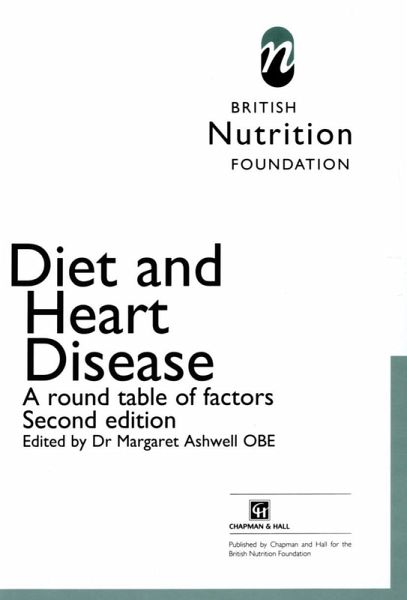
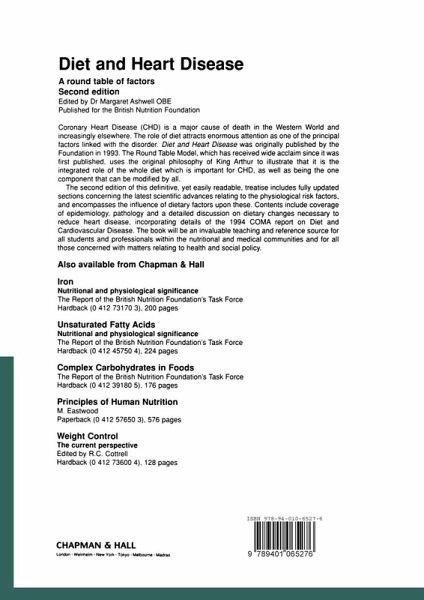
Coronary heart disease is a major cause of death in the Western World and increasingly elsewhere. Although it is a multifactorial disorder, the integrated role of diet attracts enormous attention since it is the one component which can be modified by all and is strongly correlated to population behaviour. The second edition of this highly successful treatise, is an invaluable reference source for all those working within the professions of health, medicine and food science and for all those concerned with matters relating to health and social policy.
Coronary heart disease is a major cause of death in the Western World and increasingly elsewhere. Although it is a multifactorial disorder, the integrated role of diet attracts enormous attention since it is the one component which can be modified by all and is strongly correlated to population behaviour. The second edition of this highly successful treatise, is an invaluable reference source for all those working within the professions of health, medicine and food science and for all those concerned with matters relating to health and social policy.
1 Epidemiology.- 1.1 Worldwide comparisons.- 1.2 Within the United Kingdom.- 1.3 Consideration of methodology.- 1.4 Risk factors for coronary heart disease.- 2 Pathology - events leading to coronary heart disease.- 2.1 Injury to coronary arteries.- 2.2 Fibrous plaque formation.- 2.3 Thrombosis and heart attack.- 3 Physiological risk factors.- 3.1 Increased blood pressure.- 3.2 Increased lipid oxidation.- 3.3 Increased inflammation.- 3.4 Increased atherogenic lipid profile.- 3.5 Increased plasma homocysteine levels.- 3.6. Increased blood clotting factors.- 3.7 Increased insulin resistance.- 3.8 Increased platelet aggregation.- 3.9 Increased arrhythmia.- 4 Uncontrollable factors.- 4.1 Effects of age, sex and race on coronary heart disease.- 4.2 Genetic factors.- 4.3 Possible infant origins of coronary heart disease.- 4.4 Effect of stress on coronary heart disease.- 4.5 Infectious agents as a cause of coronary heart disease.- 5 Dietary factors.- 5.1 Dietary fats.- 5.2 Non-starch polysaccharides or dietary fibre.- 5.3 Starches.- 5.4 Antioxidants.- 5.5 Salt.- 5.6 Alcohol.- 6 The influence of dietary factors on different physiological riskfactors.- 6.1 Influence of dietary factors on blood pressure.- 6.2 Influence of dietary factors on lipid oxidation.- 6.3 Influence of dietary factors on inflammation.- 6.4 Influence of dietary factors on the atherogenic lipid profile.- 6.5 Influence of dietary factors on plasma homocysteine.- 6.6 Influence of dietary factors on clotting factors influencing fibrin formation and deposition in the fibrous plaque.- 6.7 Insulin resistance.- 6.8 Influence of dietary factors on platelet aggregation leading to thrombus formation.- 6.9 Influence of dietary factors on clotting factors influencing fibrin formation in the thrombus.- 6.10 Influence ofdietary factors on arrhythmia.- 7 Interactions between dietary components and physiological risk factors.- 7.1 Potentiating interactions.- 7.2 Protective interactions.- 8 What dietary changes are necessary to reduce coronary heart disease?.- 8.1 Changes to the nutrient composition of the diet.- 8.2 The foods we eat.- 8.3 The whole diet.- 9 Conclusions.- References.
1 Epidemiology.- 1.1 Worldwide comparisons.- 1.2 Within the United Kingdom.- 1.3 Consideration of methodology.- 1.4 Risk factors for coronary heart disease.- 2 Pathology - events leading to coronary heart disease.- 2.1 Injury to coronary arteries.- 2.2 Fibrous plaque formation.- 2.3 Thrombosis and heart attack.- 3 Physiological risk factors.- 3.1 Increased blood pressure.- 3.2 Increased lipid oxidation.- 3.3 Increased inflammation.- 3.4 Increased atherogenic lipid profile.- 3.5 Increased plasma homocysteine levels.- 3.6. Increased blood clotting factors.- 3.7 Increased insulin resistance.- 3.8 Increased platelet aggregation.- 3.9 Increased arrhythmia.- 4 Uncontrollable factors.- 4.1 Effects of age, sex and race on coronary heart disease.- 4.2 Genetic factors.- 4.3 Possible infant origins of coronary heart disease.- 4.4 Effect of stress on coronary heart disease.- 4.5 Infectious agents as a cause of coronary heart disease.- 5 Dietary factors.- 5.1 Dietary fats.- 5.2 Non-starch polysaccharides or dietary fibre.- 5.3 Starches.- 5.4 Antioxidants.- 5.5 Salt.- 5.6 Alcohol.- 6 The influence of dietary factors on different physiological riskfactors.- 6.1 Influence of dietary factors on blood pressure.- 6.2 Influence of dietary factors on lipid oxidation.- 6.3 Influence of dietary factors on inflammation.- 6.4 Influence of dietary factors on the atherogenic lipid profile.- 6.5 Influence of dietary factors on plasma homocysteine.- 6.6 Influence of dietary factors on clotting factors influencing fibrin formation and deposition in the fibrous plaque.- 6.7 Insulin resistance.- 6.8 Influence of dietary factors on platelet aggregation leading to thrombus formation.- 6.9 Influence of dietary factors on clotting factors influencing fibrin formation in the thrombus.- 6.10 Influence ofdietary factors on arrhythmia.- 7 Interactions between dietary components and physiological risk factors.- 7.1 Potentiating interactions.- 7.2 Protective interactions.- 8 What dietary changes are necessary to reduce coronary heart disease?.- 8.1 Changes to the nutrient composition of the diet.- 8.2 The foods we eat.- 8.3 The whole diet.- 9 Conclusions.- References.
Es gelten unsere Allgemeinen Geschäftsbedingungen: www.buecher.de/agb
Impressum
www.buecher.de ist ein Internetauftritt der buecher.de internetstores GmbH
Geschäftsführung: Monica Sawhney | Roland Kölbl | Günter Hilger
Sitz der Gesellschaft: Batheyer Straße 115 - 117, 58099 Hagen
Postanschrift: Bürgermeister-Wegele-Str. 12, 86167 Augsburg
Amtsgericht Hagen HRB 13257
Steuernummer: 321/5800/1497
USt-IdNr: DE450055826