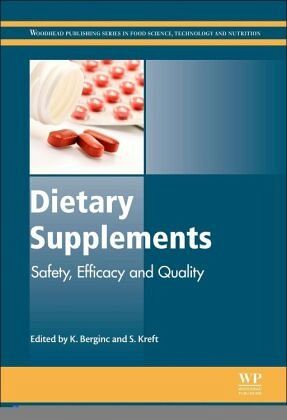
Dietary Supplements
Safety, Efficacy and Quality
Herausgegeben:Berginc, Katja; Kreft, Samo
Dietary Supplements
Safety, Efficacy and Quality
Herausgegeben:Berginc, Katja; Kreft, Samo
- Gebundenes Buch
- Merkliste
- Auf die Merkliste
- Bewerten Bewerten
- Teilen
- Produkt teilen
- Produkterinnerung
- Produkterinnerung
Dietary supplements made from foods, herbs and their constituents are a rapidly growing market sector. Consumers often view food supplements as 'natural' and therefore safe; however, supplements are regulated as foods rather than as pharmaceuticals and so are not as closely monitored as may be necessary. With the commercial market in these products growing, this book provides essential research into their safety, efficacy and potential risk of interaction with pharmaceuticals. Following an introductory chapter, part one covers the chemical composition, manufacture and regulation of dietary…mehr
Andere Kunden interessierten sich auch für
Nidhi SharmaDietary Supplements and Nutraceuticals29,99 €
Dietary Supplements153,99 €
Jaivik PatelValidation of Dietary Supplements47,99 €
Melanie Johns Cupp (ed.)Dietary Supplements154,99 €
Munir A ChandniwalaThe Encyclopedia of Nutraceutical Ingredients49,99 €
Sutaria Sagar JigishbhaiStudy to Compare the Efficacy and Safety27,99 €
Apurva BarotTo Compare The Efficacy And Safety Of Eplerenone And Spironolactone41,99 €-
-
-
Dietary supplements made from foods, herbs and their constituents are a rapidly growing market sector. Consumers often view food supplements as 'natural' and therefore safe; however, supplements are regulated as foods rather than as pharmaceuticals and so are not as closely monitored as may be necessary. With the commercial market in these products growing, this book provides essential research into their safety, efficacy and potential risk of interaction with pharmaceuticals. Following an introductory chapter, part one covers the chemical composition, manufacture and regulation of dietary supplements. Part two looks at the effectiveness of different types of dietary supplement and methods of evaluation. Finally, part three focuses on supplement safety.
Produktdetails
- Produktdetails
- Woodhead Publishing Series in Food Science, Technology and Nutrition
- Verlag: Elsevier Science & Technology / Woodhead Publishing
- Artikelnr. des Verlages: C2013-0-16446-X
- Englisch
- Abmessung: 15mm x 152mm x 229mm
- Gewicht: 520g
- ISBN-13: 9781782420767
- Artikelnr.: 41493898
- Herstellerkennzeichnung Die Herstellerinformationen sind derzeit nicht verfügbar.
- Woodhead Publishing Series in Food Science, Technology and Nutrition
- Verlag: Elsevier Science & Technology / Woodhead Publishing
- Artikelnr. des Verlages: C2013-0-16446-X
- Englisch
- Abmessung: 15mm x 152mm x 229mm
- Gewicht: 520g
- ISBN-13: 9781782420767
- Artikelnr.: 41493898
- Herstellerkennzeichnung Die Herstellerinformationen sind derzeit nicht verfügbar.
- List of contributors
- Woodhead Publishing Series in Food Science, Technology and Nutrition
- Introduction
- Part One: General issues
- 1: Dietary supplement labelling and health claims
- Abstract
- 1.1 Introduction: the regulatory situation in the European Union (EU)
- 1.2 Labelling requirements
- 1.3 Nutrition claims
- 1.4 Health claims
- 1.5 Borderline substances: between foods and medicine
- 1.6 Conclusions
- Acknowledgements
- Appendix: abbreviations
- 2: Good manufacturing practice (GMP) in the production of dietary supplements
- Abstract
- 2.1 Introduction
- 2.2 Key issues related to good manufacturing practice/good hygienic practice (GMP/GHP) implementation
- 2.3 Documentation of GMP
- 2.4 Benefits and drawbacks of GMP use in organisations
- 2.5 Summary
- 3: Analysing the composition of fortified foods and supplements: the case of vitamins
- Abstract
- 3.1 Introduction
- 3.2 Extraction and purification methods
- 3.3 High performance liquid chromatography (HPLC)
- 3.4 Gas chromatography (GC)
- 3.5 Capillary electrophoresis (CE)
- 3.6 Spectroscopic methods
- 3.7 Microbiological methods
- 3.8 Immunoassays
- 3.9 Other methods
- 3.10 Future trends
- 1: Dietary supplement labelling and health claims
- Part Two: Drug-supplement interactions
- 4: Pharmacokinetic interactions between drugs and dietary supplements: herbal supplements
- Abstract
- 4.1 Introduction
- 4.2 Herbals: introduction
- 4.3 Hypericum perforatum (St John's Wort (SJW))
- 4.4 Allium sativum (garlic)
- 4.5 Ginkgo biloba (ginkgo)
- 4.6 Panax ginseng (ginseng), Piper methysticum (kava kava) and Serenoa repens (saw palmetto)
- 4.7 Echinacea purpurea (purple coneflower), Vaccinium macrocarpon (cranberry) and Silybum marianum (milk thistle)
- 4.8 Hydrastis canadensis (goldenseal), Valeriana officinalis (valerian) and Cimicifuga racemosa (black cohosh)
- 4.9 Glycine max (soy), Camellia sinensis (green tea) and Zingiber officinale (ginger)
- 4.10 Morinda citrifolia (noni), Aloe vera (aloe), Vitis vinifera (grape seed) and Curcuma longa (turmeric)
- 4.11 Stevia rebaudiana (stevia), Lepidium meyenii (maca) and Garcinia mangostana (mangosteen)
- 4.12 Summary
- 5: Pharmacokinetic interactions between drugs and dietary supplements: probiotic and lipid supplements
- Abstract
- 5.1 Introduction
- 5.2 Probiotics and drug delivery in the colon
- 5.3 Probiotics: summary
- 5.4 Lipids and drug delivery
- 5.5 Lipidic excipients and drug release
- 5.6 Summary: pharmacokinetic drug-lipid interactions
- 6: Pharmacokinetic interactions between drugs and dietary supplements: carbohydrate, protein, vitamin and mineral supplements
- Abstract
- 6.1 Introduction
- 6.2 Carbohydrates as dietary supplements
- 6.3 Carbohydrates as pharmaceutical excipients and prodrugs
- 6.4 Carbohydrates: summary
- 6.5 Proteins, peptides, and amino acids
- 6.6 The impact of proteins on drug pharmacokinetics and their use as prodrugs
- 6.7 Proteins: summary
- 6.8 Vitamins
- 6.9 Vitamins: summary
- 6.10 Minerals and oligoelements
- 6.11 Minerals: summary
- 7: Pharmacodynamic interactions between drugs and dietary supplements
- Abstract
- 7.1 Introduction
- 7.2 Vitamins
- 7.3 Minerals
- 7.4 Herbal supplements
- 7.5 Antioxidants
- 7.6 Conclusion
- 4: Pharmacokinetic interactions between drugs and dietary supplements: herbal supplements
- Part Three: Vitamins, minerals and probiotics as dietary supplements
- 8: Vi
- List of contributors
- Woodhead Publishing Series in Food Science, Technology and Nutrition
- Introduction
- Part One: General issues
- 1: Dietary supplement labelling and health claims
- Abstract
- 1.1 Introduction: the regulatory situation in the European Union (EU)
- 1.2 Labelling requirements
- 1.3 Nutrition claims
- 1.4 Health claims
- 1.5 Borderline substances: between foods and medicine
- 1.6 Conclusions
- Acknowledgements
- Appendix: abbreviations
- 2: Good manufacturing practice (GMP) in the production of dietary supplements
- Abstract
- 2.1 Introduction
- 2.2 Key issues related to good manufacturing practice/good hygienic practice (GMP/GHP) implementation
- 2.3 Documentation of GMP
- 2.4 Benefits and drawbacks of GMP use in organisations
- 2.5 Summary
- 3: Analysing the composition of fortified foods and supplements: the case of vitamins
- Abstract
- 3.1 Introduction
- 3.2 Extraction and purification methods
- 3.3 High performance liquid chromatography (HPLC)
- 3.4 Gas chromatography (GC)
- 3.5 Capillary electrophoresis (CE)
- 3.6 Spectroscopic methods
- 3.7 Microbiological methods
- 3.8 Immunoassays
- 3.9 Other methods
- 3.10 Future trends
- 1: Dietary supplement labelling and health claims
- Part Two: Drug-supplement interactions
- 4: Pharmacokinetic interactions between drugs and dietary supplements: herbal supplements
- Abstract
- 4.1 Introduction
- 4.2 Herbals: introduction
- 4.3 Hypericum perforatum (St John's Wort (SJW))
- 4.4 Allium sativum (garlic)
- 4.5 Ginkgo biloba (ginkgo)
- 4.6 Panax ginseng (ginseng), Piper methysticum (kava kava) and Serenoa repens (saw palmetto)
- 4.7 Echinacea purpurea (purple coneflower), Vaccinium macrocarpon (cranberry) and Silybum marianum (milk thistle)
- 4.8 Hydrastis canadensis (goldenseal), Valeriana officinalis (valerian) and Cimicifuga racemosa (black cohosh)
- 4.9 Glycine max (soy), Camellia sinensis (green tea) and Zingiber officinale (ginger)
- 4.10 Morinda citrifolia (noni), Aloe vera (aloe), Vitis vinifera (grape seed) and Curcuma longa (turmeric)
- 4.11 Stevia rebaudiana (stevia), Lepidium meyenii (maca) and Garcinia mangostana (mangosteen)
- 4.12 Summary
- 5: Pharmacokinetic interactions between drugs and dietary supplements: probiotic and lipid supplements
- Abstract
- 5.1 Introduction
- 5.2 Probiotics and drug delivery in the colon
- 5.3 Probiotics: summary
- 5.4 Lipids and drug delivery
- 5.5 Lipidic excipients and drug release
- 5.6 Summary: pharmacokinetic drug-lipid interactions
- 6: Pharmacokinetic interactions between drugs and dietary supplements: carbohydrate, protein, vitamin and mineral supplements
- Abstract
- 6.1 Introduction
- 6.2 Carbohydrates as dietary supplements
- 6.3 Carbohydrates as pharmaceutical excipients and prodrugs
- 6.4 Carbohydrates: summary
- 6.5 Proteins, peptides, and amino acids
- 6.6 The impact of proteins on drug pharmacokinetics and their use as prodrugs
- 6.7 Proteins: summary
- 6.8 Vitamins
- 6.9 Vitamins: summary
- 6.10 Minerals and oligoelements
- 6.11 Minerals: summary
- 7: Pharmacodynamic interactions between drugs and dietary supplements
- Abstract
- 7.1 Introduction
- 7.2 Vitamins
- 7.3 Minerals
- 7.4 Herbal supplements
- 7.5 Antioxidants
- 7.6 Conclusion
- 4: Pharmacokinetic interactions between drugs and dietary supplements: herbal supplements
- Part Three: Vitamins, minerals and probiotics as dietary supplements
- 8: Vi