

Andere Kunden interessierten sich auch für
 Digital Dental Excellence44,99 €
 Cyfrowa doskona¿o¿¿ stomatologiczna44,99 €
 L'excellence dentaire numérique44,99 €
 Digitalization in Prosthodontics45,99 €
 Cone Beam Computed Tomography In Orthodontics53,99 €
 Digital Workflow in Complete Denture Fabrication56,99 €
 Injectable Gutta Percha45,99 €




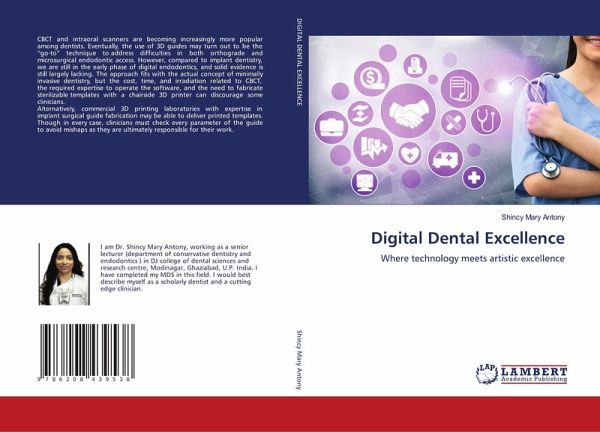
CBCT and intraoral scanners are becoming increasingly more popular among dentists. Eventually, the use of 3D guides may turn out to be the "go-to" technique to address difficulties in both orthograde and microsurgical endodontic access. However, compared to implant dentistry, we are still in the early phase of digital endodontics, and solid evidence is still largely lacking. The approach fits with the actual concept of minimally invasive dentistry, but the cost, time, and irradiation related to CBCT, the required expertise to operate the software, and the need to fabricate sterilizable templates with a chairside 3D printer can discourage some clinicians.Alternatively, commercial 3D printing laboratories with expertise in implant surgical guide fabrication may be able to deliver printed templates. Though in every case, clinicians must check every parameter of the guide to avoid mishaps as they are ultimately responsible for their work.