62,99 €
inkl. MwSt.
Versandkostenfrei*Erscheint vorauss. 1. April 2026
Melden Sie sich
hier
hier
für den Produktalarm an, um über die Verfügbarkeit des Produkts informiert zu werden.

31 °P sammeln
Andere Kunden interessierten sich auch für
 Demystifying Disability13,99 €
 Code Dependent18,99 €
 Goodparents.com20,99 €
 Das metrische Wir20,00 €
 Radikaler Digitaler Humanismus29,90 €
 The Technological Society12,99 €
 Analogia19,99 €





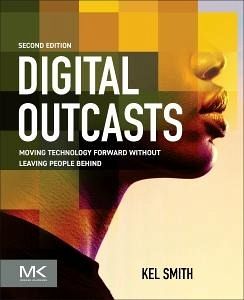
Digital Outcasts: Moving Technology Forward without Leaving People Behind, Second Edition comprehensively explores inclusive design in human-computer interaction. The book examines the real-life experiences of people with disabilities as they navigate systemic barriers in employment, education, healthcare, and social connectivity. This new edition covers the intersectionality of disability with other forms of economic and political discrimination, uncovering how biases related to race, gender, and ability are reflected in language models and AI algorithms. With digital access a foundational element of human existence, the consequences of exclusion are far-reaching and increasingly urgent. Citing case studies in law, creative arts, and social science, this updated edition also examines the historical and emergent impact people with disabilities have on culture and industry. Digital Outcasts emphases that disability has long served as a powerful catalyst for design innovation, driving transformational benefit for consumers of all abilities and backgrounds. Taking into account new legal and technological perspectives, this revision stands as an update on the progress we have made-and how far we have yet to go.
"The intended reader is anyone attempting to either create more accessible technology for use by the disabled, or has an interest in novel ways that things like virtual reality, computer games, and assistive devices can be used in medicine to treat a variety of disabilities and assist in patient rehabilitation. The book concludes with a series of chapters on socially and environmentally responsible design and thinking ahead to the future in which digital devices will become ever more integrated into daily life and even the human body itself." --Reference & Research Book News, December 2013
"Kel Smith makes a significant contribution to the subject of user experience in this easily read but important treatise. the book makes a compelling case for universal design, a concept far more expansive than the more common notion of handicapped-accessible technology.The information here will be challenging and profitable, not only for designers but also for anyone associated with advancing computer technology." --ComputingReviews.com, November 13, 2013
"The book provides a detailed overview of how people with disabilities use technology. More importantly, it shows that creating effective user interfaces for those with disabilities is beneficial for all users.Smith writes that for accessibility to work, it has to be an enterprise initiative. He provides 8 strategic steps to doing that.This book is an important read for everyone." --Slashdot.org, November 25, 2013
"This is a wise book that accepts that disability, like ability, is abounding with nuances and variation, and Smith admits that it is behaviour that has to be focused upon rather than any device.Smith draws this excellent book to a close with the ethics surrounding the technology, along with current and future developments." --BCS online, November 2013
"Kel Smith makes a significant contribution to the subject of user experience in this easily read but important treatise. the book makes a compelling case for universal design, a concept far more expansive than the more common notion of handicapped-accessible technology.The information here will be challenging and profitable, not only for designers but also for anyone associated with advancing computer technology." --ComputingReviews.com, November 13, 2013
"The book provides a detailed overview of how people with disabilities use technology. More importantly, it shows that creating effective user interfaces for those with disabilities is beneficial for all users.Smith writes that for accessibility to work, it has to be an enterprise initiative. He provides 8 strategic steps to doing that.This book is an important read for everyone." --Slashdot.org, November 25, 2013
"This is a wise book that accepts that disability, like ability, is abounding with nuances and variation, and Smith admits that it is behaviour that has to be focused upon rather than any device.Smith draws this excellent book to a close with the ethics surrounding the technology, along with current and future developments." --BCS online, November 2013