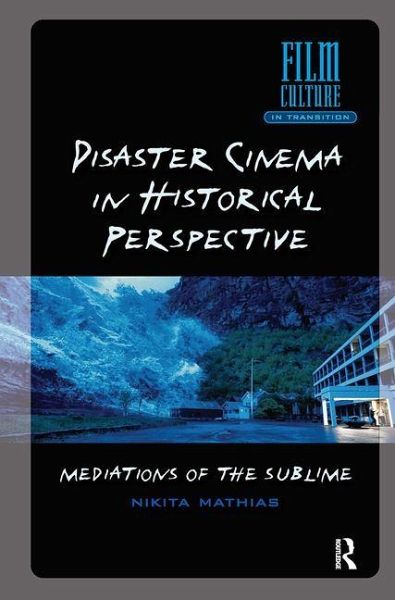
How do we experience disaster films in cinema? And where does disaster cinema come from? The two questions are more closely related than one might initially think. For the framework of the cinematic experience of natural disasters has its roots in the mid-eighteenth century when the aesthetic category of the sublime was re-established as the primary mode for appreciating nature's violent forces. In this book, the sublime is understood as a complex and culturally specific meeting point between philosophical thought, artistic creation, social and technical development, and popular imagination.…mehr
How do we experience disaster films in cinema? And where does disaster cinema come from? The two questions are more closely related than one might initially think. For the framework of the cinematic experience of natural disasters has its roots in the mid-eighteenth century when the aesthetic category of the sublime was re-established as the primary mode for appreciating nature's violent forces. In this book, the sublime is understood as a complex and culturally specific meeting point between philosophical thought, artistic creation, social and technical development, and popular imagination. On the one hand, the sublime provides a receptive model to uncover how cinematic disaster depictions affect our senses, bodies and minds. On the other hand, this experiential framework of disaster cinema is only one of the most recent agents within the historical trajectory of sublime disasters, which is traced in this book among a broad range of media: from landscape and history painting to a variety of pictorial devices like Eidophusikon, Panorama, Diorama, and, finally, cinema.
Holding a PhD from the University of Tübingen, Germany, Nikita Mathias's main research interests lie within the fields of art history, media studies, aesthetics, and literary studies. Besides his academic career, he has worked as a journalist and in various positions in the cultural sector. In his current occupation, he holds the position of Senior Concept Developer at the Munch Museum in Oslo, Norway, which involves creating meaningful and engaging art experiences as well as publications and research.
Inhaltsangabe
I. Introduction II. Starting Points III. The Iconography of the Sublime IV. Mediating the Sublime V. Cinema - A Medium of the Sublime? VI. Disaster Cinema. A Historical Overview VII. The Sublime in Disaster Cinema Bibliography Index
I. Introduction II. Starting Points III. The Iconography of the Sublime IV. Mediating the Sublime V. Cinema - A Medium of the Sublime? VI. Disaster Cinema. A Historical Overview VII. The Sublime in Disaster Cinema Bibliography Index
Es gelten unsere Allgemeinen Geschäftsbedingungen: www.buecher.de/agb
Impressum
www.buecher.de ist ein Internetauftritt der buecher.de internetstores GmbH
Geschäftsführung: Monica Sawhney | Roland Kölbl | Günter Hilger
Sitz der Gesellschaft: Batheyer Straße 115 - 117, 58099 Hagen
Postanschrift: Bürgermeister-Wegele-Str. 12, 86167 Augsburg
Amtsgericht Hagen HRB 13257
Steuernummer: 321/5800/1497
USt-IdNr: DE450055826