
Andere Kunden interessierten sich auch für
 Dividend Policy and Corporate Governance181,99 €
 Determinants of Dividend Policy of insurance companies in Ethiopia33,99 €
 Dividend Investing15,99 €
 Environmental Taxation and the Double Dividend176,99 €
 Dividend Growth Investing11,99 €
 Cash Flow Stock Investing19,99 €
 Dividend Investing20,99 €


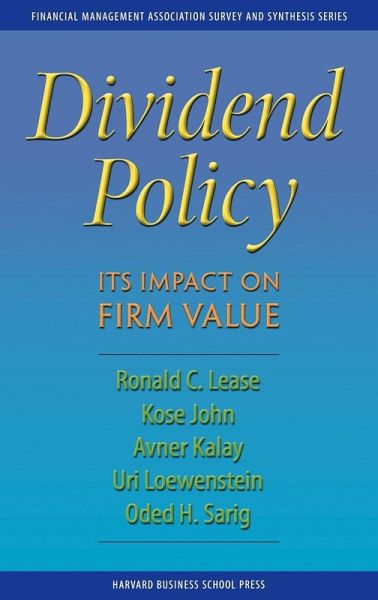
The purpose of this book is to review the theory and empirical evidence regarding the impact of dividend policy on shareholder wealth. It cuts to the quick of such long-standing questions as Why do corporations pay dividends? and Why should investors care? With relevant anecdotes, surveys, examples, and research from the financial press, company documents, and academic literature, the book focuses less on mathematics and more on the intuition of share valuation as a function of dividend policy. While the authors acknowledge the irrelevance of dividend policy in a world with perfect capital markets, they stress how market imperfections such as taxes, imperfect information, and agency issues can alter the dividend irrelevance conclusion. It concludes with the authors'recommendations on how managers should incorporate market imperfections most relevant to their firm in setting dividend policy. Not mathematically rigorous.