

Andere Kunden interessierten sich auch für
 Jesus Divine Messiah26,99 €
 Divine Immutability19,99 €
 Christian Understandings of Christ18,99 €
 Intercultural Christology in John's Gospel21,99 €
 Jesus and the Quest for Meaning25,99 €
 Divine Empathy27,99 €
 Jesus and the Village Scribes27,99 €






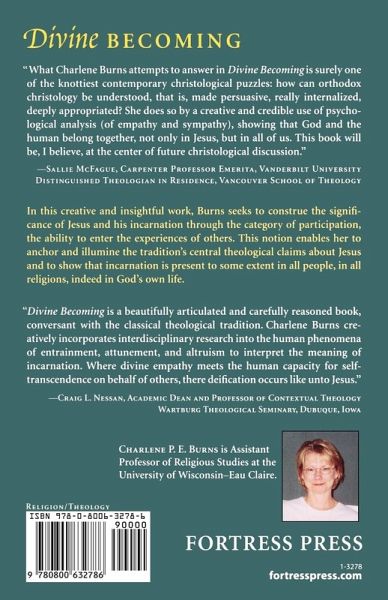
The universally human element of Jesus' incarnationDespite the feverish pace of publishing in historical Jesus studies, biblical scholars and theologians have not notably progressed in addressing the meaning and significance of the figure of Jesus in ways credible for contemporary persons. In this creative and insightful work, Burns seeks to understand the significance of Jesus and his incarnation through the category of participation. The central theological claims in the traditional concept of incarnation are anchored and illumined by Jesus' particular ability for empathy, sympathy, attunement, and entrainment. This notion, derived from the psychological research of Daniel Stern, allows Burns to show that incarnation the capacity to participate in the life of others is present not only in Jesus but to some extent in all people and in all religions. It further illumines features of God's trinitarian life and our lifelong journey into God (deification).