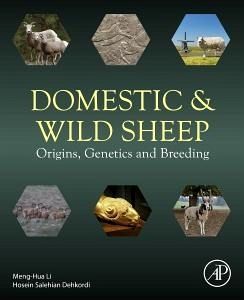
The Characterization of Genus Ovis: Genetics, Domestication and Behavior delves into the diverse world of wild and domesticated sheep. This book offers comprehensive information on the genetics, evolution, diversity, behavior, expansion, breeding, and domestication of sheep. It is a detailed characterization of this ecologically and commercially significant genus. Written by experts who have hosted the World Sheep Conference four times, the book is systematically structured into four sections to guide readers through the various Ovis species, their biological characteristics, genetic markers,…mehr
The Characterization of Genus Ovis: Genetics, Domestication and Behavior delves into the diverse world of wild and domesticated sheep. This book offers comprehensive information on the genetics, evolution, diversity, behavior, expansion, breeding, and domestication of sheep. It is a detailed characterization of this ecologically and commercially significant genus. Written by experts who have hosted the World Sheep Conference four times, the book is systematically structured into four sections to guide readers through the various Ovis species, their biological characteristics, genetic markers, and their significance to human populations. Furthermore, it offers new insights into the functional genetics of sheep species, their migrations and expansions in connection with human history, and guidance on successful breeding and husbandry. The book is organized for accessibility to student, academic, and professional audiences, making it an indispensable resource for anyone interested in animal evolution, diversity, behavior, and husbandry.
Dr. Menghua Li is Full Professor and head of China Agricultural University's College of Animal Science and Technology, as well as head of the Sino-Arabian Joint Laboratory for Sheep and Goat Germplasm Innovation in Beijing, China. He obtained a PhD in Animal Genetics, Breeding, and Reproduction from Huazhong Agricultural University's College of Animal Husbandry and Veterinary Medicine and brings more than 20 years of experience to the project. His research focuses on animal ecology, evolutionary biology, animal breeding, and germplasm innovation. Dr. Li has been the Chairman of the Sheep Committee of the International Society of Animal Genetics since 2019 and the Chairman of the first, second, third, and fourth World Sheep Conferences.
Inhaltsangabe
Part 1. 1. An introduction to sheep, its importance in human history, its taxonomic classification and diversity 2. Bighorn sheep (???????? ????????????????????) 3. Thinhorn sheep (???????? ??????????) 4. Snow sheep (???????? ????????????????) 5. Argali (???????? ??????????) 6. Urial (???????? ????????????) 7. Asian mouflon (???????? ????????????????????; ???????? ??????????????) 8. European mouflon (???????? ??????????????) 9. Domestic sheep (???????? ??????????) Part 2. 10. Adapted behaviors of genus Ovis to various conditions 11. Reproductive behaviors during the reproductive season 12. Genes and behavioral traits 13. New methods and technologies to record sheep behaviors Part 3. 14. Genetic markers and platforms in genetics studies of sheep 15. Functional genes and genetic mechanisms underlying phenotypic variations in wild sheep 16. Functional genes for meat production and growth traits 17. Functional genes for milk production 18. Functional genes for wool traits and coat colors 19. Functional genes for reproductive traits 20. Functional genes for tail-type traits 21. Functional genes related to appendages (i.e., horns, teats, ears) 22. Functional genes for stress and disease resistance Part 4. 23. Sheep domestication and major post-domestication breeding 24. Post-domestication expansions and haplotypes 25. Archaeological evidence and historical records for sheep remains and ancient DNA 26. Evidence from Neolithic archaeological sites during past millennia and post-domestication migrations 27. Interspecies mating and genetic introgressions among the ???????? species
Es gelten unsere Allgemeinen Geschäftsbedingungen: www.buecher.de/agb
Impressum
www.buecher.de ist ein Internetauftritt der buecher.de internetstores GmbH
Geschäftsführung: Monica Sawhney | Roland Kölbl | Günter Hilger
Sitz der Gesellschaft: Batheyer Straße 115 - 117, 58099 Hagen
Postanschrift: Bürgermeister-Wegele-Str. 12, 86167 Augsburg
Amtsgericht Hagen HRB 13257
Steuernummer: 321/5800/1497
USt-IdNr: DE450055826