
Andere Kunden interessierten sich auch für
 Reconciling Law and Morality in Human Rights Discourse76,99 €
 Hegel and Global Justice113,99 €
 An Introduction to Human Rights in African Philosophy39,99 €
 Challenging the Borders of Justice in the Age of Migrations76,99 €
 Assertiveness in the Context of Human Rights, Ethics, and Classical Virtues98,99 €
 Marx' Critique of Science and Positivism115,99 €
 Marx' Critique of Science and Positivism113,99 €
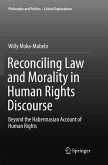
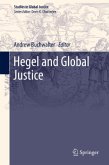


This book develops a philosophical conception of human rights that responds satisfactorily to the challenges raised by cultural and political critics of human rights, who contend that the contemporary human rights movement is promoting an imperialist ideology, and that the humanitarian intervention for protecting human rights is a neo-colonialism. These claims affect the normativity and effectiveness of human rights; that is why they have to be taken seriously. At the same time, the same philosophical account dismisses the imperialist crusaders who support the imperialistic use of human rights by the West to advance liberal culture.
Thus, after elaborating and exposing these criticisms, the book confronts them to the human rights theories of John Rawls and Jürgen Habermas, in order to see whether they can be addressed. Unfortunately, they are not. Therefore, having shown that these two philosophical accounts of human rights do not respond convincingly to those the postco
lonial challenges, the book provides an alternative conception that draws the understanding of human rights from local practices. It is a multilayer conception which is not centered on state, but rather integrates it in a larger web of actors involved in shaping the practice and meaning of human rights. Confronted to the challenges, this new conception offers a promising way for addressing them satisfactorily, and it even sheds new light to the classical questions of universality of human rights, as well as the tension between universalism and relativism.
Thus, after elaborating and exposing these criticisms, the book confronts them to the human rights theories of John Rawls and Jürgen Habermas, in order to see whether they can be addressed. Unfortunately, they are not. Therefore, having shown that these two philosophical accounts of human rights do not respond convincingly to those the postco
lonial challenges, the book provides an alternative conception that draws the understanding of human rights from local practices. It is a multilayer conception which is not centered on state, but rather integrates it in a larger web of actors involved in shaping the practice and meaning of human rights. Confronted to the challenges, this new conception offers a promising way for addressing them satisfactorily, and it even sheds new light to the classical questions of universality of human rights, as well as the tension between universalism and relativism.