
Andere Kunden interessierten sich auch für
 Don DeLillo's Underworld25,99 €
 The Cambridge Companion to American Modernism36,99 €
 The Cambridge Companion to the African American Slave Narrative45,99 €
 The Cambridge Introduction to Early American Literature40,99 €
 David Guterson's Snow Falling on Cedars23,99 €
 Carol Shields's the Stone Diaries25,99 €
 The Cambridge Introduction to Edgar Allan Poe27,99 €

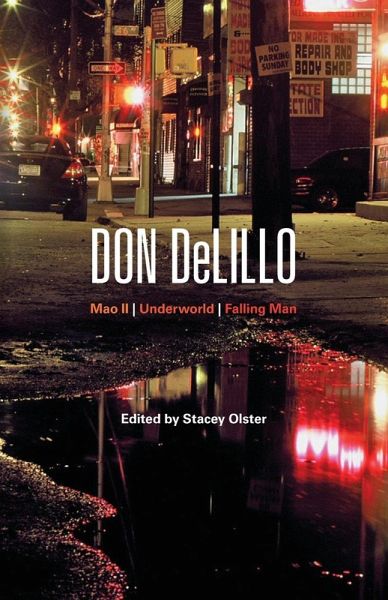
A collection of original, stimulating interpretations of key texts by Don DeLillo, designed for students and edited and written by leading scholars in the field. The book offers new perspectives on two of the most important pre-millennial novels by any American writer Mao II and Underworld and the first extended discussions of Falling Man, DeLillo's exploration of 9/11 and its aftermath.
An American Studies approach to the texts brings together both established DeLillo scholars and other academics whose interdisciplinary methodologies drawn from history, ethnic studies, new economic criticism, women's studies, art history, and urban studies shed new light on DeLillo's work and demonstrate its wide-ranging significance in contemporary American culture.
An American Studies approach to the texts brings together both established DeLillo scholars and other academics whose interdisciplinary methodologies drawn from history, ethnic studies, new economic criticism, women's studies, art history, and urban studies shed new light on DeLillo's work and demonstrate its wide-ranging significance in contemporary American culture.
This is a beautifully coherent collection of essays on DeLillo's three most important recent novels. It is also much more than that. The volume reflects on, tells us much about, and revises views of, DeLillo's entire oeuvre, American literature and culture broadly, modernist and postmodernist theory, and the other arts (including photography, performance art, film). Anyone with any interest in contemporary culture should know this book. Led by the level-setting eloquent and erudite Olster, the contributors comprise the most exciting scholars in American literary and cultural studies today. Fittingly for a volume on DeLillo, reading it you will never forget that these are people who can write. J.D. Prosser, Reader in Humanities, School of English, University of Leeds, UK