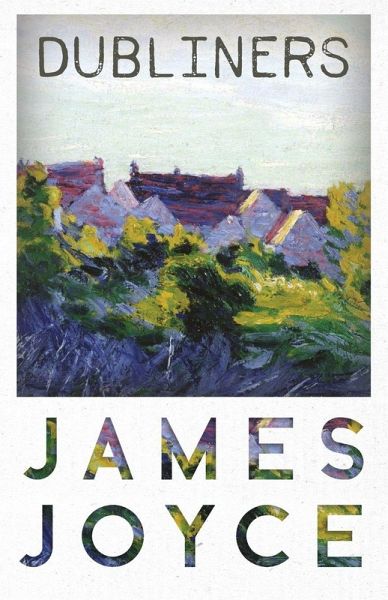
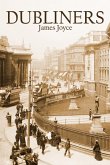
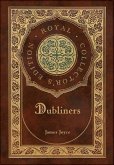
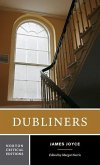
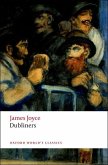
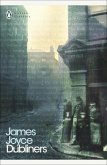
Dubliners is James Joyce's groundbreaking collection of short stories capturing the everyday lives, struggles, and quiet epiphanies of ordinary people in early twentieth-century Dublin. From the innocence of childhood in 'The Sisters' to the poignant paralysis of adulthood in 'The Dead', Joyce offers a hauntingly intimate portrait of a city and its soul. Each of the fifteen stories stands alone, yet together they form a cohesive exploration of identity, constraint, and the elusive nature of change. Written in a clear, unadorned style, Dubliners marked a radical departure from the romanticised…mehr
Dubliners is James Joyce's groundbreaking collection of short stories capturing the everyday lives, struggles, and quiet epiphanies of ordinary people in early twentieth-century Dublin. From the innocence of childhood in 'The Sisters' to the poignant paralysis of adulthood in 'The Dead', Joyce offers a hauntingly intimate portrait of a city and its soul. Each of the fifteen stories stands alone, yet together they form a cohesive exploration of identity, constraint, and the elusive nature of change. Written in a clear, unadorned style, Dubliners marked a radical departure from the romanticised Irish literature of its time, embracing instead a stark realism and psychological depth that would become hallmarks of Joyce's work. First published in 1914, Dubliners remains one of the most important short story collections in the English language, essential reading for lovers of modern fiction.
James Joyce was born in Dublin, Ireland, in 1882 and is considered one of the most influential modernist writers of the 20th century. He studied at University College Dublin, where he developed his interest in literature, philosophy, and languages. His early works, including Dubliners and A Portrait of the Artist as a Young Man, established his reputation as a groundbreaking writer who explored themes of identity, exile, and human consciousness.Joyce spent much of his adult life in self-imposed exile, living in cities such as Paris, Zurich, and Trieste. During this period, he completed his most famous work, Ulysses (1922), which revolutionized the modern novel with its stream-of-consciousness technique and intricate structure. Although controversial and banned in several countries for its explicit content, Ulysses became a landmark of literary innovation and remains a key text in the modernist canon.His final major work, Finnegans Wake (1939), further pushed the boundaries of language and narrative complexity. Joyce's innovative use of language, his deep engagement with Irish identity, and his examination of the inner workings of the mind have cemented his legacy as one of the great literary figures of the 20th century. He died in Zurich in 1941.
Es gelten unsere Allgemeinen Geschäftsbedingungen: www.buecher.de/agb
Impressum
www.buecher.de ist ein Internetauftritt der buecher.de internetstores GmbH
Geschäftsführung: Monica Sawhney | Roland Kölbl | Günter Hilger
Sitz der Gesellschaft: Batheyer Straße 115 - 117, 58099 Hagen
Postanschrift: Bürgermeister-Wegele-Str. 12, 86167 Augsburg
Amtsgericht Hagen HRB 13257
Steuernummer: 321/5800/1497
USt-IdNr: DE450055826