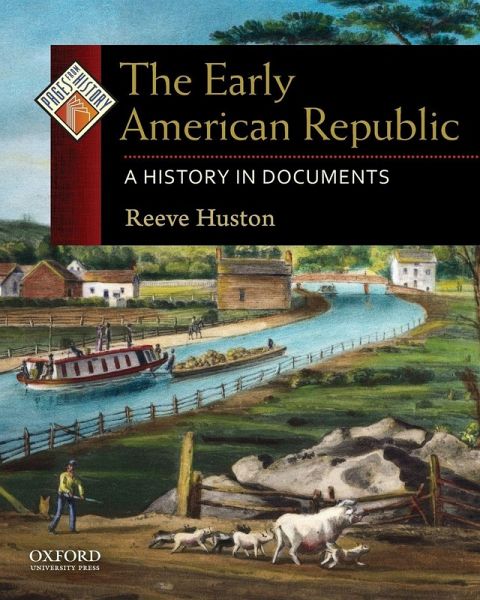
The early years of the American republic witnessed wrenching conflict and change. Northerners created an industrial order, which brought with it troubled relationships at work and within families. White southerners extended plantation slavery while the anti-slavery movement grew above the Mason-Dixon line. In the West, Native Americans battled newly arrived yeomen, entrepreneurs, and planters for control over land. Throughout the young nation numerous groups--African Americans, poor white men, women--fought for full citizenship, while others vigorously opposed their bids for equality. The…mehr
The early years of the American republic witnessed wrenching conflict and change. Northerners created an industrial order, which brought with it troubled relationships at work and within families. White southerners extended plantation slavery while the anti-slavery movement grew above the Mason-Dixon line. In the West, Native Americans battled newly arrived yeomen, entrepreneurs, and planters for control over land. Throughout the young nation numerous groups--African Americans, poor white men, women--fought for full citizenship, while others vigorously opposed their bids for equality. The Mexican-American War (1846-1848) marked the end of the period with violence that prefigured the Civil War.
Reeve Huston is Associate Professor of History at Duke University. He is the author of Land and Freedom: Rural Society, Popular Protest, and Party Politics in Antebellum New York (OUP, 2002), which was the winner of the 2001 Theodore Saloutos Prize of the Agricultural History Society and the New York State Historical Association's 1999 Dixon Ryan Fox Manuscript Prize.
Inhaltsangabe
What Is a Document? How to Read a Document Introduction Note on Sources and Interpretation Chapter 1: The People Rule, But Who Are the People? The Founders' Social Vision Poor White Men's Bid for Equality Middle- and Upper-Class Women's Bid for Intellectual Equality The Attack on Slavery Chapter 2: Creating a Political Order The Federalists' Political Vision An Elite Opposition Emerges A Popular Opposition Emerges The Clash of Parties President Jefferson Chapter 3: Expanding the National Territory Acquiring the Land Indians, White Settlers, and the Federal Government Squatters and the Federal Government Life in the Western Farm Settlements Expanding Slavery Beyond the Mississippi Chapter 4: The Transformation of the North Before the Industrial Revolution Economic Innovators Religious Innovators Innovators in Family Life A New World of Wage Labor Origins of the American Labor Movement The Beginnings of Mass Immigration Chapter 5: Masters and Slaves The Struggle for Control The World of the Enslaved Resistance, Repression, and Rebellion Chapter 6: Picture Essay: Picturing Families Chapter 7: The Triumph of Partisan Democracy Creating a White Male Electorate Re-creating Party Politics Party Issues, Party Principles Politics without Parties Chapter 8: Race, Reform, and Sectional Conflict A New Anti-Slavery Movement The Re-emergence of American Feminism A Woman's Rights Movement Emerges Southern Leaders Defend Slavery Anti-Abolitionism and a New Racial Regime in the North Epilogue: Becoming a Continental Nation Refiguring American Nationalism Anglos and Mexicans in the Conquered Territories The Sectional Conflict Deepens Timeline Further Reading Websites Text Credits Picture Credits Index
What Is a Document? How to Read a Document Introduction Note on Sources and Interpretation Chapter 1: The People Rule, But Who Are the People? The Founders' Social Vision Poor White Men's Bid for Equality Middle- and Upper-Class Women's Bid for Intellectual Equality The Attack on Slavery Chapter 2: Creating a Political Order The Federalists' Political Vision An Elite Opposition Emerges A Popular Opposition Emerges The Clash of Parties President Jefferson Chapter 3: Expanding the National Territory Acquiring the Land Indians, White Settlers, and the Federal Government Squatters and the Federal Government Life in the Western Farm Settlements Expanding Slavery Beyond the Mississippi Chapter 4: The Transformation of the North Before the Industrial Revolution Economic Innovators Religious Innovators Innovators in Family Life A New World of Wage Labor Origins of the American Labor Movement The Beginnings of Mass Immigration Chapter 5: Masters and Slaves The Struggle for Control The World of the Enslaved Resistance, Repression, and Rebellion Chapter 6: Picture Essay: Picturing Families Chapter 7: The Triumph of Partisan Democracy Creating a White Male Electorate Re-creating Party Politics Party Issues, Party Principles Politics without Parties Chapter 8: Race, Reform, and Sectional Conflict A New Anti-Slavery Movement The Re-emergence of American Feminism A Woman's Rights Movement Emerges Southern Leaders Defend Slavery Anti-Abolitionism and a New Racial Regime in the North Epilogue: Becoming a Continental Nation Refiguring American Nationalism Anglos and Mexicans in the Conquered Territories The Sectional Conflict Deepens Timeline Further Reading Websites Text Credits Picture Credits Index
Es gelten unsere Allgemeinen Geschäftsbedingungen: www.buecher.de/agb
Impressum
www.buecher.de ist ein Internetauftritt der buecher.de internetstores GmbH
Geschäftsführung: Monica Sawhney | Roland Kölbl | Günter Hilger
Sitz der Gesellschaft: Batheyer Straße 115 - 117, 58099 Hagen
Postanschrift: Bürgermeister-Wegele-Str. 12, 86167 Augsburg
Amtsgericht Hagen HRB 13257
Steuernummer: 321/5800/1497
USt-IdNr: DE450055826