
Andere Kunden interessierten sich auch für
 The Art of Mercy in Middle-earth27,99 €
 Roberto Rébora: Matter and Discourse of Faith27,99 €
 Radiant Matter19,99 €
 The Great Book of Drawing Zentangle13,99 €
 The Arts17,99 €
 7ed") Ethics, Integrity & Aptitude (For Civil Services Examination) 7ed58,99 €
Ethics, Integrity & Aptitude (For Civil Services Examination) 7ed58,99 € IIT JEE 2023 Main & Advanced - Objective Mathematics by Er. Purushottam Kumar Sharma, Er. Brijesh Sharma48,99 €

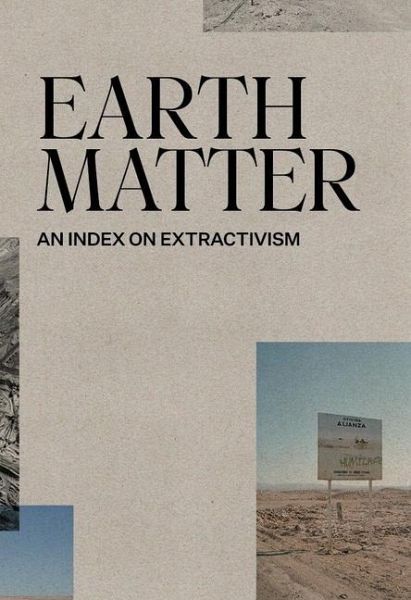
The culmination of over a decade of collaborative research exploring the global impact of extractivism, tied to the Traces of Nitrate project. Earth Matter delves into the history of extractivism in Chile, beginning with the nitrate mines in the Atacama Desert in the nineteenth century and extending to the ongoing extraction of copper, lithium, and water. Through photography, video, archival research, and personal interviews, artist-researchers Xavier Ribas, Ignacio Acosta, and activist-writer Louise Purbrick examine the interconnected forces that bind Chile's natural resources to global capital, particularly in the financial district of London. This publication offers a critical analysis of how extractivist practices have shaped both historical and contemporary life, while anticipating future forms of exploitation. An index of terms explores past and present facts, documents, sites, projects, politicians, activists, NGOs, and critical writings, forming a Benjaminian constellation that readers can connect and decipher at their own pace. The book includes essays by scientist Cristina Dorador on life in extreme climates, politician and environmentalist Sara Larraín on the legal protection of glaciers, political theory professor Robert Nichols on the history of land expropriation related to extractivism, and art curator Carles Guerra. Earth Matter provides a comprehensive map of the forces driving the increasingly hegemonic system of resource extraction. It reflects not only on past struggles but also on the ongoing fight for justice in the face of an unrelenting global economy. Traces of Nitrate is an arts research collective led by Ignacio Acosta, Louise Purbrick, and Xavier Ribas, committed to documenting the extraction of minerals from Chile and their transformation in global capitalist systems. Through writing, photography, video, and sound, they seek to reveal the ecological and colonial legacies of mining and advocate for environmental justice.