
Andere Kunden interessierten sich auch für
 Environmental Compliance Guidebook: Beyond U.S. Water Quality Regulations282,99 €
 Water Treatment Operator Training Handbook, Third Edition111,99 €
 Drainage Of Irrigated Lands14,99 €
 M28 Rehabilitation of Water Mains, Third Edition119,99 €
 Water Quality Complaint Investigator's Guide, Second Edition74,99 €
 Operational Guide to Awwa Standard G200 Distribution Systems Operation & Management90,99 €
 Ensuring Safe Drinking Water: Learning from Frontline Experience with Contamination73,99 €




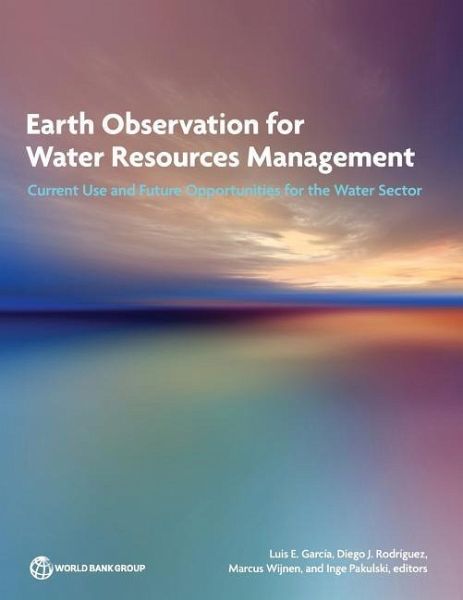
Water systems are building blocks for poverty alleviation, shared growth, sustainable development and green growth strategies. They require data from in-situ observation networks. Budgetary and other constraints have taken a toll on their operation and there are many regions in the world where the data are scarce or unreliable. Increasingly, remote sensing satellite-based earth observation is becoming an alternative. This book briefly describes some key global water challenges, perspectives for remote sensing approaches, and the importance for the World Bank water resources-related activities. It describes eight key types of water resources management variables, a list of sensors that can produce such information and a description of existing data products with examples. This book provides a series of practical guidelines that can be used by project leaders to decide whether remote sensing may be useful for the problem at hand and suitable data sources to consider if so. The book concludes with a review of the literature on reliability statistics of remote-sensed estimations.