
Andere Kunden interessierten sich auch für
 Athen. Architekturführer38,00 €
 Norway. Architectural Guide48,00 €
 Chisinau. Architectural Guide38,00 €
 Chicago. Architectural Guide38,00 €
 Bordeaux. Architekturführer/Guide d'Architecture38,00 €
 Architekturtheorie9,95 €
 Wörterbuch der Architektur7,80 €







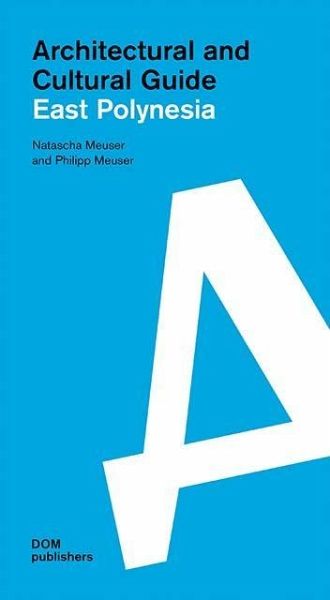
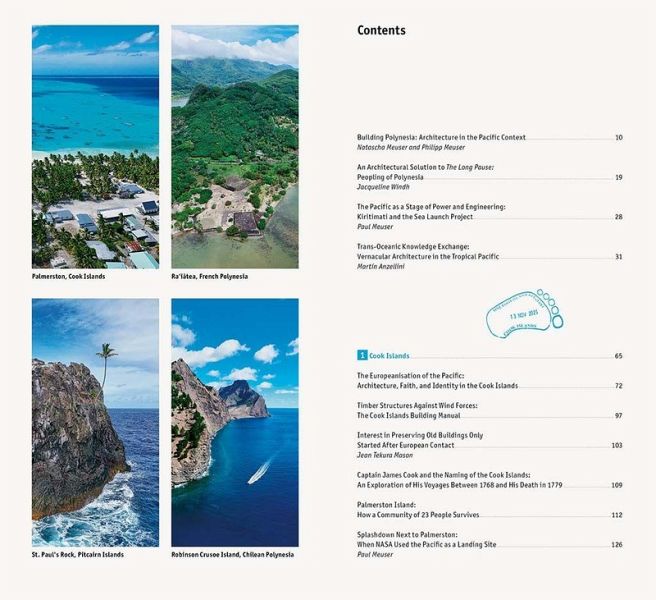
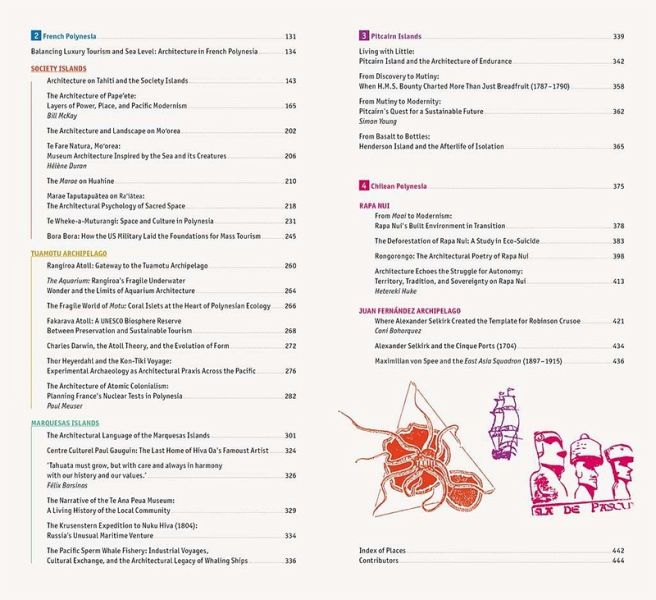
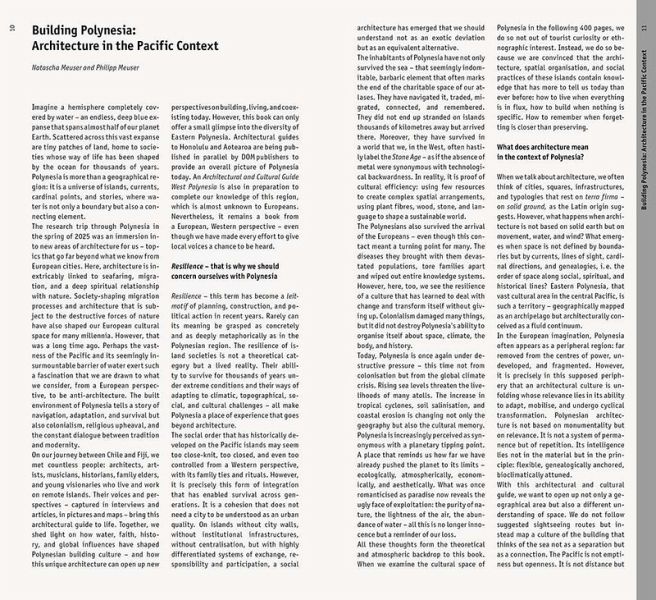
This Architectural and Cultural Guide East Polynesia challenges the romanticised visions of the South Pacific by critically examining the built environment through the lens of architecture, history, and cultural resilience. Across over 400 richly illustrated pages, it traces how traditional knowledge systems, ecological adaptation, and colonial ruptures have shaped architectural practices from the Cook Islands via French Polynesia and Pitcairn to Rapa Nui in Chilean Polynesia. With contributions from local experts, architects, geologists, and historians, the guide foregrounds the complex entanglements of place, power, and memory. Rather than offering a conventional typological catalogue, it maps networks of meaning: from sacred stone platforms (marae) and climate-responsive vernacular dwellings to the infrastructural legacies of nuclear testing and space-age geopolitics. The Pacific is not portrayed as a void but as a stage of cultural innovation and architectural intelligence. This publication is a carefully curated, research-based exploration of a region where architecture emerges not as monumentality, but as method: flexible, bioclimatic, and socially coded. Aimed at critically minded travellers, scholars, and architects, this volume invites readers to reconsider what architecture can mean in contexts defined not by permanence, but by rhythm, movement, and relational space.