
Andere Kunden interessierten sich auch für
 Eastern Pilgrims;23,99 €
 The Triumphs of Truth, or, The Scripture of True Guide to Zion's Pilgrims; in Which Some of the Most Important Branches of the Christian Theology are21,99 €
 Diary of an Overland Journey From Bombay to England, and of a Year's Residence in Great Britain17,99 €
 The Eastern Alps, Including the Bavarian Highlands, the Tyrol, Salzkammergut, Styria, and Carinthia: Handbook for Travellers26,99 €
 The Story of My Struggles17,99 €
 The Lives of Celebrated Travellers20,99 €
 Holidays in Eastern France18,99 €


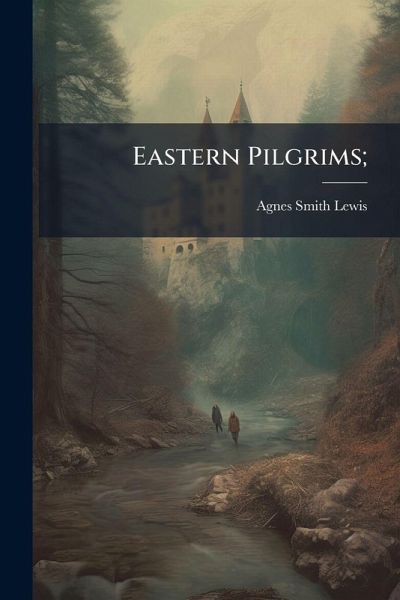
Eastern Pilgrims; recounts Agnes Smith Lewis's travels in the Middle East during the late 19th century. A vivid travelogue, the book offers a glimpse into the Victorian era's fascination with the Holy Land and the broader Near East. Lewis provides detailed descriptions of the landscapes, cultures, and historical sites encountered on her journey, appealing to readers interested in historical travel writing and the experiences of early female travelers. This work has been selected by scholars as being culturally important, and is part of the knowledge base of civilization as we know it. This work was reproduced from the original artifact, and remains as true to the original work as possible. Therefore, you will see the original copyright references, library stamps (as most of these works have been housed in our most important libraries around the world), and other notations in the work. This work is in the public domain in the United States of America, and possibly other nations. Within the United States, you may freely copy and distribute this work, as no entity (individual or corporate) has a copyright on the body of the work. As a reproduction of a historical artifact, this work may contain missing or blurred pages, poor pictures, errant marks, etc. Scholars believe, and we concur, that this work is important enough to be preserved, reproduced, and made generally available to the public. We appreciate your support of the preservation process, and thank you for being an important part of keeping this knowledge alive and relevant.