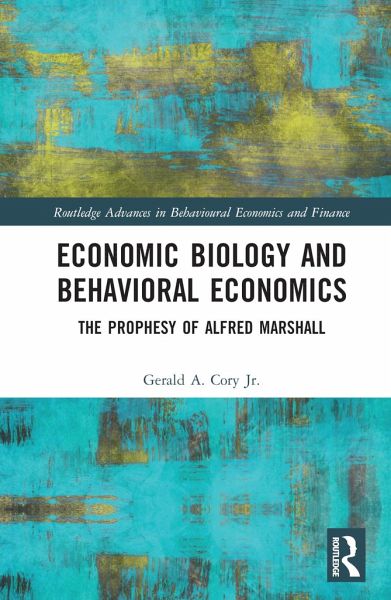
Economic Biology and Behavioral Economics: The Prophesy of Alfred Marsh all explores the prophesy of Alfred Marshall, the grand synthesizer of neoclassical economics, that the "Mecca of the economist lies in economic biology".
Economic Biology and Behavioral Economics: The Prophesy of Alfred Marsh all explores the prophesy of Alfred Marshall, the grand synthesizer of neoclassical economics, that the "Mecca of the economist lies in economic biology".
Gerald A. Cory, Jr., Former Senior Fellow, Graduate Studies and Research, San Jose State University (Retired)
Inhaltsangabe
Chapter 1: Introduction Part 1: The Biological Fundamentals Chapter 2: Foundations: Evolutionary Brain Science in the 21st Century Chapter 3: Our Mammalian Heritage: A Dual Motive Neurobehavioural Model Chapter 4: The Dynamic Algorithms of Social Behaviour Chapter 5: The Physiology of Social Behaviour Chapter 6: The Organic, Homeostatic Equation of our Neural Architecture Chapter 7: Physics vs. Social Science: Some Differences Part 2: Biological Linkages to the Discipline of Economics Chapter 8: Family, Gift, and Market Chapter 9: Adam Smith and the Market Chapter 10: The Invisible Hand as a Neural Algorithm Chapter 11: General Equilibrium Theory: From Newtonian Physics to Organic Dynamics Chapter 12: The Social Brain and the Idealized Version of Price Theory Chapter 13: Calculus and Neural Algorithms in Price Theory Chapter 14: Further Application of the Basic Homeostatic Equation to Economics Chapter 15: Self-Interest and the Fallacy of Self-Reference Chapter 16: Hayek: Wishful Thinking and a not so Spontaneous Order Chapter 17: Nash: Modeling Equilibrium with Beautiful Mind, Beautiful Equations Part 3: The Wider Context Chapter 18: The Emergence and Promise of Neuroeconomics Chapter 19: The Larger Context: The Stiff Upper Lip, Original Sin, and Western Science Chapter 20: Evolutionary Neuroethology and Inclusive Fitness Chapter 21: Social Exchange and the Structure of Society Chapter 22: Conclusion
Chapter 1: Introduction Part 1: The Biological Fundamentals Chapter 2: Foundations: Evolutionary Brain Science in the 21st Century Chapter 3: Our Mammalian Heritage: A Dual Motive Neurobehavioural Model Chapter 4: The Dynamic Algorithms of Social Behaviour Chapter 5: The Physiology of Social Behaviour Chapter 6: The Organic, Homeostatic Equation of our Neural Architecture Chapter 7: Physics vs. Social Science: Some Differences Part 2: Biological Linkages to the Discipline of Economics Chapter 8: Family, Gift, and Market Chapter 9: Adam Smith and the Market Chapter 10: The Invisible Hand as a Neural Algorithm Chapter 11: General Equilibrium Theory: From Newtonian Physics to Organic Dynamics Chapter 12: The Social Brain and the Idealized Version of Price Theory Chapter 13: Calculus and Neural Algorithms in Price Theory Chapter 14: Further Application of the Basic Homeostatic Equation to Economics Chapter 15: Self-Interest and the Fallacy of Self-Reference Chapter 16: Hayek: Wishful Thinking and a not so Spontaneous Order Chapter 17: Nash: Modeling Equilibrium with Beautiful Mind, Beautiful Equations Part 3: The Wider Context Chapter 18: The Emergence and Promise of Neuroeconomics Chapter 19: The Larger Context: The Stiff Upper Lip, Original Sin, and Western Science Chapter 20: Evolutionary Neuroethology and Inclusive Fitness Chapter 21: Social Exchange and the Structure of Society Chapter 22: Conclusion
Chapter 1: Introduction Part 1: The Biological Fundamentals Chapter 2: Foundations: Evolutionary Brain Science in the 21st Century Chapter 3: Our Mammalian Heritage: A Dual Motive Neurobehavioural Model Chapter 4: The Dynamic Algorithms of Social Behaviour Chapter 5: The Physiology of Social Behaviour Chapter 6: The Organic, Homeostatic Equation of our Neural Architecture Chapter 7: Physics vs. Social Science: Some Differences Part 2: Biological Linkages to the Discipline of Economics Chapter 8: Family, Gift, and Market Chapter 9: Adam Smith and the Market Chapter 10: The Invisible Hand as a Neural Algorithm Chapter 11: General Equilibrium Theory: From Newtonian Physics to Organic Dynamics Chapter 12: The Social Brain and the Idealized Version of Price Theory Chapter 13: Calculus and Neural Algorithms in Price Theory Chapter 14: Further Application of the Basic Homeostatic Equation to Economics Chapter 15: Self-Interest and the Fallacy of Self-Reference Chapter 16: Hayek: Wishful Thinking and a not so Spontaneous Order Chapter 17: Nash: Modeling Equilibrium with Beautiful Mind, Beautiful Equations Part 3: The Wider Context Chapter 18: The Emergence and Promise of Neuroeconomics Chapter 19: The Larger Context: The Stiff Upper Lip, Original Sin, and Western Science Chapter 20: Evolutionary Neuroethology and Inclusive Fitness Chapter 21: Social Exchange and the Structure of Society Chapter 22: Conclusion
Chapter 1: Introduction Part 1: The Biological Fundamentals Chapter 2: Foundations: Evolutionary Brain Science in the 21st Century Chapter 3: Our Mammalian Heritage: A Dual Motive Neurobehavioural Model Chapter 4: The Dynamic Algorithms of Social Behaviour Chapter 5: The Physiology of Social Behaviour Chapter 6: The Organic, Homeostatic Equation of our Neural Architecture Chapter 7: Physics vs. Social Science: Some Differences Part 2: Biological Linkages to the Discipline of Economics Chapter 8: Family, Gift, and Market Chapter 9: Adam Smith and the Market Chapter 10: The Invisible Hand as a Neural Algorithm Chapter 11: General Equilibrium Theory: From Newtonian Physics to Organic Dynamics Chapter 12: The Social Brain and the Idealized Version of Price Theory Chapter 13: Calculus and Neural Algorithms in Price Theory Chapter 14: Further Application of the Basic Homeostatic Equation to Economics Chapter 15: Self-Interest and the Fallacy of Self-Reference Chapter 16: Hayek: Wishful Thinking and a not so Spontaneous Order Chapter 17: Nash: Modeling Equilibrium with Beautiful Mind, Beautiful Equations Part 3: The Wider Context Chapter 18: The Emergence and Promise of Neuroeconomics Chapter 19: The Larger Context: The Stiff Upper Lip, Original Sin, and Western Science Chapter 20: Evolutionary Neuroethology and Inclusive Fitness Chapter 21: Social Exchange and the Structure of Society Chapter 22: Conclusion
Es gelten unsere Allgemeinen Geschäftsbedingungen: www.buecher.de/agb
Impressum
www.buecher.de ist ein Internetauftritt der buecher.de internetstores GmbH
Geschäftsführung: Monica Sawhney | Roland Kölbl | Günter Hilger
Sitz der Gesellschaft: Batheyer Straße 115 - 117, 58099 Hagen
Postanschrift: Bürgermeister-Wegele-Str. 12, 86167 Augsburg
Amtsgericht Hagen HRB 13257
Steuernummer: 321/5800/1497
USt-IdNr: DE450055826