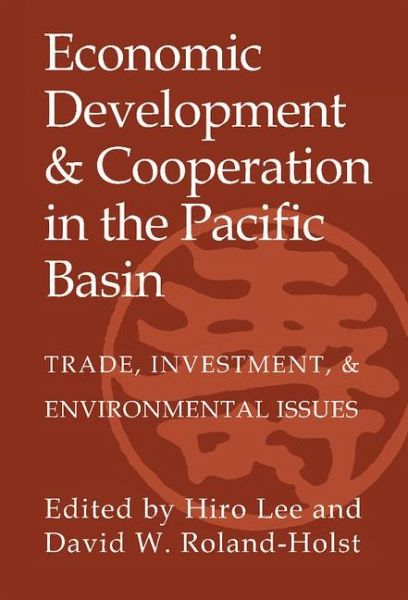
Economic Development and Cooperation in the Pacific Basin
Herausgeber: Lee, Hiro; Roland-Holst, David W.
Economic Development and Cooperation in the Pacific Basin
Herausgeber: Lee, Hiro; Roland-Holst, David W.
- Gebundenes Buch
- Merkliste
- Auf die Merkliste
- Bewerten Bewerten
- Teilen
- Produkt teilen
- Produkterinnerung
- Produkterinnerung
This 1998 text appraises and distils the most important issues facing policy makers around the Pacific Basin.
Andere Kunden interessierten sich auch für
Bertug OzarisoyEnergy Policy Design in the Eastern Mediterranean Basin169,99 €
Jean GrugelPolitics and Development in the Caribbean Basin57,99 €
The Pacific Basin186,99 €
Rami OkaschaWater Scarcity and Regional Security in the Nile Basin17,95 €
Alexander NkengfuaImproving Transboundary Water Governance in the Lake Chad Basin32,99 €
Oil and Climate Change in the Guyana-Suriname Basin172,99 €
Terrence P CooperThe Caribbean Basin25,99 €-
-
-
This 1998 text appraises and distils the most important issues facing policy makers around the Pacific Basin.
Produktdetails
- Produktdetails
- Verlag: Cambridge University Press
- Seitenzahl: 504
- Erscheinungstermin: 28. Januar 2015
- Englisch
- Abmessung: 235mm x 157mm x 34mm
- Gewicht: 961g
- ISBN-13: 9780521583664
- ISBN-10: 0521583667
- Artikelnr.: 21803846
- Herstellerkennzeichnung
- Libri GmbH
- Europaallee 1
- 36244 Bad Hersfeld
- gpsr@libri.de
- Verlag: Cambridge University Press
- Seitenzahl: 504
- Erscheinungstermin: 28. Januar 2015
- Englisch
- Abmessung: 235mm x 157mm x 34mm
- Gewicht: 961g
- ISBN-13: 9780521583664
- ISBN-10: 0521583667
- Artikelnr.: 21803846
- Herstellerkennzeichnung
- Libri GmbH
- Europaallee 1
- 36244 Bad Hersfeld
- gpsr@libri.de
Part I. Introduction and Overview: 1. Prelude to the Pacific century:
overview of the region, leading issues, and methodology Hiro Lee and David
Roland-Holst; Part II. US-Japan and Asian Trade Patterns: 2. Cooperative
approaches to shifting comparative advantage: the case of bilateral trade
between the United States and Japan Hiro Lee and David Roland-Holst;
Comment Peter A. Petri; 3. Is there an Asian export model? Marcus Noland;
Comment Albert Fishlow; Part III. Regional Trading: Arrangements in the
Pacific Basin: 4. Should East Asia go regional? Arvind Panagariya; Comment
Barry Eichengreen; 5. Political feasibility and empirical assessments of a
Pacific free trade area Hiro Lee and David Roland-Holst; Comment Alain de
Janvry; 6. Regionalism in the Pacific basin: strategic interest of ASEAN in
APEC Tan Kong Yam; Comment Pearl Imada Iboshi; Part IV. Foreign Direct
Investment: Determinants and Consequences: 7. The determinants of foreign
direct investment: a survey with application to the United States Peter A.
Petri and Michael G. Plummer; Comment Jeffrey H. Bergstrand; 8. Are trade
and direct investment substitutes or complements? An analysis of the
Japanese manufacturing industry Masahiro Kawai and Shujiro Urata; Comments
Julia Lowell; 9. Korea's outward foreign direct investment and the division
of labor in the Asia-Pacific Jai-Won Ryou; Comment Chung H. Lee; 10.
China's absorption of foreign direct investment Shang-Jin Wei; Comment K.
C. Fung; 11. The impact of foreign investment in Indonesia: historical
trends and simulation analysis Iwan Azis; Comment William E. James; Part V.
Trade Resources and the Environment: 12. Economic development and the
environment in China Wang Huijiong and Li Shantong; Comment Mark
Poffenberger; 13. Outward orientation and the environment in the Pacific
Basin: coordinated trade and environmental policy reform in Mexico John
Beghin, David Roland-Holst, and Dominique van der Mensbrugghe; Comment
David Zilberman and Linda Fernandez.
overview of the region, leading issues, and methodology Hiro Lee and David
Roland-Holst; Part II. US-Japan and Asian Trade Patterns: 2. Cooperative
approaches to shifting comparative advantage: the case of bilateral trade
between the United States and Japan Hiro Lee and David Roland-Holst;
Comment Peter A. Petri; 3. Is there an Asian export model? Marcus Noland;
Comment Albert Fishlow; Part III. Regional Trading: Arrangements in the
Pacific Basin: 4. Should East Asia go regional? Arvind Panagariya; Comment
Barry Eichengreen; 5. Political feasibility and empirical assessments of a
Pacific free trade area Hiro Lee and David Roland-Holst; Comment Alain de
Janvry; 6. Regionalism in the Pacific basin: strategic interest of ASEAN in
APEC Tan Kong Yam; Comment Pearl Imada Iboshi; Part IV. Foreign Direct
Investment: Determinants and Consequences: 7. The determinants of foreign
direct investment: a survey with application to the United States Peter A.
Petri and Michael G. Plummer; Comment Jeffrey H. Bergstrand; 8. Are trade
and direct investment substitutes or complements? An analysis of the
Japanese manufacturing industry Masahiro Kawai and Shujiro Urata; Comments
Julia Lowell; 9. Korea's outward foreign direct investment and the division
of labor in the Asia-Pacific Jai-Won Ryou; Comment Chung H. Lee; 10.
China's absorption of foreign direct investment Shang-Jin Wei; Comment K.
C. Fung; 11. The impact of foreign investment in Indonesia: historical
trends and simulation analysis Iwan Azis; Comment William E. James; Part V.
Trade Resources and the Environment: 12. Economic development and the
environment in China Wang Huijiong and Li Shantong; Comment Mark
Poffenberger; 13. Outward orientation and the environment in the Pacific
Basin: coordinated trade and environmental policy reform in Mexico John
Beghin, David Roland-Holst, and Dominique van der Mensbrugghe; Comment
David Zilberman and Linda Fernandez.
Part I. Introduction and Overview: 1. Prelude to the Pacific century:
overview of the region, leading issues, and methodology Hiro Lee and David
Roland-Holst; Part II. US-Japan and Asian Trade Patterns: 2. Cooperative
approaches to shifting comparative advantage: the case of bilateral trade
between the United States and Japan Hiro Lee and David Roland-Holst;
Comment Peter A. Petri; 3. Is there an Asian export model? Marcus Noland;
Comment Albert Fishlow; Part III. Regional Trading: Arrangements in the
Pacific Basin: 4. Should East Asia go regional? Arvind Panagariya; Comment
Barry Eichengreen; 5. Political feasibility and empirical assessments of a
Pacific free trade area Hiro Lee and David Roland-Holst; Comment Alain de
Janvry; 6. Regionalism in the Pacific basin: strategic interest of ASEAN in
APEC Tan Kong Yam; Comment Pearl Imada Iboshi; Part IV. Foreign Direct
Investment: Determinants and Consequences: 7. The determinants of foreign
direct investment: a survey with application to the United States Peter A.
Petri and Michael G. Plummer; Comment Jeffrey H. Bergstrand; 8. Are trade
and direct investment substitutes or complements? An analysis of the
Japanese manufacturing industry Masahiro Kawai and Shujiro Urata; Comments
Julia Lowell; 9. Korea's outward foreign direct investment and the division
of labor in the Asia-Pacific Jai-Won Ryou; Comment Chung H. Lee; 10.
China's absorption of foreign direct investment Shang-Jin Wei; Comment K.
C. Fung; 11. The impact of foreign investment in Indonesia: historical
trends and simulation analysis Iwan Azis; Comment William E. James; Part V.
Trade Resources and the Environment: 12. Economic development and the
environment in China Wang Huijiong and Li Shantong; Comment Mark
Poffenberger; 13. Outward orientation and the environment in the Pacific
Basin: coordinated trade and environmental policy reform in Mexico John
Beghin, David Roland-Holst, and Dominique van der Mensbrugghe; Comment
David Zilberman and Linda Fernandez.
overview of the region, leading issues, and methodology Hiro Lee and David
Roland-Holst; Part II. US-Japan and Asian Trade Patterns: 2. Cooperative
approaches to shifting comparative advantage: the case of bilateral trade
between the United States and Japan Hiro Lee and David Roland-Holst;
Comment Peter A. Petri; 3. Is there an Asian export model? Marcus Noland;
Comment Albert Fishlow; Part III. Regional Trading: Arrangements in the
Pacific Basin: 4. Should East Asia go regional? Arvind Panagariya; Comment
Barry Eichengreen; 5. Political feasibility and empirical assessments of a
Pacific free trade area Hiro Lee and David Roland-Holst; Comment Alain de
Janvry; 6. Regionalism in the Pacific basin: strategic interest of ASEAN in
APEC Tan Kong Yam; Comment Pearl Imada Iboshi; Part IV. Foreign Direct
Investment: Determinants and Consequences: 7. The determinants of foreign
direct investment: a survey with application to the United States Peter A.
Petri and Michael G. Plummer; Comment Jeffrey H. Bergstrand; 8. Are trade
and direct investment substitutes or complements? An analysis of the
Japanese manufacturing industry Masahiro Kawai and Shujiro Urata; Comments
Julia Lowell; 9. Korea's outward foreign direct investment and the division
of labor in the Asia-Pacific Jai-Won Ryou; Comment Chung H. Lee; 10.
China's absorption of foreign direct investment Shang-Jin Wei; Comment K.
C. Fung; 11. The impact of foreign investment in Indonesia: historical
trends and simulation analysis Iwan Azis; Comment William E. James; Part V.
Trade Resources and the Environment: 12. Economic development and the
environment in China Wang Huijiong and Li Shantong; Comment Mark
Poffenberger; 13. Outward orientation and the environment in the Pacific
Basin: coordinated trade and environmental policy reform in Mexico John
Beghin, David Roland-Holst, and Dominique van der Mensbrugghe; Comment
David Zilberman and Linda Fernandez.