
Andere Kunden interessierten sich auch für
 Economics of the Family156,99 €
 Women's Work in East and West: The Dual Burden of Employment and Family Life222,99 €
 The Romantic Economist43,99 €
 Economic Concepts for the Social Sciences38,99 €
 The New Economics of Human Behaviour113,99 €
 The Economics of Saving and Growth127,99 €
 Profit and Gift in the Digital Economy87,99 €


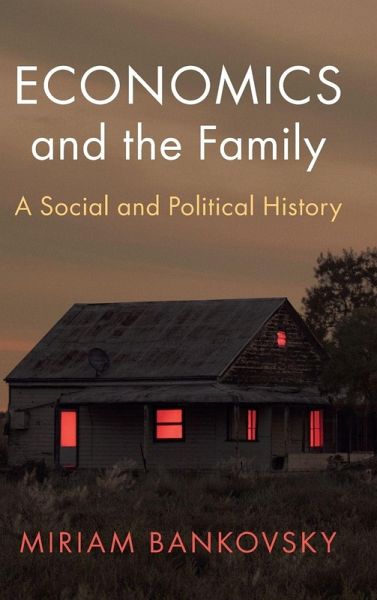
Most economists think family economics began in the 1960s when price theory was applied to family behaviour. Instead, this book focuses on enduring concerns with family poverty across the last two centuries. In nineteenth-century Britain and Europe, economists debated the effects of poverty relief and sought to improve family productivity. In the US, interwar household consumer economists studied how to rationalise family consumption, because factories were producing goods for low-income families. From the 1960s onwards, 'New' household economists attributed family poverty to inadequate human capital investment in predominantly non-white families. Even when feminist, development, and queer economists problematised gendered injustices, they recentred family poverty, targeting the 'pauperisation' of motherhood and the marginalisation of 'families we choose.' Economics and the Family does not simply reconstruct this alternate history, it also shows how economists in all these periods overlooked injustices which must be shouldered today.