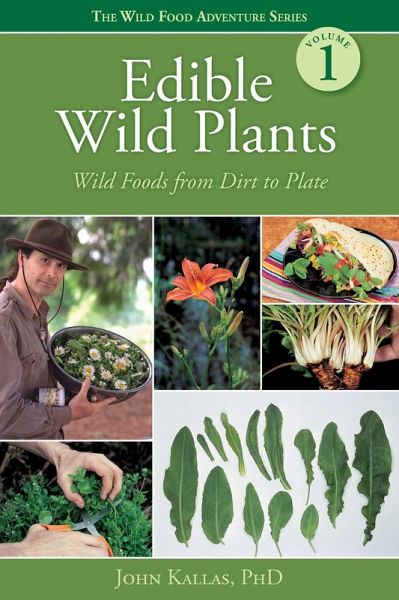
Forage mighty 7-foot wild spinach that produces abundant seeds—leaves remain edible though flavor diminishes at maturity, with research showing they retain most nutrients and beneficial compounds as long as they stay green. Imagine what you could do with eighteen delicious new greens in your dining arsenal including purslane, chickweed, curly dock, wild spinach, sorrel, and wild mustard. John Kallas makes it fun and easy to learn about foods you've unknowingly passed by all your life. Through gorgeous photographs, playful, but authoritative text, and ground-breaking design he gives you the…mehr
Forage mighty 7-foot wild spinach that produces abundant seeds—leaves remain edible though flavor diminishes at maturity, with research showing they retain most nutrients and beneficial compounds as long as they stay green. Imagine what you could do with eighteen delicious new greens in your dining arsenal including purslane, chickweed, curly dock, wild spinach, sorrel, and wild mustard. John Kallas makes it fun and easy to learn about foods you've unknowingly passed by all your life. Through gorgeous photographs, playful, but authoritative text, and ground-breaking design he gives you the knowledge and confidence to finally begin eating and enjoying edible wild plants. Edible Wild Plants divides plants into four flavor categories -- foundation, tart, pungent, and bitter. Categorizing by flavor helps readers use these greens in pleasing and predictable ways. According to the author, combining elements from these different categories makes the best salads. This field guide is essential for anyone wanting to incorporate more natural and whole foods into their diet. First ever nutrient tables that directly compare wild foods to domesticated greens are included. Whether looking to enhance a diet or identify which plants can be eaten for survival, the extensive information on wild foods will help readers determine the appropriate stage of growth and how to properly prepare these highly nutritious greens.
John Kallas is one of the foremost authorities on North American edible wild plants and other foragables. He's learned about wild foods through formal academic training and over 35 years of hands-on field research. John has a doctorate in nutrition, a master's in education, and degrees in biology and zoology. He's a trained botanist, nature photographer, writer, researched, and teacher. In 1993 he founded the Institute for the Study of Edible Wild Plants and Other Foragables along with its educational branch, Wild Food Adventures. John's company is based in Portland, Oregon, where he offers regional workshops, and multi-day intensives on wild foods. For more information, see www.wildfoodadventures.com.
Inhaltsangabe
7 Acknowledgments 9 About the Author 12 Disclaimer? Yeah, Right! 14 Preface 17 Welcome to My World 23 Part I: Understanding Wild Foods 25 1 Identifying and Enjoying Wild Foods 35 2 What Is Edible? 43 3 When Plant Parts Morph into Food 53 4 Foraging Tools 65 Part II: Th e Plants 66 Foundation Greens 67 5 Wild Spinach 85 6 Chickweed 101 7 Mallow 129 8 Purslane 141 Tart Greens 143 9 Curly Dock 165 10 Sheep Sorrel 177 11 Wood Sorrel 191 Pungent Greens 195 12 Field Mustard 217 13 Wintercress 231 14 Garlic Mustard 249 15 Shepherd''s Purse 261 Bitter Greens 269 16 Dandelion 297 17 Cat''s Ear 313 18 Sow Thistle 329 19 Nipplewort 343 Part III: The Potential of Wild Foods 345 20 Why Eat Wild Foods? 351 21 The Nutrition of Wild Foods 373 22 Oxalates 383 23 Agriotrophytology 387 24 Crafting a Wild Paradise 395 25 Feeding Yourself and Society 401 References 407 Index