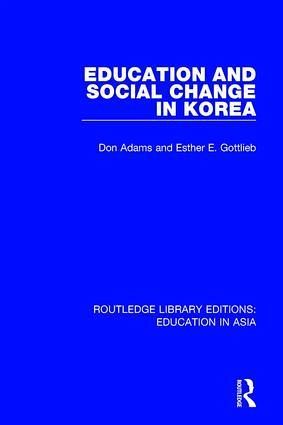
This book, first published in 1993, provides students and scholars with an introduction to Korean education and the dynamics of interchange between the educational system and rapidly changing Korean society. Severe political, social and educational problems may be found in modern Korea.
This book, first published in 1993, provides students and scholars with an introduction to Korean education and the dynamics of interchange between the educational system and rapidly changing Korean society. Severe political, social and educational problems may be found in modern Korea.
1. Historical Roots of Modern Education 1.1. Traditional Educational Patterns 1.2. Introduction of Modern Education 1.3. Period of Japanese Annexation 1.4. Education Under the US Military Government 1.5. Korean Education Under the First and Second Republics, 1948-1961 1.6. Education Goals and Laws 1.7. The Development Decades 2. The Educational System: Structure, Content and Administration 2.1. Formal Education 2.2. Teachers and Teacher Education 2.3. Teachers' Organisations 2.4. Non-formal Education 2.5. Administration of Education 2.6. The Ministry of Education 2.7. Finance 3. Transnational Transfer of Knowledge and its Influences on Korean Education 3.1. The Transnational Knowledge System 3.2. US Influences on Educational Theory and Practice 3.3. The Case of US Teaching Methods in Korea 3.4. Koreans Studying in Western Countries 3.5. Building an Indigenous Knowledge System 4. Educational Policy Making and Planning 4.1. Organisation of Planning and Policy Process 4.2. Sequential Middle-Range Plans 4.3. Policy/Planning/Practice: The Example of Vocational Education 4.4. Long-Term Educational Planning 5. Education, Economic and Social Change 5.1. Educational Growth 5.2. Distribution of Educational Opportunity 5.3. Education and Economic Growth 5.4. Education and Social Change 5.5. Education, Politics and Government 6. Epilogue 6.1. Explaining Educational and Economic Growth 6.2. Educational and Social Problems 6.3. Trends and Strategies 6.4. Goals and Ideology 6.5. Effectiveness and Quality 6.6. Equalising Educational Opportunity
1. Historical Roots of Modern Education 1.1. Traditional Educational Patterns 1.2. Introduction of Modern Education 1.3. Period of Japanese Annexation 1.4. Education Under the US Military Government 1.5. Korean Education Under the First and Second Republics, 1948-1961 1.6. Education Goals and Laws 1.7. The Development Decades 2. The Educational System: Structure, Content and Administration 2.1. Formal Education 2.2. Teachers and Teacher Education 2.3. Teachers' Organisations 2.4. Non-formal Education 2.5. Administration of Education 2.6. The Ministry of Education 2.7. Finance 3. Transnational Transfer of Knowledge and its Influences on Korean Education 3.1. The Transnational Knowledge System 3.2. US Influences on Educational Theory and Practice 3.3. The Case of US Teaching Methods in Korea 3.4. Koreans Studying in Western Countries 3.5. Building an Indigenous Knowledge System 4. Educational Policy Making and Planning 4.1. Organisation of Planning and Policy Process 4.2. Sequential Middle-Range Plans 4.3. Policy/Planning/Practice: The Example of Vocational Education 4.4. Long-Term Educational Planning 5. Education, Economic and Social Change 5.1. Educational Growth 5.2. Distribution of Educational Opportunity 5.3. Education and Economic Growth 5.4. Education and Social Change 5.5. Education, Politics and Government 6. Epilogue 6.1. Explaining Educational and Economic Growth 6.2. Educational and Social Problems 6.3. Trends and Strategies 6.4. Goals and Ideology 6.5. Effectiveness and Quality 6.6. Equalising Educational Opportunity
Es gelten unsere Allgemeinen Geschäftsbedingungen: www.buecher.de/agb
Impressum
www.buecher.de ist ein Internetauftritt der buecher.de internetstores GmbH
Geschäftsführung: Monica Sawhney | Roland Kölbl | Günter Hilger
Sitz der Gesellschaft: Batheyer Straße 115 - 117, 58099 Hagen
Postanschrift: Bürgermeister-Wegele-Str. 12, 86167 Augsburg
Amtsgericht Hagen HRB 13257
Steuernummer: 321/5800/1497
USt-IdNr: DE450055826