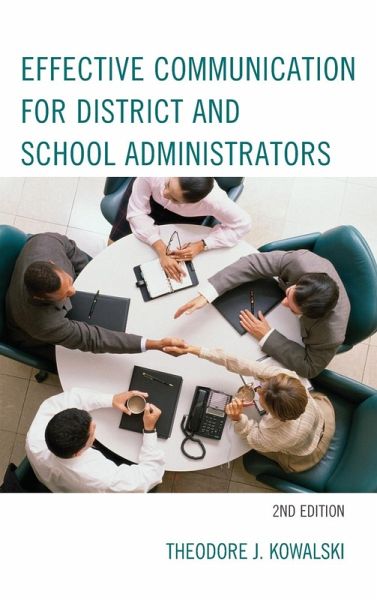
This book is a unique and necessary contribution to the literature on school administration. Research, theory, and practice were melded to produce a book that can be used as a primary or supplemental text or as professional growth resource for practitioners.
This book is a unique and necessary contribution to the literature on school administration. Research, theory, and practice were melded to produce a book that can be used as a primary or supplemental text or as professional growth resource for practitioners.
Theodore J. Kowalski is Professor and the Kuntz Family Endowed Chair in Educational Administration at the University of Dayton. A former teacher, principal, superintendent, and college dean, he is the author of 31 books and approximately200 book chapters, journal articles, and research studies.
Inhaltsangabe
Preface Chapter 1: Communication Basics IntroductionCommunication CharacteristicsFormFlowStatusActionSymmetryTheoretical PerspectivesClassical theoriesHuman relations theoriesSystems theoriesSynthesisReflective questions Chapter 2: Communicating Competently IntroductionCommunicative behaviorInstitutional dimensionPersonal dimensionAvoiding common problemsInsufficient forethoughtOrganizational constraintsPersonal constraintsInadequate evaluationComplementary and Relational CommunicationCommunicative competenceSynthesisReflective Questions Chapter 3: Leadership and Relationships IntroductionUnderstanding LeadershipLeadership, management, and administrationFormal versus informal leadershipImportance of RelationshipsCommunicative behavior and relationshipsRelationships matterSynthesisReflective Questions Chapter 4: Problem Solving, Decision Making, and Critical Thinking IntroductionProblem SolvingProblem framingStagesDecision MakingTypes of decisionsGroup decision makingCritical ThinkingLanguage and communicationReflectionSynthesisReflective Questions Chapter 5: Organizational Communication IntroductionSchools as Loosely Coupled OrganizationsSchools and couplingAdvantages and disadvantages of loose couplingContemporary perspectiveCommunication NetworksFormal versus informal networksBridges or buffersBeneficial propertiesConstructing and applying evidenceEvaluating networksSynthesisReflective Questions Chapter 6: School Governance and Democratic Administration IntroductionCitizen Involvement in School GovernanceDemocratic localismRepresentative democracyCurrent conditionsDemocratic AdministrationHistorical contextThe second coming Democratic administration and communicationSynthesisReflective Questions Chapter 7: Climate, Culture, and the Learning Organization IntroductionSchool Climate Elements Closed and open climatesSchool CultureElementsEffectsCulture and communicationWhy culture change is difficultSchool as a Learning OrganizationOrganizational learningA learning cultureSynthesisReflective Questions Chapter 8: Initiating and Sustaining Planned Change IntroductionContemporary School Reform1983-1989Post 1989Change ProcessesEmpirical-rationalPower-coerciveNormative-reeducativeProcess Issues: Involvement and CommunicationInclusivenessCommunicating appropriatelySynthesisReflective Questions Chapter 9: School Partnerships IntroductionUnderstanding PartnershipsDefinitionLevels of AutonomyOperational CharacteristicsMotivesCommunity stakeholdersEducatorsCollaborating organizations/groupsWhy Partnerships Succeed or FailEffective PracticesPotential PitfallsSynthesisReflective Questions Chapter 10: Managing Conflict IntroductionOrganizational ConflictDefining conflictConflict in schoolsSources, Types, and ContaminantsSources and typesContaminantsManagement System and StrategiesSystemStrategiesConflict Management and CommunicationSynthesisReflective Questions Chapter 11: Conducting a Referendum Campaign IntroductionKey Administrative ResponsibilitiesVerifying the needMarketing Conducting the CampaignOrganizationProcessPotential pitfallsEvaluating outcomesImportance of CommunicationSynthesisReflective Questions Chapter 12: Relationships with Media Personnel IntroductionWorking with JournalistsPreparationMaking relationships positiveInitiating Media CoveragePress releasesPress conferencesElectronic Media InterviewsVideoAudioCrisis CommunicationBefore the crisisDuring the crisisAfter the crisisSynthesisReflective Questions
Preface Chapter 1: Communication Basics IntroductionCommunication CharacteristicsFormFlowStatusActionSymmetryTheoretical PerspectivesClassical theoriesHuman relations theoriesSystems theoriesSynthesisReflective questions Chapter 2: Communicating Competently IntroductionCommunicative behaviorInstitutional dimensionPersonal dimensionAvoiding common problemsInsufficient forethoughtOrganizational constraintsPersonal constraintsInadequate evaluationComplementary and Relational CommunicationCommunicative competenceSynthesisReflective Questions Chapter 3: Leadership and Relationships IntroductionUnderstanding LeadershipLeadership, management, and administrationFormal versus informal leadershipImportance of RelationshipsCommunicative behavior and relationshipsRelationships matterSynthesisReflective Questions Chapter 4: Problem Solving, Decision Making, and Critical Thinking IntroductionProblem SolvingProblem framingStagesDecision MakingTypes of decisionsGroup decision makingCritical ThinkingLanguage and communicationReflectionSynthesisReflective Questions Chapter 5: Organizational Communication IntroductionSchools as Loosely Coupled OrganizationsSchools and couplingAdvantages and disadvantages of loose couplingContemporary perspectiveCommunication NetworksFormal versus informal networksBridges or buffersBeneficial propertiesConstructing and applying evidenceEvaluating networksSynthesisReflective Questions Chapter 6: School Governance and Democratic Administration IntroductionCitizen Involvement in School GovernanceDemocratic localismRepresentative democracyCurrent conditionsDemocratic AdministrationHistorical contextThe second coming Democratic administration and communicationSynthesisReflective Questions Chapter 7: Climate, Culture, and the Learning Organization IntroductionSchool Climate Elements Closed and open climatesSchool CultureElementsEffectsCulture and communicationWhy culture change is difficultSchool as a Learning OrganizationOrganizational learningA learning cultureSynthesisReflective Questions Chapter 8: Initiating and Sustaining Planned Change IntroductionContemporary School Reform1983-1989Post 1989Change ProcessesEmpirical-rationalPower-coerciveNormative-reeducativeProcess Issues: Involvement and CommunicationInclusivenessCommunicating appropriatelySynthesisReflective Questions Chapter 9: School Partnerships IntroductionUnderstanding PartnershipsDefinitionLevels of AutonomyOperational CharacteristicsMotivesCommunity stakeholdersEducatorsCollaborating organizations/groupsWhy Partnerships Succeed or FailEffective PracticesPotential PitfallsSynthesisReflective Questions Chapter 10: Managing Conflict IntroductionOrganizational ConflictDefining conflictConflict in schoolsSources, Types, and ContaminantsSources and typesContaminantsManagement System and StrategiesSystemStrategiesConflict Management and CommunicationSynthesisReflective Questions Chapter 11: Conducting a Referendum Campaign IntroductionKey Administrative ResponsibilitiesVerifying the needMarketing Conducting the CampaignOrganizationProcessPotential pitfallsEvaluating outcomesImportance of CommunicationSynthesisReflective Questions Chapter 12: Relationships with Media Personnel IntroductionWorking with JournalistsPreparationMaking relationships positiveInitiating Media CoveragePress releasesPress conferencesElectronic Media InterviewsVideoAudioCrisis CommunicationBefore the crisisDuring the crisisAfter the crisisSynthesisReflective Questions
Es gelten unsere Allgemeinen Geschäftsbedingungen: www.buecher.de/agb
Impressum
www.buecher.de ist ein Internetauftritt der buecher.de internetstores GmbH
Geschäftsführung: Monica Sawhney | Roland Kölbl | Günter Hilger
Sitz der Gesellschaft: Batheyer Straße 115 - 117, 58099 Hagen
Postanschrift: Bürgermeister-Wegele-Str. 12, 86167 Augsburg
Amtsgericht Hagen HRB 13257
Steuernummer: 321/5800/1497
USt-IdNr: DE450055826