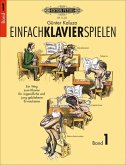
The gradual piano tutorial Einfach Klavier spielen / Treffpunkt Klavier by Günter Kaluza offers a straightforward introduction to playing the piano, even for those with no previous knowledge. The second volume contains exercises and pieces in various musical styles from classical music, folk and country music to pop and world music, as well as some original compositions by the author. Suitable for adolescents and adults, with illustrations by Wilhelm Busch. Das mehrstufige Lehrwerk Einfach Klavier spielen / Treffpunkt Klavier von Günter Kaluza bietet einen komfortablen Einstieg in das…mehr
The gradual piano tutorial Einfach Klavier spielen / Treffpunkt Klavier by Günter Kaluza offers a straightforward introduction to playing the piano, even for those with no previous knowledge. The second volume contains exercises and pieces in various musical styles from classical music, folk and country music to pop and world music, as well as some original compositions by the author. Suitable for adolescents and adults, with illustrations by Wilhelm Busch.
Das mehrstufige Lehrwerk Einfach Klavier spielen / Treffpunkt Klavier von Günter Kaluza bietet einen komfortablen Einstieg in das Klavierspiel, auch ohne Vorkenntnisse. Der 2. Band enthält �bungen und Spielstücke in verschiedenen Musikstilen von Klassik über Folk und Country bis Pop und Weltmusik, ergänzt durch originelle Eigenkompositionen des Autors. Geeignet für Jugendliche und jung gebliebene Erwachsene, mit Illustrationen von Wilhelm Busch.
Wilhelm Busch, 15. 04. 1832 Wiedensahl bei Hannover - 9.01.1908 Mechtshausen bei Seesen. Er brach das 1847 in Hannover begonnene Maschinenbaustudium 1851 ab und schrieb sich stattdessen an der Düsseldorfer Kunstakademie ein. 1852 - 53 setzte er das Studium in Antwerpen fort, 1854 wechselte er nach München. Hier blieb er bis 1868; 1869 bis 1872 wohnte er in Frankfurt a. M., danach in Wiedensahl, bis er 1898 zu seinem Neffen nach Mechtshausen zog. Er konnte sich als Maler nicht durchsetzen, aber als Zeichner und Karikaturist. Mit "Max und Moritz' (1865) begann die Zeit der Bildergeschichten. Wilhelm Busch machte sich auch als Lyriker einen Namen.
Inhaltsangabe
Kaluza, Günter To change Anonym Autumn comes (16. Jahrhundert, aus England) Anonym Mary Hamilton (Traditional) Anonym Glockenspiel (Big Ben [London]) Beethoven, Ludwig van Deutscher Tanz Anonym Klostergarten (aus Griechenland) Anonym Bejvavalo Dobre (Ach, wenn ich doch jung wäre) (aus Tschechien) Anonym Weißt du, wieviel Sternlein stehen (aus Deutschland) Anonym Schwedisches Hirtenlied (aus Dalarna) Händel, Georg Friedrich Passepied Fibich, Zdenko Poem Anonym Were you there? (Spiritual) Anonym Spanish Air Czerny, Carl Andante Anonym This Old Man (Traditional) Mozart, Leopold Menuett Anonym Escondido (aus Argentinien) Beethoven, Ludwig van Russisches Lied (nach: Zehn variierte Themen für Klavier op. 107, Nr. 3 "Air de la petite Russie") Händel, Georg Friedrich Menuett Purcell, Henry A New Scotch Tune Anonym Dat Du min Leevsten büst (Traditional) Anonym Kalamatianos (aus Griechenland) Anonym Volkslied (aus Ungarn) Anonym Tanzlied (aus Frankreich) Kaluza, Günter Have a break Anonym Varjele Vakainen Luoja (Schütze uns zu allen Zeiten) (dorisch, aus Finnland) Anonym Oh Colleen Love (phrygisch, irische Ballade) Kaluza, Günter Elegie (lydisch) Anonym The Cliffs of Dooneen (mixolydisch, irische Ballade) Anonym Frühlingskanon (dorisch, aus Ungarn) Krieger, Johann Menuett Staden, Johann Fries de See (aus Friesland) Visée, Robert de Bourrée Anonym Wisla -Volkslied über die Weichsel- (aus Polen) Anonym Row your boat (aus England) Müller, Wenzel Beschwingt Anonym Deep the silence (aus Wales) Gurlitt, Cornelius Zeit zum Handeln Anonym Daphne (from Anne Cromwell's Virginal Book, 17th Century) Kaluza, Günter Hurry up Kaluza, Günter Sechzehntel Anonym Chisholm Trail (Traditional Folksong) Anonym Oh, Susanna (aus Nordamerika) Bach, Johann Sebastian Aria Parlow, Albert Amboss-Polka Diabelli, Anton Allegretto op. 125 Nr. 10 Anonym Pera stus pera kampus (aus Griechenland) Hässler, Johann Wilhelm Allegro Kaluza, Günter Mes amies Bach, Johann Sebastian Menuett (Aus dem Notenbüchlein für Anna Magdalena Bach, Zuschreibung unsicher) Tárrega, Francisco Estudio Nr. 1 Kaluza, Günter Fanfare Grieg, Edvard In der Halle des Bergkönigs (Thema aus der Peer-Gynt-Suite op. 46, Nr. 4)
Kaluza, Günter To change Anonym Autumn comes (16. Jahrhundert, aus England) Anonym Mary Hamilton (Traditional) Anonym Glockenspiel (Big Ben [London]) Beethoven, Ludwig van Deutscher Tanz Anonym Klostergarten (aus Griechenland) Anonym Bejvavalo Dobre (Ach, wenn ich doch jung wäre) (aus Tschechien) Anonym Weißt du, wieviel Sternlein stehen (aus Deutschland) Anonym Schwedisches Hirtenlied (aus Dalarna) Händel, Georg Friedrich Passepied Fibich, Zdenko Poem Anonym Were you there? (Spiritual) Anonym Spanish Air Czerny, Carl Andante Anonym This Old Man (Traditional) Mozart, Leopold Menuett Anonym Escondido (aus Argentinien) Beethoven, Ludwig van Russisches Lied (nach: Zehn variierte Themen für Klavier op. 107, Nr. 3 "Air de la petite Russie") Händel, Georg Friedrich Menuett Purcell, Henry A New Scotch Tune Anonym Dat Du min Leevsten büst (Traditional) Anonym Kalamatianos (aus Griechenland) Anonym Volkslied (aus Ungarn) Anonym Tanzlied (aus Frankreich) Kaluza, Günter Have a break Anonym Varjele Vakainen Luoja (Schütze uns zu allen Zeiten) (dorisch, aus Finnland) Anonym Oh Colleen Love (phrygisch, irische Ballade) Kaluza, Günter Elegie (lydisch) Anonym The Cliffs of Dooneen (mixolydisch, irische Ballade) Anonym Frühlingskanon (dorisch, aus Ungarn) Krieger, Johann Menuett Staden, Johann Fries de See (aus Friesland) Visée, Robert de Bourrée Anonym Wisla -Volkslied über die Weichsel- (aus Polen) Anonym Row your boat (aus England) Müller, Wenzel Beschwingt Anonym Deep the silence (aus Wales) Gurlitt, Cornelius Zeit zum Handeln Anonym Daphne (from Anne Cromwell's Virginal Book, 17th Century) Kaluza, Günter Hurry up Kaluza, Günter Sechzehntel Anonym Chisholm Trail (Traditional Folksong) Anonym Oh, Susanna (aus Nordamerika) Bach, Johann Sebastian Aria Parlow, Albert Amboss-Polka Diabelli, Anton Allegretto op. 125 Nr. 10 Anonym Pera stus pera kampus (aus Griechenland) Hässler, Johann Wilhelm Allegro Kaluza, Günter Mes amies Bach, Johann Sebastian Menuett (Aus dem Notenbüchlein für Anna Magdalena Bach, Zuschreibung unsicher) Tárrega, Francisco Estudio Nr. 1 Kaluza, Günter Fanfare Grieg, Edvard In der Halle des Bergkönigs (Thema aus der Peer-Gynt-Suite op. 46, Nr. 4)
Es gelten unsere Allgemeinen Geschäftsbedingungen: www.buecher.de/agb
Impressum
www.buecher.de ist ein Internetauftritt der buecher.de internetstores GmbH
Geschäftsführung: Monica Sawhney | Roland Kölbl | Günter Hilger
Sitz der Gesellschaft: Batheyer Straße 115 - 117, 58099 Hagen
Postanschrift: Bürgermeister-Wegele-Str. 12, 86167 Augsburg
Amtsgericht Hagen HRB 13257
Steuernummer: 321/5800/1497
USt-IdNr: DE450055826