
Andere Kunden interessierten sich auch für
 El Consejer¿¿a de la personal19,99 €
 El C¿¿mo Comprender Y Sana El Abuso16,99 €
 Pour la gloire de Dieu.9,99 €
 Pour la gloire de Dieu.15,99 €
 El Celebremos La Recuperaci¿¿n Gu¿¿a del L¿¿der - Edici¿¿n Revisada25,99 €
 Das Ende der Rastlosigkeit23,00 €
 Das Heilige in allen Dingen22,00 €





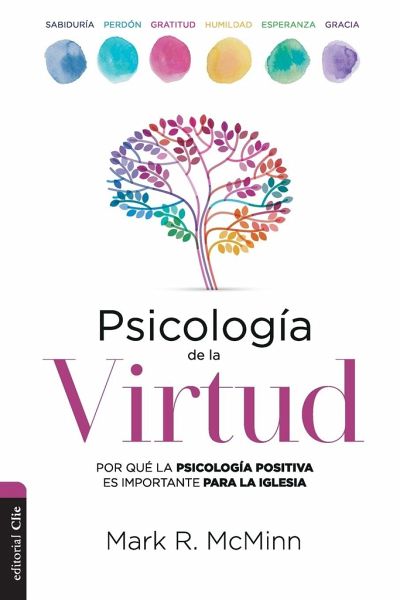
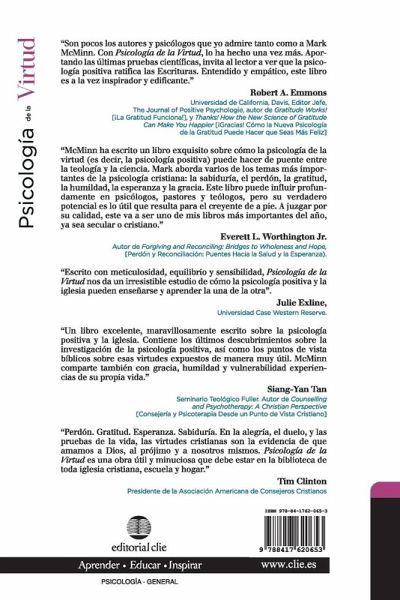
En Psicolog¿¿a de la Virtud, Mark McMinn aclara c¿¿mo la psicolog¿¿a positiva puede complementar la fe cristiana y promover la felicidad y el florecimiento personal. La psicolog¿¿a positiva ayuda a redimir el lenguaje de la virtud. Con la modernidad el discurso sobre la virtud disminuy¿¿, as¿¿ como la capacidad para entender lo que es. Aunque la ciencia no puede recuperar en su plenitud la rica idea que la gente ten¿¿a de la virtud en los siglos pasados, la psicolog¿¿a positiva es un paso en la buena direcci¿¿n. La psicolog¿¿a positiva re¿¿ne la virtud y la ciencia para tratar temas como la esperanza, la capacidad de recuperaci¿¿n, la compasi¿¿n, la gratitud, la tolerancia, el perd¿¿n, la autenticidad, la humildad, la creatividad, la sabidur¿¿a, y muchas cosas m¿¿s. Cada cap¿¿tulo de este libro incluye una secci¿¿n dirigida a los consejeros cristianos que buscan promover la felicidad y la realizaci¿¿n en los dem¿¿s. Este libro te ayudar¿¿ a: Reunir las herramientas necesarias para desarrollar un estado de realizaci¿¿n plena. Comprender por qü¿ la psicolog¿¿a positiva necesita a la iglesia y viceversa. Complementar la consejer¿¿a pastoral con la psicolog¿¿a positiva. Profundizar en temas como la sabidur¿¿a, el perd¿¿n, la gratitud, la humildad, la esperanza, la gracia, desde el punto de vista de la psicolog¿¿a positiva. The Science of Virtue: Why Positive Psychology Matters to the Church In The Science of Virtue: Why Positive Psychology Matters to the Church Mark McMinn clarifies how positive psychology can complement the Christian faith and promote happiness and personal growth. Positive psychology helps redeem the language of virtue. With modernity, the discourse on virtue diminished, as did the ability to understand what it is. Although science cannot fully recover the rich idea that people had of virtue in past centuries, positive psychology is a step in the right direction. Positive psychology brings together virtue and science to address topics such as hope, resilience, compassion, gratitude, tolerance, forgiveness, authenticity, humility, creativity, wisdom, and much more. Each chapter in this book includes a section for Christian counselors seeking to promote happiness and fulfillment in others. This book will help you to: Gather the necessary tools to develop a state of full realization. Understand why positive psychology needs the church and vice versa. Complement pastoral counseling with positive psychology. Delve into topics such as wisdom, forgiveness, gratitude, humility, hope, and grace, from the point of view of positive psychology.