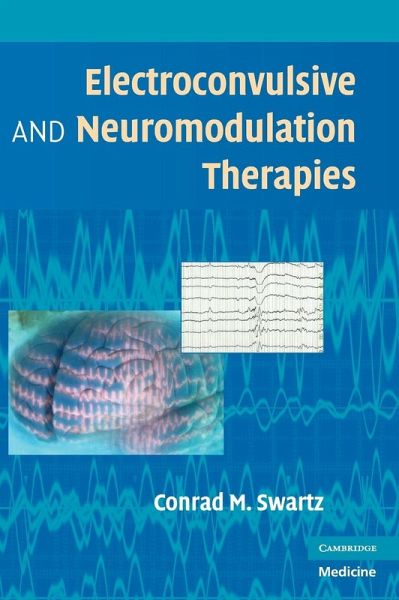
Electroconvulsive and Neuromodulation Therapy
Herausgeber: Swartz, Conrad; Lisanby, Sarah
Electroconvulsive and Neuromodulation Therapy
Herausgeber: Swartz, Conrad; Lisanby, Sarah
- Gebundenes Buch
- Merkliste
- Auf die Merkliste
- Bewerten Bewerten
- Teilen
- Produkt teilen
- Produkterinnerung
- Produkterinnerung
The definitive reference on electroconvulsive and neuromodulation therapy, covering the scientific basis, clinical practice, and administrative perspectives for ECT use.
Andere Kunden interessierten sich auch für
Anesthesia Management for Electroconvulsive Therapy98,99 €
Md Deborah Y. LigganECT AND THE ELDERLY17,99 €
Anesthesia Management for Electroconvulsive Therapy98,99 €
Max FinkElectroconvulsive Therapy36,99 €
Regional Nerve Blocks in Anesthesia and Pain Therapy283,99 €
Topics in Neuromodulation Treatment84,99 €
Ketamine151,99 €-
-
-
The definitive reference on electroconvulsive and neuromodulation therapy, covering the scientific basis, clinical practice, and administrative perspectives for ECT use.
Produktdetails
- Produktdetails
- Verlag: Cambridge University Press
- Seitenzahl: 650
- Erscheinungstermin: 28. Mai 2009
- Englisch
- Abmessung: 260mm x 183mm x 39mm
- Gewicht: 1399g
- ISBN-13: 9780521883887
- ISBN-10: 0521883881
- Artikelnr.: 26033893
- Herstellerkennzeichnung
- Libri GmbH
- Europaallee 1
- 36244 Bad Hersfeld
- gpsr@libri.de
- Verlag: Cambridge University Press
- Seitenzahl: 650
- Erscheinungstermin: 28. Mai 2009
- Englisch
- Abmessung: 260mm x 183mm x 39mm
- Gewicht: 1399g
- ISBN-13: 9780521883887
- ISBN-10: 0521883881
- Artikelnr.: 26033893
- Herstellerkennzeichnung
- Libri GmbH
- Europaallee 1
- 36244 Bad Hersfeld
- gpsr@libri.de
Preface Conrad M. Swartz; Part I. Scientific and Experimental Bases of ECT:
1. ECT and electricity Conrad M. Swartz; 2. Non-electrical convulsive
therapies Niall McCrae; 3. Neurochemical effects of electrically induced
seizures: relevance to the antidepressant mechanism of ECT Renana Eitan,
Bernard Lerer, and Galit Landshut; 4. Hypothesized mechanisms and sites of
action of ECT Nikolaus Michael; 5. Brain imaging and ECT Hal Blumenfeld and
Kathy Peng; 6. Evidence for ECT efficacy in mood disorders Keith Rasmussen;
7. Clinical evidence for the efficacy of ECT in the treatment of catatonia
and psychoses Gabor Gazdag, Gabor Ungvari, Stephan Mann, and Stanley
Caroff; 8. Hormonal effects of ECT Conrad M. Swartz; Part II. Historical,
Societal and Geographic Perspectives: 9. History of electroconvulsive
therapy Edward Shorter; 10. ECT in biographical books and movies Andrew
McDonald and Garry Walter; 11. Professional barriers to offering or
providing electroconvulsive therapy William Reid; 12. Legislation that
regulates, limits or bans ECT Alan Felthous; Part III. International
Perspectives: 13. ECT availability in the United States Barbara Rohland and
Michelle Magid; 14. ECT in Scandinavia and the UK Susan Benbow and Tom
Bolwig; 15. Electroconvulsive therapy in continental western Europe: a
literature review Walter W. van den Broek and Pascal Sienaert; 16. ECT in
Asia Sidney Chang; 17. History of ECT in the Russian Federation Alexander
Nelson and Nataliya Giagou; 18. ECT in Latin America Moacyr Alexandro Rosa
and Marina Odebrecht Rosa; Part IV. Administrative Perspectives: 19. ECT
hospital policy and quality assurance Barry Alan Kramer; 20. Staff
management and physical layout for ECT Jerry Lewis; 21. ECT forms Jerry
Lewis; Part V. The Clinical Manual: 22. Patient selection and ECT
indications Conrad M. Swartz; 23. ECT or antipsychotic drugs (or
benzodiazepines for catatonia) Conrad M. Swartz; 24. Informed consent Peter
Rosenquist; 25. ECT in the medically ill Keith Rasmussen and Paul Mueller;
26. Anesthesia for ECT Charles Kellner, Dongchen Li, and Limore Maron; 27.
Stimulus electrode placement Conrad M. Swartz; 28. Stimulus dosing W.
Vaughn McCall; 29. EEG monitoring and implications Hideki Azuma; 30. ECT
cognitive effects and testing J. Stuart Lawson; 31. ECT methods in children
and adolescents Garry Walter, Colleen Loo, and Joseph Rey; 32. Post-ECT
evaluation and prophylaxis Walter W. van den Broek and Tom K. Birkenhager;
33. Ambulatory and maintenance ECT Charles Kellner and Unnati Patel; Part
VI. Neuromodulation Treatment: 34. Transcranial magnetic stimulation (TMS)
Pinhas Dannon and Oded Rosenberg; 35. Vagus nerve stimulation: indications,
efficacy and methods Mustafa M. Husain, Shawn McClintock, and Kenneth
Trevino; 36. Deep brain stimulation: methods, indications, locations, and
efficacy Thomas Schlaepfer and B. H. Bewernick; 37. Transcranial direct
current stimulation (tDCS) Felipe Fregni and Julie Williams.
1. ECT and electricity Conrad M. Swartz; 2. Non-electrical convulsive
therapies Niall McCrae; 3. Neurochemical effects of electrically induced
seizures: relevance to the antidepressant mechanism of ECT Renana Eitan,
Bernard Lerer, and Galit Landshut; 4. Hypothesized mechanisms and sites of
action of ECT Nikolaus Michael; 5. Brain imaging and ECT Hal Blumenfeld and
Kathy Peng; 6. Evidence for ECT efficacy in mood disorders Keith Rasmussen;
7. Clinical evidence for the efficacy of ECT in the treatment of catatonia
and psychoses Gabor Gazdag, Gabor Ungvari, Stephan Mann, and Stanley
Caroff; 8. Hormonal effects of ECT Conrad M. Swartz; Part II. Historical,
Societal and Geographic Perspectives: 9. History of electroconvulsive
therapy Edward Shorter; 10. ECT in biographical books and movies Andrew
McDonald and Garry Walter; 11. Professional barriers to offering or
providing electroconvulsive therapy William Reid; 12. Legislation that
regulates, limits or bans ECT Alan Felthous; Part III. International
Perspectives: 13. ECT availability in the United States Barbara Rohland and
Michelle Magid; 14. ECT in Scandinavia and the UK Susan Benbow and Tom
Bolwig; 15. Electroconvulsive therapy in continental western Europe: a
literature review Walter W. van den Broek and Pascal Sienaert; 16. ECT in
Asia Sidney Chang; 17. History of ECT in the Russian Federation Alexander
Nelson and Nataliya Giagou; 18. ECT in Latin America Moacyr Alexandro Rosa
and Marina Odebrecht Rosa; Part IV. Administrative Perspectives: 19. ECT
hospital policy and quality assurance Barry Alan Kramer; 20. Staff
management and physical layout for ECT Jerry Lewis; 21. ECT forms Jerry
Lewis; Part V. The Clinical Manual: 22. Patient selection and ECT
indications Conrad M. Swartz; 23. ECT or antipsychotic drugs (or
benzodiazepines for catatonia) Conrad M. Swartz; 24. Informed consent Peter
Rosenquist; 25. ECT in the medically ill Keith Rasmussen and Paul Mueller;
26. Anesthesia for ECT Charles Kellner, Dongchen Li, and Limore Maron; 27.
Stimulus electrode placement Conrad M. Swartz; 28. Stimulus dosing W.
Vaughn McCall; 29. EEG monitoring and implications Hideki Azuma; 30. ECT
cognitive effects and testing J. Stuart Lawson; 31. ECT methods in children
and adolescents Garry Walter, Colleen Loo, and Joseph Rey; 32. Post-ECT
evaluation and prophylaxis Walter W. van den Broek and Tom K. Birkenhager;
33. Ambulatory and maintenance ECT Charles Kellner and Unnati Patel; Part
VI. Neuromodulation Treatment: 34. Transcranial magnetic stimulation (TMS)
Pinhas Dannon and Oded Rosenberg; 35. Vagus nerve stimulation: indications,
efficacy and methods Mustafa M. Husain, Shawn McClintock, and Kenneth
Trevino; 36. Deep brain stimulation: methods, indications, locations, and
efficacy Thomas Schlaepfer and B. H. Bewernick; 37. Transcranial direct
current stimulation (tDCS) Felipe Fregni and Julie Williams.
Preface Conrad M. Swartz; Part I. Scientific and Experimental Bases of ECT:
1. ECT and electricity Conrad M. Swartz; 2. Non-electrical convulsive
therapies Niall McCrae; 3. Neurochemical effects of electrically induced
seizures: relevance to the antidepressant mechanism of ECT Renana Eitan,
Bernard Lerer, and Galit Landshut; 4. Hypothesized mechanisms and sites of
action of ECT Nikolaus Michael; 5. Brain imaging and ECT Hal Blumenfeld and
Kathy Peng; 6. Evidence for ECT efficacy in mood disorders Keith Rasmussen;
7. Clinical evidence for the efficacy of ECT in the treatment of catatonia
and psychoses Gabor Gazdag, Gabor Ungvari, Stephan Mann, and Stanley
Caroff; 8. Hormonal effects of ECT Conrad M. Swartz; Part II. Historical,
Societal and Geographic Perspectives: 9. History of electroconvulsive
therapy Edward Shorter; 10. ECT in biographical books and movies Andrew
McDonald and Garry Walter; 11. Professional barriers to offering or
providing electroconvulsive therapy William Reid; 12. Legislation that
regulates, limits or bans ECT Alan Felthous; Part III. International
Perspectives: 13. ECT availability in the United States Barbara Rohland and
Michelle Magid; 14. ECT in Scandinavia and the UK Susan Benbow and Tom
Bolwig; 15. Electroconvulsive therapy in continental western Europe: a
literature review Walter W. van den Broek and Pascal Sienaert; 16. ECT in
Asia Sidney Chang; 17. History of ECT in the Russian Federation Alexander
Nelson and Nataliya Giagou; 18. ECT in Latin America Moacyr Alexandro Rosa
and Marina Odebrecht Rosa; Part IV. Administrative Perspectives: 19. ECT
hospital policy and quality assurance Barry Alan Kramer; 20. Staff
management and physical layout for ECT Jerry Lewis; 21. ECT forms Jerry
Lewis; Part V. The Clinical Manual: 22. Patient selection and ECT
indications Conrad M. Swartz; 23. ECT or antipsychotic drugs (or
benzodiazepines for catatonia) Conrad M. Swartz; 24. Informed consent Peter
Rosenquist; 25. ECT in the medically ill Keith Rasmussen and Paul Mueller;
26. Anesthesia for ECT Charles Kellner, Dongchen Li, and Limore Maron; 27.
Stimulus electrode placement Conrad M. Swartz; 28. Stimulus dosing W.
Vaughn McCall; 29. EEG monitoring and implications Hideki Azuma; 30. ECT
cognitive effects and testing J. Stuart Lawson; 31. ECT methods in children
and adolescents Garry Walter, Colleen Loo, and Joseph Rey; 32. Post-ECT
evaluation and prophylaxis Walter W. van den Broek and Tom K. Birkenhager;
33. Ambulatory and maintenance ECT Charles Kellner and Unnati Patel; Part
VI. Neuromodulation Treatment: 34. Transcranial magnetic stimulation (TMS)
Pinhas Dannon and Oded Rosenberg; 35. Vagus nerve stimulation: indications,
efficacy and methods Mustafa M. Husain, Shawn McClintock, and Kenneth
Trevino; 36. Deep brain stimulation: methods, indications, locations, and
efficacy Thomas Schlaepfer and B. H. Bewernick; 37. Transcranial direct
current stimulation (tDCS) Felipe Fregni and Julie Williams.
1. ECT and electricity Conrad M. Swartz; 2. Non-electrical convulsive
therapies Niall McCrae; 3. Neurochemical effects of electrically induced
seizures: relevance to the antidepressant mechanism of ECT Renana Eitan,
Bernard Lerer, and Galit Landshut; 4. Hypothesized mechanisms and sites of
action of ECT Nikolaus Michael; 5. Brain imaging and ECT Hal Blumenfeld and
Kathy Peng; 6. Evidence for ECT efficacy in mood disorders Keith Rasmussen;
7. Clinical evidence for the efficacy of ECT in the treatment of catatonia
and psychoses Gabor Gazdag, Gabor Ungvari, Stephan Mann, and Stanley
Caroff; 8. Hormonal effects of ECT Conrad M. Swartz; Part II. Historical,
Societal and Geographic Perspectives: 9. History of electroconvulsive
therapy Edward Shorter; 10. ECT in biographical books and movies Andrew
McDonald and Garry Walter; 11. Professional barriers to offering or
providing electroconvulsive therapy William Reid; 12. Legislation that
regulates, limits or bans ECT Alan Felthous; Part III. International
Perspectives: 13. ECT availability in the United States Barbara Rohland and
Michelle Magid; 14. ECT in Scandinavia and the UK Susan Benbow and Tom
Bolwig; 15. Electroconvulsive therapy in continental western Europe: a
literature review Walter W. van den Broek and Pascal Sienaert; 16. ECT in
Asia Sidney Chang; 17. History of ECT in the Russian Federation Alexander
Nelson and Nataliya Giagou; 18. ECT in Latin America Moacyr Alexandro Rosa
and Marina Odebrecht Rosa; Part IV. Administrative Perspectives: 19. ECT
hospital policy and quality assurance Barry Alan Kramer; 20. Staff
management and physical layout for ECT Jerry Lewis; 21. ECT forms Jerry
Lewis; Part V. The Clinical Manual: 22. Patient selection and ECT
indications Conrad M. Swartz; 23. ECT or antipsychotic drugs (or
benzodiazepines for catatonia) Conrad M. Swartz; 24. Informed consent Peter
Rosenquist; 25. ECT in the medically ill Keith Rasmussen and Paul Mueller;
26. Anesthesia for ECT Charles Kellner, Dongchen Li, and Limore Maron; 27.
Stimulus electrode placement Conrad M. Swartz; 28. Stimulus dosing W.
Vaughn McCall; 29. EEG monitoring and implications Hideki Azuma; 30. ECT
cognitive effects and testing J. Stuart Lawson; 31. ECT methods in children
and adolescents Garry Walter, Colleen Loo, and Joseph Rey; 32. Post-ECT
evaluation and prophylaxis Walter W. van den Broek and Tom K. Birkenhager;
33. Ambulatory and maintenance ECT Charles Kellner and Unnati Patel; Part
VI. Neuromodulation Treatment: 34. Transcranial magnetic stimulation (TMS)
Pinhas Dannon and Oded Rosenberg; 35. Vagus nerve stimulation: indications,
efficacy and methods Mustafa M. Husain, Shawn McClintock, and Kenneth
Trevino; 36. Deep brain stimulation: methods, indications, locations, and
efficacy Thomas Schlaepfer and B. H. Bewernick; 37. Transcranial direct
current stimulation (tDCS) Felipe Fregni and Julie Williams.