- Broschiertes Buch
- Merkliste
- Auf die Merkliste
- Bewerten Bewerten
- Teilen
- Produkt teilen
- Produkterinnerung
- Produkterinnerung
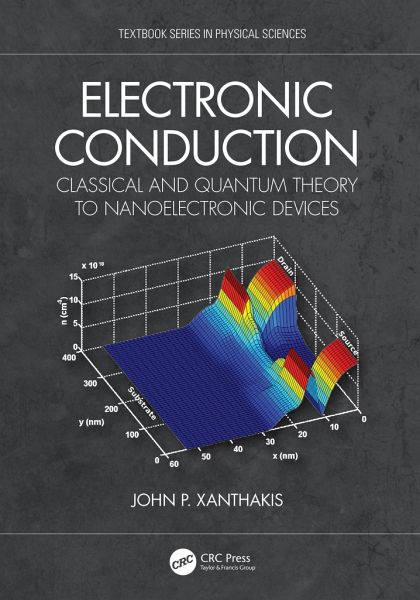
Electronic Conduction: Classical and Quantum Theory to Nanoelectronic Devices provides a concise, complete introduction to the fundamental principles of electronic conduction in microelectronic and nanoelectronic devices, with an emphasis on integrating the quantum aspects of conduction.
The chapter coverage begins by presenting the classical theory of conduction, including introductory chapters on quantum mechanics and the solid state, then moving to a complete presentation of essential theory for understanding modern electronic devices. The author's unique approach is applicable to…mehr
Andere Kunden interessierten sich auch für
Vinod Kumar KhannaIntroductory Nanoelectronics45,99 €
Vinod Kumar KhannaIntroductory Nanoelectronics154,99 €
Vitalii DugaevModern Semiconductor Physics and Device Applications51,99 €
Matthew D. McCluskeyDopants and Defects in Semiconductors51,99 €
Sharon Ann HolgateUnderstanding Solid State Physics107,99 €
Greg ParkerIntroductory Semiconductor Device Physics64,99 €
Manoj Kumar Majumder (IIIT, Chhattisgarh, India)Introduction to Microelectronics to Nanoelectronics135,99 €-
-
-
Electronic Conduction: Classical and Quantum Theory to Nanoelectronic Devices provides a concise, complete introduction to the fundamental principles of electronic conduction in microelectronic and nanoelectronic devices, with an emphasis on integrating the quantum aspects of conduction.
The chapter coverage begins by presenting the classical theory of conduction, including introductory chapters on quantum mechanics and the solid state, then moving to a complete presentation of essential theory for understanding modern electronic devices. The author's unique approach is applicable to microscale and nanoscale device simulation, which is particularly timely given the explosion in the nanoelectronics field.
Features
Self-contained
Gives a complete account of classical and quantum aspects of conduction in nanometer scale devices
Emphasises core principles, the book can be useful to electrical engineers and material scientists, and no prior course in semiconductors is necessary
Highlights the bridge to modern electronics, first presenting the physics, and then the engineering complications related to quantum behaviour
Includes many clear, illustrative diagrams and chapter problem sets
Gives an account of post-Silicon devices such as the GaAs MOSFET, the CNT-FET and the vacuum transistor
Showcases why quantum mechanics is necessary with modern devices due to their size and corresponding electron transport properties
Discusses all the issues that will enable readers to conduct their own research
The chapter coverage begins by presenting the classical theory of conduction, including introductory chapters on quantum mechanics and the solid state, then moving to a complete presentation of essential theory for understanding modern electronic devices. The author's unique approach is applicable to microscale and nanoscale device simulation, which is particularly timely given the explosion in the nanoelectronics field.
Features
Self-contained
Gives a complete account of classical and quantum aspects of conduction in nanometer scale devices
Emphasises core principles, the book can be useful to electrical engineers and material scientists, and no prior course in semiconductors is necessary
Highlights the bridge to modern electronics, first presenting the physics, and then the engineering complications related to quantum behaviour
Includes many clear, illustrative diagrams and chapter problem sets
Gives an account of post-Silicon devices such as the GaAs MOSFET, the CNT-FET and the vacuum transistor
Showcases why quantum mechanics is necessary with modern devices due to their size and corresponding electron transport properties
Discusses all the issues that will enable readers to conduct their own research
Produktdetails
- Produktdetails
- Textbook Series in Physical Sciences
- Verlag: CRC Press / Taylor & Francis
- Seitenzahl: 312
- Erscheinungstermin: 31. Mai 2023
- Englisch
- Abmessung: 254mm x 178mm x 17mm
- Gewicht: 570g
- ISBN-13: 9780367639198
- ISBN-10: 036763919X
- Artikelnr.: 67826183
- Herstellerkennzeichnung
- Libri GmbH
- Europaallee 1
- 36244 Bad Hersfeld
- gpsr@libri.de
- Textbook Series in Physical Sciences
- Verlag: CRC Press / Taylor & Francis
- Seitenzahl: 312
- Erscheinungstermin: 31. Mai 2023
- Englisch
- Abmessung: 254mm x 178mm x 17mm
- Gewicht: 570g
- ISBN-13: 9780367639198
- ISBN-10: 036763919X
- Artikelnr.: 67826183
- Herstellerkennzeichnung
- Libri GmbH
- Europaallee 1
- 36244 Bad Hersfeld
- gpsr@libri.de
John P. Xanthakis obtained his PhD from the Electrical Engineering Department of Imperial College, University of London in 1980. After a period as a post-doctoral fellow at the Mathematics Department of Imperial College he obtained a lectureship at the National Technical University of Athens (NTUA) in 1985. In 1992 - 93 he spent the academic year at Imperial College on sabbatical leave. He was promoted to Professor at NTUA in 1999. He has 50+ papers in peer-reviewed journals and numerous presentations in International Conferences. He is a Senior Member of IEEE, a member of the New York Academy of Sciences and a regular reviewer in many top journals. His main interest is in nanoelectronics, in particular vacuum nanoelectronics.
I. Prerequisites: Quantum Mechanics and The Electronic States in Solids. 1. Quantum Mechanics. 1.1. The two-slit experiment. 1.2. The Schroedinger Equation. 1.3. Particle in a Rectangular Quantum Box. 1.4. Heisenberg's Uncertainty Principle. 1.5. The Pauli Principle and the Fermi Dirac Probability. 1.6. The Hydrogen atom and the atoms of the Periodic Table. 1.7. Barrier Penetration and Tunneling. 1.8. Probability Current Density. 2. Electron States in Solids. 2.1. Qualitative Description of Energy Bands in Solids. 2.2. The k-space and Bloch's Theorem. 2.3. The LCAO method. 2.4. Quick Revision of the concept of a Hole and Doping. 2.5. Velocity of electrons in Solids. 2.6. The concept of Effective Mass. 2.7. Concentration of Carriers in Semiconductors and Metals. 2.8. The Effective Mass Equation. II. Theory Of Conduction. 3. Simple Classical Theory of Conduction. 3.1. External voltages and Fermi levels. 3.2. Collisions and drift mobility. 3.3. Mechanisms of scattering. 3.4. Recombination of carriers. 3.5 Diffusion Current. 3.6. Continuity Equations. 3.7. The ideal PN junction at equilibrium. 3.8. The ideal PN junction under bias. 3.9. The non-ideal PN junction. 3.10. The Metal-Semiconductor or Schottky junction. 4. Advanced Classical Theory of conduction. 4.1. The need for a better classical theory of conduction. 4.2. The Boltzman equation. 4.3. Solution of the Boltzman equation by the relaxation time approximation. 4.4. Application of an Electric Field. 4.5. Diffusion Currents. 4.6. General Expression for the Current Density. 4.7. The Seebeck-Thermoelectric Effect. 4.8. Saturation of drift velocity. 4.9. The Gunn Effect and velocity overshoot. 4.10. The classical Hall Effect. Chapter 5. The Quantum Theory of Conduction. 5.1. Critique of the Boltzmann Equation and Regimes of conduction. 5.2. Electronic Structure of Low-dimensional Systems. 5.3. The Landauer Formalism. 5.4. The Effective Mass Equation for Heterostructures. 5.5. Transmission Matrices and Airy Function. 5.6. The Resonant Tunneling Diode RTD. III. Devices. Chapter 6: Field Emission and Vacuum Devices. 6.1. Introduction. 6.2. The One-dimensional WKB Equation. 6.3. Field Emission from Planar Surfaces. 6.4. The Three-dimensional WKB Problem. 6.5. Field Emission from Curved Surfaces. 6.6. The Vacuum Transistor. Chapter 7. The MOSFET. 7.1. Basic Operation. 7.2. Simple Classical Theory of the MOSFET. 7.3. Advanced Classical Theory of the MOSFET. 7.4. Quantum Theory of the MOSFET. 7.5. Time-Dependent Performance and Moores' law. 7.6. Non-Planar Si MOSFETs and the FinFET. Chapter 8. Post -Si FETs. 8.1. Introduction. 8.2. Simple Theory of the HEMT or MODFET. 8.3. Advanced theory of the HEMT. 8.4. The III-V MOSFET. 8.5. The Carbon Nanotube FET, CNTFET. Appendices. A1. Angular Momentum and Spin. A2. Lattice Vibrations. A3. Calculation of Impurity States in Semiconductors. A4. Direct and Indirect Gap Semiconductors and Optical Properties.
I. Prerequisites: Quantum Mechanics and The Electronic States in Solids.
1. Quantum Mechanics. 1.1. The two-slit experiment. 1.2. The Schroedinger
Equation. 1.3. Particle in a Rectangular Quantum Box. 1.4. Heisenberg's
Uncertainty Principle. 1.5. The Pauli Principle and the Fermi Dirac
Probability. 1.6. The Hydrogen atom and the atoms of the Periodic Table.
1.7. Barrier Penetration and Tunneling. 1.8. Probability Current Density.
2. Electron States in Solids. 2.1. Qualitative Description of Energy Bands
in Solids. 2.2. The k-space and Bloch's Theorem. 2.3. The LCAO method. 2.4.
Quick Revision of the concept of a Hole and Doping. 2.5. Velocity of
electrons in Solids. 2.6. The concept of Effective Mass. 2.7. Concentration
of Carriers in Semiconductors and Metals. 2.8. The Effective Mass Equation.
II. Theory Of Conduction. 3. Simple Classical Theory of Conduction. 3.1.
External voltages and Fermi levels. 3.2. Collisions and drift mobility.
3.3. Mechanisms of scattering. 3.4. Recombination of carriers. 3.5
Diffusion Current. 3.6. Continuity Equations. 3.7. The ideal PN junction at
equilibrium. 3.8. The ideal PN junction under bias. 3.9. The non-ideal PN
junction. 3.10. The Metal-Semiconductor or Schottky junction. 4. Advanced
Classical Theory of conduction. 4.1. The need for a better classical theory
of conduction. 4.2. The Boltzman equation. 4.3. Solution of the Boltzman
equation by the relaxation time approximation. 4.4. Application of an
Electric Field. 4.5. Diffusion Currents. 4.6. General Expression for the
Current Density. 4.7. The Seebeck-Thermoelectric Effect. 4.8. Saturation of
drift velocity. 4.9. The Gunn Effect and velocity overshoot. 4.10. The
classical Hall Effect. Chapter 5. The Quantum Theory of Conduction. 5.1.
Critique of the Boltzmann Equation and Regimes of conduction. 5.2.
Electronic Structure of Low-dimensional Systems. 5.3. The Landauer
Formalism. 5.4. The Effective Mass Equation for Heterostructures. 5.5.
Transmission Matrices and Airy Function. 5.6. The Resonant Tunneling Diode
RTD. III. Devices. Chapter 6: Field Emission and Vacuum Devices. 6.1.
Introduction. 6.2. The One-dimensional WKB Equation. 6.3. Field Emission
from Planar Surfaces. 6.4. The Three-dimensional WKB Problem. 6.5. Field
Emission from Curved Surfaces. 6.6. The Vacuum Transistor. Chapter 7. The
MOSFET. 7.1. Basic Operation. 7.2. Simple Classical Theory of the MOSFET.
7.3. Advanced Classical Theory of the MOSFET. 7.4. Quantum Theory of the
MOSFET. 7.5. Time-Dependent Performance and Moores' law. 7.6. Non-Planar Si
MOSFETs and the FinFET. Chapter 8. Post -Si FETs. 8.1. Introduction. 8.2.
Simple Theory of the HEMT or MODFET. 8.3. Advanced theory of the HEMT. 8.4.
The III-V MOSFET. 8.5. The Carbon Nanotube FET, CNTFET. Appendices. A1.
Angular Momentum and Spin. A2. Lattice Vibrations. A3. Calculation of
Impurity States in Semiconductors. A4. Direct and Indirect Gap
Semiconductors and Optical Properties.
1. Quantum Mechanics. 1.1. The two-slit experiment. 1.2. The Schroedinger
Equation. 1.3. Particle in a Rectangular Quantum Box. 1.4. Heisenberg's
Uncertainty Principle. 1.5. The Pauli Principle and the Fermi Dirac
Probability. 1.6. The Hydrogen atom and the atoms of the Periodic Table.
1.7. Barrier Penetration and Tunneling. 1.8. Probability Current Density.
2. Electron States in Solids. 2.1. Qualitative Description of Energy Bands
in Solids. 2.2. The k-space and Bloch's Theorem. 2.3. The LCAO method. 2.4.
Quick Revision of the concept of a Hole and Doping. 2.5. Velocity of
electrons in Solids. 2.6. The concept of Effective Mass. 2.7. Concentration
of Carriers in Semiconductors and Metals. 2.8. The Effective Mass Equation.
II. Theory Of Conduction. 3. Simple Classical Theory of Conduction. 3.1.
External voltages and Fermi levels. 3.2. Collisions and drift mobility.
3.3. Mechanisms of scattering. 3.4. Recombination of carriers. 3.5
Diffusion Current. 3.6. Continuity Equations. 3.7. The ideal PN junction at
equilibrium. 3.8. The ideal PN junction under bias. 3.9. The non-ideal PN
junction. 3.10. The Metal-Semiconductor or Schottky junction. 4. Advanced
Classical Theory of conduction. 4.1. The need for a better classical theory
of conduction. 4.2. The Boltzman equation. 4.3. Solution of the Boltzman
equation by the relaxation time approximation. 4.4. Application of an
Electric Field. 4.5. Diffusion Currents. 4.6. General Expression for the
Current Density. 4.7. The Seebeck-Thermoelectric Effect. 4.8. Saturation of
drift velocity. 4.9. The Gunn Effect and velocity overshoot. 4.10. The
classical Hall Effect. Chapter 5. The Quantum Theory of Conduction. 5.1.
Critique of the Boltzmann Equation and Regimes of conduction. 5.2.
Electronic Structure of Low-dimensional Systems. 5.3. The Landauer
Formalism. 5.4. The Effective Mass Equation for Heterostructures. 5.5.
Transmission Matrices and Airy Function. 5.6. The Resonant Tunneling Diode
RTD. III. Devices. Chapter 6: Field Emission and Vacuum Devices. 6.1.
Introduction. 6.2. The One-dimensional WKB Equation. 6.3. Field Emission
from Planar Surfaces. 6.4. The Three-dimensional WKB Problem. 6.5. Field
Emission from Curved Surfaces. 6.6. The Vacuum Transistor. Chapter 7. The
MOSFET. 7.1. Basic Operation. 7.2. Simple Classical Theory of the MOSFET.
7.3. Advanced Classical Theory of the MOSFET. 7.4. Quantum Theory of the
MOSFET. 7.5. Time-Dependent Performance and Moores' law. 7.6. Non-Planar Si
MOSFETs and the FinFET. Chapter 8. Post -Si FETs. 8.1. Introduction. 8.2.
Simple Theory of the HEMT or MODFET. 8.3. Advanced theory of the HEMT. 8.4.
The III-V MOSFET. 8.5. The Carbon Nanotube FET, CNTFET. Appendices. A1.
Angular Momentum and Spin. A2. Lattice Vibrations. A3. Calculation of
Impurity States in Semiconductors. A4. Direct and Indirect Gap
Semiconductors and Optical Properties.
I. Prerequisites: Quantum Mechanics and The Electronic States in Solids. 1. Quantum Mechanics. 1.1. The two-slit experiment. 1.2. The Schroedinger Equation. 1.3. Particle in a Rectangular Quantum Box. 1.4. Heisenberg's Uncertainty Principle. 1.5. The Pauli Principle and the Fermi Dirac Probability. 1.6. The Hydrogen atom and the atoms of the Periodic Table. 1.7. Barrier Penetration and Tunneling. 1.8. Probability Current Density. 2. Electron States in Solids. 2.1. Qualitative Description of Energy Bands in Solids. 2.2. The k-space and Bloch's Theorem. 2.3. The LCAO method. 2.4. Quick Revision of the concept of a Hole and Doping. 2.5. Velocity of electrons in Solids. 2.6. The concept of Effective Mass. 2.7. Concentration of Carriers in Semiconductors and Metals. 2.8. The Effective Mass Equation. II. Theory Of Conduction. 3. Simple Classical Theory of Conduction. 3.1. External voltages and Fermi levels. 3.2. Collisions and drift mobility. 3.3. Mechanisms of scattering. 3.4. Recombination of carriers. 3.5 Diffusion Current. 3.6. Continuity Equations. 3.7. The ideal PN junction at equilibrium. 3.8. The ideal PN junction under bias. 3.9. The non-ideal PN junction. 3.10. The Metal-Semiconductor or Schottky junction. 4. Advanced Classical Theory of conduction. 4.1. The need for a better classical theory of conduction. 4.2. The Boltzman equation. 4.3. Solution of the Boltzman equation by the relaxation time approximation. 4.4. Application of an Electric Field. 4.5. Diffusion Currents. 4.6. General Expression for the Current Density. 4.7. The Seebeck-Thermoelectric Effect. 4.8. Saturation of drift velocity. 4.9. The Gunn Effect and velocity overshoot. 4.10. The classical Hall Effect. Chapter 5. The Quantum Theory of Conduction. 5.1. Critique of the Boltzmann Equation and Regimes of conduction. 5.2. Electronic Structure of Low-dimensional Systems. 5.3. The Landauer Formalism. 5.4. The Effective Mass Equation for Heterostructures. 5.5. Transmission Matrices and Airy Function. 5.6. The Resonant Tunneling Diode RTD. III. Devices. Chapter 6: Field Emission and Vacuum Devices. 6.1. Introduction. 6.2. The One-dimensional WKB Equation. 6.3. Field Emission from Planar Surfaces. 6.4. The Three-dimensional WKB Problem. 6.5. Field Emission from Curved Surfaces. 6.6. The Vacuum Transistor. Chapter 7. The MOSFET. 7.1. Basic Operation. 7.2. Simple Classical Theory of the MOSFET. 7.3. Advanced Classical Theory of the MOSFET. 7.4. Quantum Theory of the MOSFET. 7.5. Time-Dependent Performance and Moores' law. 7.6. Non-Planar Si MOSFETs and the FinFET. Chapter 8. Post -Si FETs. 8.1. Introduction. 8.2. Simple Theory of the HEMT or MODFET. 8.3. Advanced theory of the HEMT. 8.4. The III-V MOSFET. 8.5. The Carbon Nanotube FET, CNTFET. Appendices. A1. Angular Momentum and Spin. A2. Lattice Vibrations. A3. Calculation of Impurity States in Semiconductors. A4. Direct and Indirect Gap Semiconductors and Optical Properties.
I. Prerequisites: Quantum Mechanics and The Electronic States in Solids.
1. Quantum Mechanics. 1.1. The two-slit experiment. 1.2. The Schroedinger
Equation. 1.3. Particle in a Rectangular Quantum Box. 1.4. Heisenberg's
Uncertainty Principle. 1.5. The Pauli Principle and the Fermi Dirac
Probability. 1.6. The Hydrogen atom and the atoms of the Periodic Table.
1.7. Barrier Penetration and Tunneling. 1.8. Probability Current Density.
2. Electron States in Solids. 2.1. Qualitative Description of Energy Bands
in Solids. 2.2. The k-space and Bloch's Theorem. 2.3. The LCAO method. 2.4.
Quick Revision of the concept of a Hole and Doping. 2.5. Velocity of
electrons in Solids. 2.6. The concept of Effective Mass. 2.7. Concentration
of Carriers in Semiconductors and Metals. 2.8. The Effective Mass Equation.
II. Theory Of Conduction. 3. Simple Classical Theory of Conduction. 3.1.
External voltages and Fermi levels. 3.2. Collisions and drift mobility.
3.3. Mechanisms of scattering. 3.4. Recombination of carriers. 3.5
Diffusion Current. 3.6. Continuity Equations. 3.7. The ideal PN junction at
equilibrium. 3.8. The ideal PN junction under bias. 3.9. The non-ideal PN
junction. 3.10. The Metal-Semiconductor or Schottky junction. 4. Advanced
Classical Theory of conduction. 4.1. The need for a better classical theory
of conduction. 4.2. The Boltzman equation. 4.3. Solution of the Boltzman
equation by the relaxation time approximation. 4.4. Application of an
Electric Field. 4.5. Diffusion Currents. 4.6. General Expression for the
Current Density. 4.7. The Seebeck-Thermoelectric Effect. 4.8. Saturation of
drift velocity. 4.9. The Gunn Effect and velocity overshoot. 4.10. The
classical Hall Effect. Chapter 5. The Quantum Theory of Conduction. 5.1.
Critique of the Boltzmann Equation and Regimes of conduction. 5.2.
Electronic Structure of Low-dimensional Systems. 5.3. The Landauer
Formalism. 5.4. The Effective Mass Equation for Heterostructures. 5.5.
Transmission Matrices and Airy Function. 5.6. The Resonant Tunneling Diode
RTD. III. Devices. Chapter 6: Field Emission and Vacuum Devices. 6.1.
Introduction. 6.2. The One-dimensional WKB Equation. 6.3. Field Emission
from Planar Surfaces. 6.4. The Three-dimensional WKB Problem. 6.5. Field
Emission from Curved Surfaces. 6.6. The Vacuum Transistor. Chapter 7. The
MOSFET. 7.1. Basic Operation. 7.2. Simple Classical Theory of the MOSFET.
7.3. Advanced Classical Theory of the MOSFET. 7.4. Quantum Theory of the
MOSFET. 7.5. Time-Dependent Performance and Moores' law. 7.6. Non-Planar Si
MOSFETs and the FinFET. Chapter 8. Post -Si FETs. 8.1. Introduction. 8.2.
Simple Theory of the HEMT or MODFET. 8.3. Advanced theory of the HEMT. 8.4.
The III-V MOSFET. 8.5. The Carbon Nanotube FET, CNTFET. Appendices. A1.
Angular Momentum and Spin. A2. Lattice Vibrations. A3. Calculation of
Impurity States in Semiconductors. A4. Direct and Indirect Gap
Semiconductors and Optical Properties.
1. Quantum Mechanics. 1.1. The two-slit experiment. 1.2. The Schroedinger
Equation. 1.3. Particle in a Rectangular Quantum Box. 1.4. Heisenberg's
Uncertainty Principle. 1.5. The Pauli Principle and the Fermi Dirac
Probability. 1.6. The Hydrogen atom and the atoms of the Periodic Table.
1.7. Barrier Penetration and Tunneling. 1.8. Probability Current Density.
2. Electron States in Solids. 2.1. Qualitative Description of Energy Bands
in Solids. 2.2. The k-space and Bloch's Theorem. 2.3. The LCAO method. 2.4.
Quick Revision of the concept of a Hole and Doping. 2.5. Velocity of
electrons in Solids. 2.6. The concept of Effective Mass. 2.7. Concentration
of Carriers in Semiconductors and Metals. 2.8. The Effective Mass Equation.
II. Theory Of Conduction. 3. Simple Classical Theory of Conduction. 3.1.
External voltages and Fermi levels. 3.2. Collisions and drift mobility.
3.3. Mechanisms of scattering. 3.4. Recombination of carriers. 3.5
Diffusion Current. 3.6. Continuity Equations. 3.7. The ideal PN junction at
equilibrium. 3.8. The ideal PN junction under bias. 3.9. The non-ideal PN
junction. 3.10. The Metal-Semiconductor or Schottky junction. 4. Advanced
Classical Theory of conduction. 4.1. The need for a better classical theory
of conduction. 4.2. The Boltzman equation. 4.3. Solution of the Boltzman
equation by the relaxation time approximation. 4.4. Application of an
Electric Field. 4.5. Diffusion Currents. 4.6. General Expression for the
Current Density. 4.7. The Seebeck-Thermoelectric Effect. 4.8. Saturation of
drift velocity. 4.9. The Gunn Effect and velocity overshoot. 4.10. The
classical Hall Effect. Chapter 5. The Quantum Theory of Conduction. 5.1.
Critique of the Boltzmann Equation and Regimes of conduction. 5.2.
Electronic Structure of Low-dimensional Systems. 5.3. The Landauer
Formalism. 5.4. The Effective Mass Equation for Heterostructures. 5.5.
Transmission Matrices and Airy Function. 5.6. The Resonant Tunneling Diode
RTD. III. Devices. Chapter 6: Field Emission and Vacuum Devices. 6.1.
Introduction. 6.2. The One-dimensional WKB Equation. 6.3. Field Emission
from Planar Surfaces. 6.4. The Three-dimensional WKB Problem. 6.5. Field
Emission from Curved Surfaces. 6.6. The Vacuum Transistor. Chapter 7. The
MOSFET. 7.1. Basic Operation. 7.2. Simple Classical Theory of the MOSFET.
7.3. Advanced Classical Theory of the MOSFET. 7.4. Quantum Theory of the
MOSFET. 7.5. Time-Dependent Performance and Moores' law. 7.6. Non-Planar Si
MOSFETs and the FinFET. Chapter 8. Post -Si FETs. 8.1. Introduction. 8.2.
Simple Theory of the HEMT or MODFET. 8.3. Advanced theory of the HEMT. 8.4.
The III-V MOSFET. 8.5. The Carbon Nanotube FET, CNTFET. Appendices. A1.
Angular Momentum and Spin. A2. Lattice Vibrations. A3. Calculation of
Impurity States in Semiconductors. A4. Direct and Indirect Gap
Semiconductors and Optical Properties.