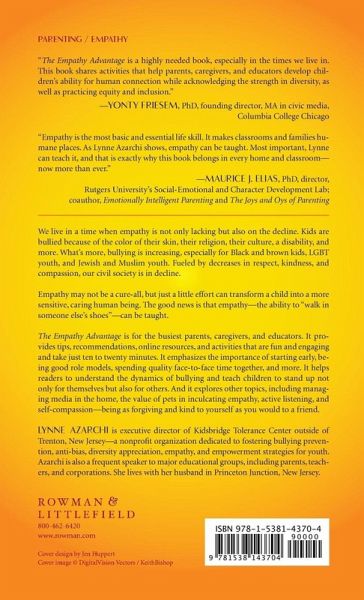
At a time of increased bullying, racism, and intolerance, The Empathy Advantage fills a critical need. This easy-to-use guide helps busy parents and educators teach children of all ages the ability to "walk in someone else's shoes." These people skills last a lifetime and help kids grow into caring, kind, respectful adults, ensuring future success.
At a time of increased bullying, racism, and intolerance, The Empathy Advantage fills a critical need. This easy-to-use guide helps busy parents and educators teach children of all ages the ability to "walk in someone else's shoes." These people skills last a lifetime and help kids grow into caring, kind, respectful adults, ensuring future success.
LYNNE AZARCHI is the former Executive Director of Kidsbridge Youth Center in Ewing, New Jersey-a nonprofit organization dedicated to fostering bullying prevention, empathy, anti-bias, anti-racism and empowerment skills for students. At Kidsbridge, the only evidence-based center dedicated solely to youth in the country, Lynne has managed the education of more than 35,000 children/teens. Lynne is a public speaker at conferences, seminars, associations, and the author of the book: The Empathy Advantage: Coaching Kids to be Kind, Respectful and Successful.
Inhaltsangabe
CONTENTS Acknowledgments Chapter 1 - Why YOU Should Care about Empathy Chapter 2 - Empathy CAN Be Taught Chapter 3 - The Science and Biology of Empathy Chapter 4 - Empathy 101: Defining How Empathy Fits in with Other Emotional Skills Chapter 5 - Empathy, Media, and Social Media Chapter 6 - Parent Tips - Strengthening Moral Compasses Chapter 7 - Teaching Empathy: Infant to Three Years Chapter 8 - Teaching Empathy: Three to Six Years Chapter 9 - Teaching Empathy: Elementary Years Chapter 10 - Teaching Empathy: Middle School Years Chapter 11 - Teaching Empathy: High School Years Chapter 12 - Empathy: Critical for Bullying Prevention Chapter 13 - What Parents Want Chapter 14 - Self-Compassion and Self-Empathy Chapter 15 - Active Listening Chapter 16 - Empathy and Gender Chapter 17 - Empathy's Cousins: Social-Emotional Skills Chapter 18 - Teaching Empathy through Documentary Films, Storytelling, and Photos Chapter 19 - Pets and Empathy Chapter 20 - Heroes and More Heroes Chapter 21 - Empathy and Paying It Forward Last Thoughts Appendices Bibliography
CONTENTS Acknowledgments Chapter 1 - Why YOU Should Care about Empathy Chapter 2 - Empathy CAN Be Taught Chapter 3 - The Science and Biology of Empathy Chapter 4 - Empathy 101: Defining How Empathy Fits in with Other Emotional Skills Chapter 5 - Empathy, Media, and Social Media Chapter 6 - Parent Tips - Strengthening Moral Compasses Chapter 7 - Teaching Empathy: Infant to Three Years Chapter 8 - Teaching Empathy: Three to Six Years Chapter 9 - Teaching Empathy: Elementary Years Chapter 10 - Teaching Empathy: Middle School Years Chapter 11 - Teaching Empathy: High School Years Chapter 12 - Empathy: Critical for Bullying Prevention Chapter 13 - What Parents Want Chapter 14 - Self-Compassion and Self-Empathy Chapter 15 - Active Listening Chapter 16 - Empathy and Gender Chapter 17 - Empathy's Cousins: Social-Emotional Skills Chapter 18 - Teaching Empathy through Documentary Films, Storytelling, and Photos Chapter 19 - Pets and Empathy Chapter 20 - Heroes and More Heroes Chapter 21 - Empathy and Paying It Forward Last Thoughts Appendices Bibliography
Es gelten unsere Allgemeinen Geschäftsbedingungen: www.buecher.de/agb
Impressum
www.buecher.de ist ein Internetauftritt der buecher.de internetstores GmbH
Geschäftsführung: Monica Sawhney | Roland Kölbl | Günter Hilger
Sitz der Gesellschaft: Batheyer Straße 115 - 117, 58099 Hagen
Postanschrift: Bürgermeister-Wegele-Str. 12, 86167 Augsburg
Amtsgericht Hagen HRB 13257
Steuernummer: 321/5800/1497
USt-IdNr: DE450055826