Winner of the 2012 Bancroft Prize in American History Finalist for the 2012 Pulitzer Prize in History To most people living in the West, the Louisiana Purchase made little difference: the United States was just another imperial overlord to be assessed and manipulated. This was not, as Empires, Nations, and Families makes clear, virgin wilderness discovered by virtuous Anglo entrepreneurs. Rather, the United States was a newcomer in a place already complicated by vying empires. This book documents the broad family associations that crossed national and ethnic lines and that, along with the…mehr
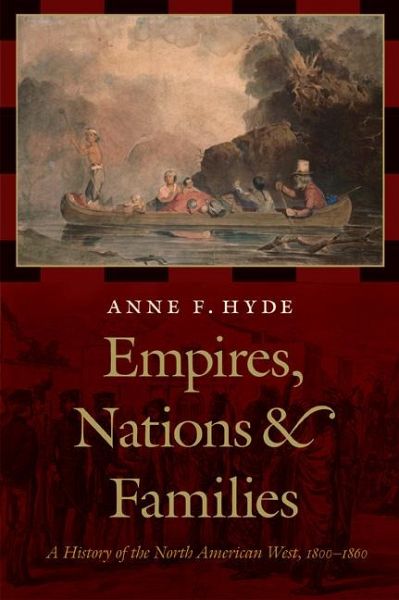
Winner of the 2012 Bancroft Prize in American History Finalist for the 2012 Pulitzer Prize in History To most people living in the West, the Louisiana Purchase made little difference: the United States was just another imperial overlord to be assessed and manipulated. This was not, as Empires, Nations, and Families makes clear, virgin wilderness discovered by virtuous Anglo entrepreneurs. Rather, the United States was a newcomer in a place already complicated by vying empires. This book documents the broad family associations that crossed national and ethnic lines and that, along with the river systems of the trans-Mississippi West, formed the basis for a global trade in furs that had operated for hundreds of years before the land became part of the United States. Empires, Nations, and Families shows how the world of river and maritime trade effectively shifted political power away from military and diplomatic circles into the hands of local people. Tracing family stories from the Canadian North to the Spanish and Mexican borderlands and from the Pacific Coast to the Missouri and Mississippi rivers, Anne F. Hyde’s narrative moves from the earliest years of the Indian trade to the Mexican War and the gold rush era. Her work reveals how, in the 1850s, immigrants to these newest regions of the United States violently wrested control from Native and other powers, and how conquest and competing demands for land and resources brought about a volatile frontier culture-not at all the peace and prosperity that the new power had promised.
Anne F. Hyde is a professor of history at Colorado College. She is the author of An American Vision: Far Western Landscape and National Culture and coauthor, with William Deverell, of The West in the History of the Nation.
Inhaltsangabe
List of Illustrations List of Maps Acknowledgments: Adventures in the Land of the Dead Introduction: The Geography of Empire in 1804 St. Louis Michilimackinac Santa Fe The Pacific Coast Family Stories "Died Single" Why Fur and Why Families? Sources and Definitions Maps and Signposts Part I: Replacing a State: The Continental Web of Family Trade Chapter 1: Families and Fur: The Personal World of the Early American West The Chouteau Family and Missouri River World "Middle Ground" or "Native Ground"? "Tough Love" and Family Loyalty On the Trail of Wealth and Opportunity The Sublette Brothers and Their Family Business Chasing Fortune and Family Americans in Mexico, Californios in America Dangerous Places Chapter 2: Fort Vancouver's Families: The Custom of the Country Cogs in the Fur Trade The Local and Global Communities of the Columbia The Métis World of John McLoughlin The Tentacles of International Trade The McLoughlins and the Company Life and Work on the Columbia Global Ambitions The Fine Mesh of the Family Network Immigrants, Nations, and the Loss of a Family Empire Murder at Fort Stikine and Suicide in California Chapter 3: Three Western Places: Regional Communities and Vecinidad William Bent's Border World Bent's Fort and Its Neighborhood Omens and Weddings Norteños and Yanquis in Alta California Captain Sutter's New Helvetia Dinner and Diplomacy in Northern California Portents of Change Stephen Austin's Border World Planting Colonies in Texas Austin's Fractious Neighborhood PART II: Americans All: The Mixed World of Indian Country Chapter 4: The Early West: The Many Faces of Indian Country Cherokee, Shawnee, and Osage The View from Fort Osage The View from St. Louis Change, Loss, and Warfare on the Missouri The Arikara War Métis and Half-Breed in an Anglo West Chapter 5: Empires in Transition: Indian Country at Midcentury, 1825-1860 Counting Indians Expanding Power The Santa Fe Trail Native Nations and Texas Revolution Retrenchment and Resistance The Osage and Accommodation on the Arkansas Good Fathers and the Fur Trade Captivity Tales and Epidemic Disease PART III: From Nations to Nation: Imposing a State, 1840-1865 Chapter 6: Unintended Consequences: Families, Nations, and the Mexican War What if Guadelupe Boggs married Teresina Carson? Questions of Citizenship and Identity Joseph Smith and the Origins of Mormonism Mexican Revolutions Continental Rumor Factories The Bent Family and the Vagaries of War Bent's Choice Brigham Young and the Choices of War Hard Choices in California The McLoughlins' Choice Chapter 7: Border Wars: Disorder and Disaster in the 1850s The Evolving Fur Trade World Postwar Family and Business on the Arkansas Indian War in the Pacific Northwest Oregon's Bloody Legacy The Failure of Warfare and Washington's Native Nations Nation-Building in the Southwest Raising Families and Fighting Wars Chapter 8: The State and its Handmaidens: Imposing Order Civil Threats and the Mormons The Personal Politics of Polygamy and Theocracy The Almost War and the Massacre in Utah Conquest and Chaos in California A Nation of Squatters While Kansas Bled and Native People Fled The Pesky Details of Popular Sovereignty A National Horror Show The Minnesota Uprising of 1862 Sand Creek and the Bent Family Nightmare Epilogue: How it All Turned Out Sonoma Los Angeles Taos The Arkansas River Oregon St. Louis Kawsmouth Notes Bibliography Index
List of Illustrations List of Maps Acknowledgments: Adventures in the Land of the Dead Introduction: The Geography of Empire in 1804 St. Louis Michilimackinac Santa Fe The Pacific Coast Family Stories "Died Single" Why Fur and Why Families? Sources and Definitions Maps and Signposts Part I: Replacing a State: The Continental Web of Family Trade Chapter 1: Families and Fur: The Personal World of the Early American West The Chouteau Family and Missouri River World "Middle Ground" or "Native Ground"? "Tough Love" and Family Loyalty On the Trail of Wealth and Opportunity The Sublette Brothers and Their Family Business Chasing Fortune and Family Americans in Mexico, Californios in America Dangerous Places Chapter 2: Fort Vancouver's Families: The Custom of the Country Cogs in the Fur Trade The Local and Global Communities of the Columbia The Métis World of John McLoughlin The Tentacles of International Trade The McLoughlins and the Company Life and Work on the Columbia Global Ambitions The Fine Mesh of the Family Network Immigrants, Nations, and the Loss of a Family Empire Murder at Fort Stikine and Suicide in California Chapter 3: Three Western Places: Regional Communities and Vecinidad William Bent's Border World Bent's Fort and Its Neighborhood Omens and Weddings Norteños and Yanquis in Alta California Captain Sutter's New Helvetia Dinner and Diplomacy in Northern California Portents of Change Stephen Austin's Border World Planting Colonies in Texas Austin's Fractious Neighborhood PART II: Americans All: The Mixed World of Indian Country Chapter 4: The Early West: The Many Faces of Indian Country Cherokee, Shawnee, and Osage The View from Fort Osage The View from St. Louis Change, Loss, and Warfare on the Missouri The Arikara War Métis and Half-Breed in an Anglo West Chapter 5: Empires in Transition: Indian Country at Midcentury, 1825-1860 Counting Indians Expanding Power The Santa Fe Trail Native Nations and Texas Revolution Retrenchment and Resistance The Osage and Accommodation on the Arkansas Good Fathers and the Fur Trade Captivity Tales and Epidemic Disease PART III: From Nations to Nation: Imposing a State, 1840-1865 Chapter 6: Unintended Consequences: Families, Nations, and the Mexican War What if Guadelupe Boggs married Teresina Carson? Questions of Citizenship and Identity Joseph Smith and the Origins of Mormonism Mexican Revolutions Continental Rumor Factories The Bent Family and the Vagaries of War Bent's Choice Brigham Young and the Choices of War Hard Choices in California The McLoughlins' Choice Chapter 7: Border Wars: Disorder and Disaster in the 1850s The Evolving Fur Trade World Postwar Family and Business on the Arkansas Indian War in the Pacific Northwest Oregon's Bloody Legacy The Failure of Warfare and Washington's Native Nations Nation-Building in the Southwest Raising Families and Fighting Wars Chapter 8: The State and its Handmaidens: Imposing Order Civil Threats and the Mormons The Personal Politics of Polygamy and Theocracy The Almost War and the Massacre in Utah Conquest and Chaos in California A Nation of Squatters While Kansas Bled and Native People Fled The Pesky Details of Popular Sovereignty A National Horror Show The Minnesota Uprising of 1862 Sand Creek and the Bent Family Nightmare Epilogue: How it All Turned Out Sonoma Los Angeles Taos The Arkansas River Oregon St. Louis Kawsmouth Notes Bibliography Index
Es gelten unsere Allgemeinen Geschäftsbedingungen: www.buecher.de/agb
Impressum
www.buecher.de ist ein Internetauftritt der buecher.de internetstores GmbH
Geschäftsführung: Monica Sawhney | Roland Kölbl | Günter Hilger
Sitz der Gesellschaft: Batheyer Straße 115 - 117, 58099 Hagen
Postanschrift: Bürgermeister-Wegele-Str. 12, 86167 Augsburg
Amtsgericht Hagen HRB 13257
Steuernummer: 321/5800/1497
USt-IdNr: DE450055826