
Andere Kunden interessierten sich auch für
 Representative Words151,99 €
 The American Open Road102,99 €
 The Saddest Words12,99 €
 Everyday Words and the Character of Prose in Nineteenth-Century Britain109,99 €
 This Business of Words70,99 €
 The Weather and the Words92,99 €
 Think on my Words22,99 €







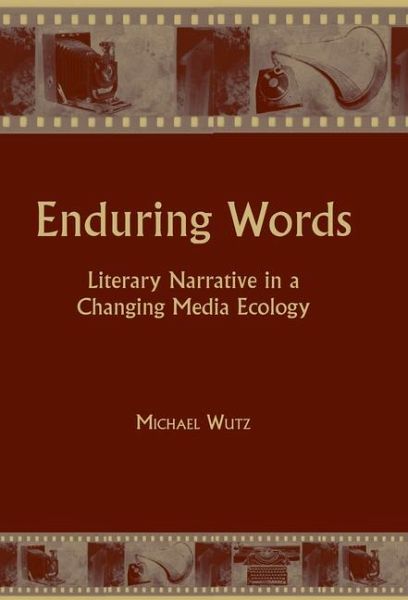
WINNER OF THE SUSANNE K. LANGER AWARD FOR OUTSTANDING SCHOLARSHIP IN THE ECOLOGY OF SYMBOLIC FORM, SPONSORED BY THE MEDIA ECOLOGY ASSOCIATION. With its rich historical scope, theoretical rigor, and optimistic outlook, Enduring Words is an essential resource for scholars and readers interested in the symbiotic evolution of literature and media. In Enduring Words, Michael Wutz embarks on a profound, interdisciplinary journey through the history of narrative fiction, examining how the literary novel has not only survived but thrived amid successive media revolutions--from phonographs and photography to cinema and digital technologies. Far from merely succumbing to the rise of film, sound recording, and electronic media, Wutz argues that the novel has reinvented itself as an "extension of thought," providing a unique space for interiority and autonomous subjectivity in contrast to the data-intensive modalities of new media. Through 8 meticulously structured chapters, Wutz weaves together historical analysis, literary criticism, and media theory. He explores how innovations in technologies--from the photograph and typewriter to the computer--have left their traces in narrative form, while highlighting the novel's evolving mnemonic and reflective capacities. Drawing on modernist writers like Frank Norris, E.L. Doctorow, Richard Powers, and the cosmopolitan Malcolm Lowry, he offers close readings that reveal the thematic and structural imprints of media on literary texts. Rejecting both technological determinism and anti-humanist perspectives, Wutz builds on--but also diverges from--the work of Friedrich Kittler and other critical media theorists. Instead, he presents a nuanced argument affirming the novel's capacity to adapt, persist, and embody human interiority, even within a media ecology increasingly dominated by visual and data-driven forms.