
Andere Kunden interessierten sich auch für
 Microbial Fuel Cells: Electricity Generation From Waste Water52,99 €
 Electricity Generation from Sewage for Shirpur City27,99 €
") Currents Of High Potential Of High And Other Frequencies (1918)30,99 €
Currents Of High Potential Of High And Other Frequencies (1918)30,99 € Rule of the Robots11,99 €
 Circular Economy and Efficient Use of Resources46,99 €
 coupled simulations of innovative enhanced geothermal systems for heat and electricity production as well as energy storage") Thermo-Hydro-Mechanical (THM) coupled simulations of innovative enhanced geothermal systems for heat and electricity production as well as energy storage55,80 €
Thermo-Hydro-Mechanical (THM) coupled simulations of innovative enhanced geothermal systems for heat and electricity production as well as energy storage55,80 € Predictors of Electricity Efficiency in the U.S. Buildings Sector40,99 €



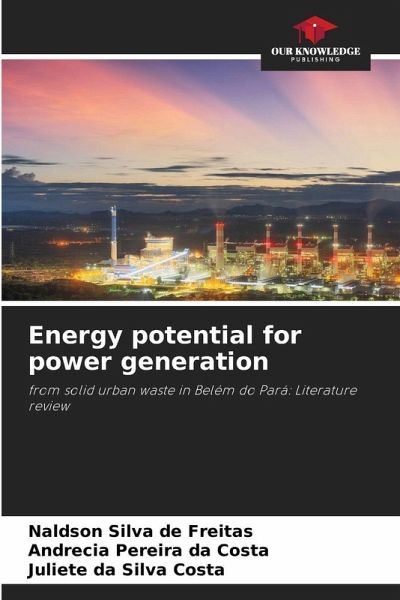
The disposal of Municipal Solid Waste (MSW) is a task that requires careful management and planning. management and planning, the biggest challenge being to find a solution that is both economically viable and environmentally sustainable. The city of Belém, one of the largest cities in the state of Pará, faces its own problems in terms of the management and final destination of urban solid waste, and as it is a very populous city, it consequently generates a high level of MSW. However, through the data collected in this study, it was observed that MSW can be reused as a source of energy with the help of evolving mechanisms and appropriate management practices. The aim of this study was to search the literature for methodologies/resources that present Belém do Pará's energy potential for generating electricity from municipal solid waste