- Broschiertes Buch
- Merkliste
- Auf die Merkliste
- Bewerten Bewerten
- Teilen
- Produkt teilen
- Produkterinnerung
- Produkterinnerung
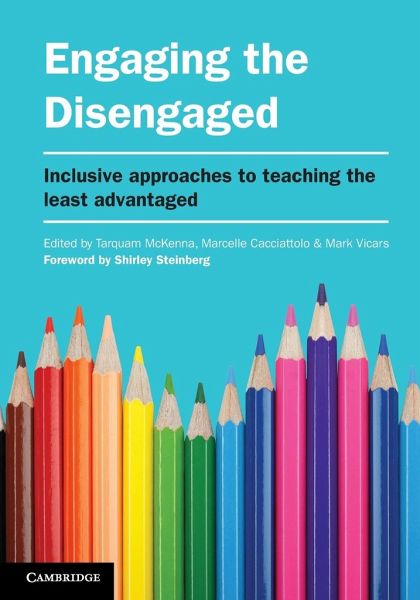
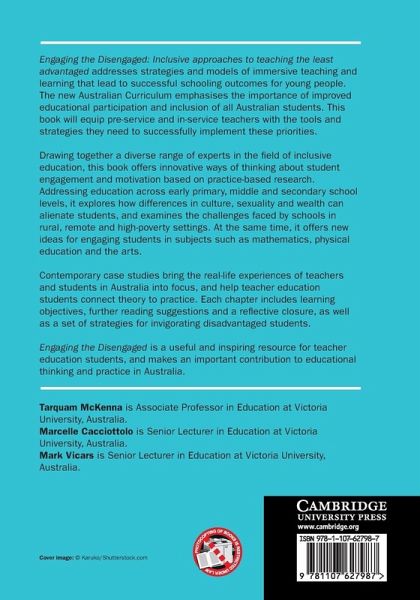
Addresses strategies and models of immersive teaching and learning that lead to successful schooling outcomes for the least advantaged students.
Andere Kunden interessierten sich auch für
Lois Brown EastonEngaging the Disengaged40,99 €
Sara L. HartmanThe Middle of Somewhere34,99 €
Ruth WilsonNaturally Inclusive32,99 €
Engaging Students With Disabilities in Remote Learning Environments150,99 €
Richard WinefieldNever the Twain Shall Meet25,99 €
Mapping the Field50,99 €
Peter GrayThe Harm of Coercive Schooling10,99 €-
-
-
Addresses strategies and models of immersive teaching and learning that lead to successful schooling outcomes for the least advantaged students.
Produktdetails
- Produktdetails
- Verlag: Cambridge University Press
- Seitenzahl: 254
- Erscheinungstermin: 17. Januar 2013
- Englisch
- Abmessung: 254mm x 178mm x 14mm
- Gewicht: 489g
- ISBN-13: 9781107627987
- ISBN-10: 1107627982
- Artikelnr.: 37467291
- Herstellerkennzeichnung
- Libri GmbH
- Europaallee 1
- 36244 Bad Hersfeld
- gpsr@libri.de
- Verlag: Cambridge University Press
- Seitenzahl: 254
- Erscheinungstermin: 17. Januar 2013
- Englisch
- Abmessung: 254mm x 178mm x 14mm
- Gewicht: 489g
- ISBN-13: 9781107627987
- ISBN-10: 1107627982
- Artikelnr.: 37467291
- Herstellerkennzeichnung
- Libri GmbH
- Europaallee 1
- 36244 Bad Hersfeld
- gpsr@libri.de
Foreword: are the engaged really engaged? Shirley Steinberg; Introduction:
exclusion: a habit that's hard to kick Roger Slee; Part I. The Digital
Divide as a Tool for Inclusion: 1. Accommodating new learning in different
school cultures Greg Neal; 2. Technology and social inclusion: rethinking
the digital divide Nicola Yelland; Part II. Engagement in the Early Years:
3. The early years: reconnecting families with preschool education Andrea
Nolan; Part III. Curriculum-Based Engagement: 4. Arts education: do the
arts really matter? Tarquam McKenna; 5. Bringing joy and success to
students and teachers through student-centered teaching of mathematics
Colleen Vale and Sharon Livy; 6. Physical education: promoting healthy
living in the classroom Anthony Watt; 7. Literacy: who needs books? There
not 'kewl' Mark Vicars; Part IV. Agents of Change and Student Wellbeing: 8.
Fostering collaborative partnerships: one school's approach Marcelle
Cacciattolo; 9. Natural environments for learning: effecting change in
classrooms and the community Cathryn Carpenter and Peter Burridge; 10.
Sexualities: gays and lesbians as outsiders? Mark Vicars and Tarquam
McKenna; 11. Indigenous Australia: ontologies, epistemologies and
pedagogies Davina Woods; 12. Positive education: pathways to achieving
social and academic success Jeanne Carroll and Marcelle Cacciattolo;
Conclusion: Creating purposeful, optimistic learning engagements Tarquam
McKenna.
exclusion: a habit that's hard to kick Roger Slee; Part I. The Digital
Divide as a Tool for Inclusion: 1. Accommodating new learning in different
school cultures Greg Neal; 2. Technology and social inclusion: rethinking
the digital divide Nicola Yelland; Part II. Engagement in the Early Years:
3. The early years: reconnecting families with preschool education Andrea
Nolan; Part III. Curriculum-Based Engagement: 4. Arts education: do the
arts really matter? Tarquam McKenna; 5. Bringing joy and success to
students and teachers through student-centered teaching of mathematics
Colleen Vale and Sharon Livy; 6. Physical education: promoting healthy
living in the classroom Anthony Watt; 7. Literacy: who needs books? There
not 'kewl' Mark Vicars; Part IV. Agents of Change and Student Wellbeing: 8.
Fostering collaborative partnerships: one school's approach Marcelle
Cacciattolo; 9. Natural environments for learning: effecting change in
classrooms and the community Cathryn Carpenter and Peter Burridge; 10.
Sexualities: gays and lesbians as outsiders? Mark Vicars and Tarquam
McKenna; 11. Indigenous Australia: ontologies, epistemologies and
pedagogies Davina Woods; 12. Positive education: pathways to achieving
social and academic success Jeanne Carroll and Marcelle Cacciattolo;
Conclusion: Creating purposeful, optimistic learning engagements Tarquam
McKenna.
Foreword: are the engaged really engaged? Shirley Steinberg; Introduction:
exclusion: a habit that's hard to kick Roger Slee; Part I. The Digital
Divide as a Tool for Inclusion: 1. Accommodating new learning in different
school cultures Greg Neal; 2. Technology and social inclusion: rethinking
the digital divide Nicola Yelland; Part II. Engagement in the Early Years:
3. The early years: reconnecting families with preschool education Andrea
Nolan; Part III. Curriculum-Based Engagement: 4. Arts education: do the
arts really matter? Tarquam McKenna; 5. Bringing joy and success to
students and teachers through student-centered teaching of mathematics
Colleen Vale and Sharon Livy; 6. Physical education: promoting healthy
living in the classroom Anthony Watt; 7. Literacy: who needs books? There
not 'kewl' Mark Vicars; Part IV. Agents of Change and Student Wellbeing: 8.
Fostering collaborative partnerships: one school's approach Marcelle
Cacciattolo; 9. Natural environments for learning: effecting change in
classrooms and the community Cathryn Carpenter and Peter Burridge; 10.
Sexualities: gays and lesbians as outsiders? Mark Vicars and Tarquam
McKenna; 11. Indigenous Australia: ontologies, epistemologies and
pedagogies Davina Woods; 12. Positive education: pathways to achieving
social and academic success Jeanne Carroll and Marcelle Cacciattolo;
Conclusion: Creating purposeful, optimistic learning engagements Tarquam
McKenna.
exclusion: a habit that's hard to kick Roger Slee; Part I. The Digital
Divide as a Tool for Inclusion: 1. Accommodating new learning in different
school cultures Greg Neal; 2. Technology and social inclusion: rethinking
the digital divide Nicola Yelland; Part II. Engagement in the Early Years:
3. The early years: reconnecting families with preschool education Andrea
Nolan; Part III. Curriculum-Based Engagement: 4. Arts education: do the
arts really matter? Tarquam McKenna; 5. Bringing joy and success to
students and teachers through student-centered teaching of mathematics
Colleen Vale and Sharon Livy; 6. Physical education: promoting healthy
living in the classroom Anthony Watt; 7. Literacy: who needs books? There
not 'kewl' Mark Vicars; Part IV. Agents of Change and Student Wellbeing: 8.
Fostering collaborative partnerships: one school's approach Marcelle
Cacciattolo; 9. Natural environments for learning: effecting change in
classrooms and the community Cathryn Carpenter and Peter Burridge; 10.
Sexualities: gays and lesbians as outsiders? Mark Vicars and Tarquam
McKenna; 11. Indigenous Australia: ontologies, epistemologies and
pedagogies Davina Woods; 12. Positive education: pathways to achieving
social and academic success Jeanne Carroll and Marcelle Cacciattolo;
Conclusion: Creating purposeful, optimistic learning engagements Tarquam
McKenna.