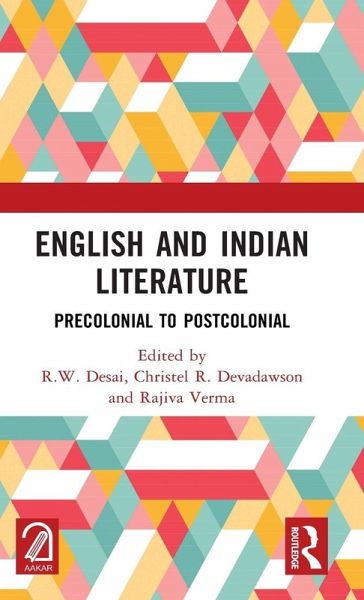
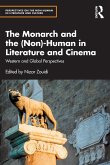
Written in the memory of Professor G.K. Das and divided into three sections, this book takes on special significance as India reflects on the ever-changing prospects ahead of the first seventy-five years of independence. The subject matter in this book outlines the relationship between texts and the larger cultural context that they shape (and that, in turn, shapes them). It also presents a comparison of the relationship between events and the written word, or between lines of inquiry and the various kinds of writing that articulate them. The first section discusses British and Indian…mehr
Written in the memory of Professor G.K. Das and divided into three sections, this book takes on special significance as India reflects on the ever-changing prospects ahead of the first seventy-five years of independence.
The subject matter in this book outlines the relationship between texts and the larger cultural context that they shape (and that, in turn, shapes them). It also presents a comparison of the relationship between events and the written word, or between lines of inquiry and the various kinds of writing that articulate them. The first section discusses British and Indian writers of the precolonial and colonial periods. The essays in the second section reflect on the question: Does the emergent nation-state seem at all like the visions that presaged it, or does it increasingly resemble the imperialistic nightmare that it seeks to replace? Finally, the last section explores the relationship between literature and human nature and also discusses the framing discourse on literature and the environment. The collection closes with a previously unpublished essay by Professor Das that brings to the forefront one of the most urgent global issues of today - the troubling relationship between humanity and an ecologically fragile environment within which it functions.
Print edition not for sale in South Asia (India, Sri Lanka, Nepal, Bangladesh, Pakistan or Bhutan)
R.W. Desai was Professor at the University of Delhi, India and Editor of the journal Hamlet Studies from 1970 to 2003. Christel R. Devadawson is Professor, Department of English, University of Delhi, India. She has also been Head of the English Department at St. Stephen's College, and at Delhi University. Rajiva Varma was Professor of English at the University of Delhi, India. He is a founding member and a former President of the Shakespeare Society India.
Inhaltsangabe
Introduction Acknowledgements I. Precolonial and Colonial Engagements 1. The 'Clever Wife' in All's Well That Ends Well and Two Indian Texts 2. John Stuart Mill's Views on the Teaching of English in India: A Reassessment from a Postcolonial Perspective 3. Tagore's Critique of the Alienation of Pure Art from the Human in Western Modernity 4. Sultana's Dream and Tagore's Nightmare: A Gender Perspective on Dreams for Social Change 5. 'The Comprehensiveness of Sympathy'-Gender and Species in Tagore 6. An Indian Judge, an English Gentlewoman, and India's Freedom Struggle 7. Five Approaches to A Passage to India 8. Interrogating History and Myth as Affirmative Strategies in L.H. Myers' The Near and the Far Tetralogy II. Postcolonial Anxieties 9. Babasaheb Ambedkar: Scholar Extraordinaire 10. 'Rival Shakuntalas': Nehru, Jayaprakash Narayan and Shankar's India 11. Gayatri Chakravorty Spivak on Mahasweta Devi: A Critique 12. From Haripir to Haripur: Problems of Plurality in The Assassin's Song 13. For Pepper and Christ: The Dawn of India's Colonization 14. English Studies Then and Now: Some Personal Reflections III. Literature at Large 15. Random Reflections on Literature and the Sacred 16. 'Poor Parsons' Daughters' in Jane Austen, the Brontës and Mrs. Gaskell 17. Christy Hero: The Evolution of the Playboy 18. The 'Strange God?': D.H. Lawrence's Quarrel with Christianity and T.S. Eliot 19. The 'Circumambient World': D.H. Lawrence and Environment Notes on Contributors Index
Introduction Acknowledgements I. Precolonial and Colonial Engagements 1. The 'Clever Wife' in All's Well That Ends Well and Two Indian Texts 2. John Stuart Mill's Views on the Teaching of English in India: A Reassessment from a Postcolonial Perspective 3. Tagore's Critique of the Alienation of Pure Art from the Human in Western Modernity 4. Sultana's Dream and Tagore's Nightmare: A Gender Perspective on Dreams for Social Change 5. 'The Comprehensiveness of Sympathy'-Gender and Species in Tagore 6. An Indian Judge, an English Gentlewoman, and India's Freedom Struggle 7. Five Approaches to A Passage to India 8. Interrogating History and Myth as Affirmative Strategies in L.H. Myers' The Near and the Far Tetralogy II. Postcolonial Anxieties 9. Babasaheb Ambedkar: Scholar Extraordinaire 10. 'Rival Shakuntalas': Nehru, Jayaprakash Narayan and Shankar's India 11. Gayatri Chakravorty Spivak on Mahasweta Devi: A Critique 12. From Haripir to Haripur: Problems of Plurality in The Assassin's Song 13. For Pepper and Christ: The Dawn of India's Colonization 14. English Studies Then and Now: Some Personal Reflections III. Literature at Large 15. Random Reflections on Literature and the Sacred 16. 'Poor Parsons' Daughters' in Jane Austen, the Brontës and Mrs. Gaskell 17. Christy Hero: The Evolution of the Playboy 18. The 'Strange God?': D.H. Lawrence's Quarrel with Christianity and T.S. Eliot 19. The 'Circumambient World': D.H. Lawrence and Environment Notes on Contributors Index
Es gelten unsere Allgemeinen Geschäftsbedingungen: www.buecher.de/agb
Impressum
www.buecher.de ist ein Internetauftritt der buecher.de internetstores GmbH
Geschäftsführung: Monica Sawhney | Roland Kölbl | Günter Hilger
Sitz der Gesellschaft: Batheyer Straße 115 - 117, 58099 Hagen
Postanschrift: Bürgermeister-Wegele-Str. 12, 86167 Augsburg
Amtsgericht Hagen HRB 13257
Steuernummer: 321/5800/1497
USt-IdNr: DE450055826