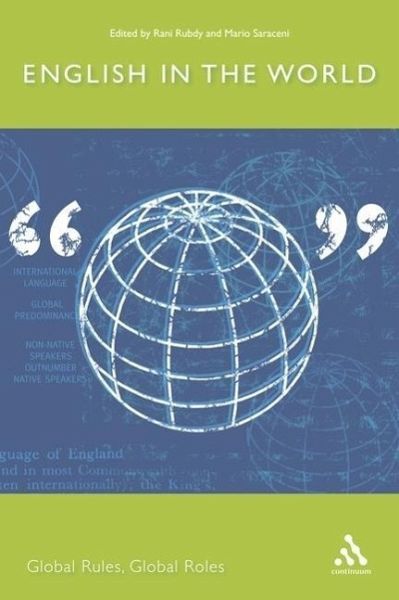
English in the World
Global Rules, Global Roles
Herausgeber: Rubdy, Rani; Saraceni, Mario
English in the World
Global Rules, Global Roles
Herausgeber: Rubdy, Rani; Saraceni, Mario
- Broschiertes Buch
- Merkliste
- Auf die Merkliste
- Bewerten Bewerten
- Teilen
- Produkt teilen
- Produkterinnerung
- Produkterinnerung
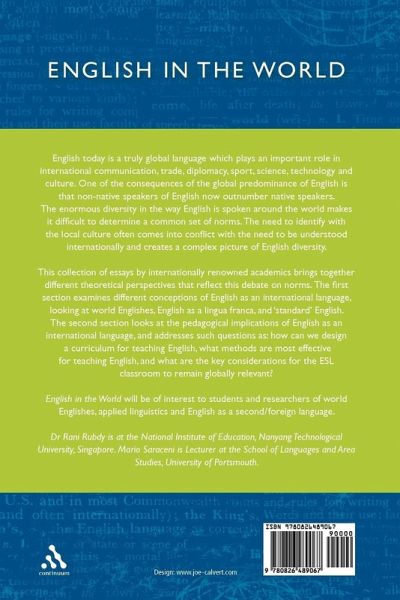
English today is a truly global language which plays an important role in international communication, trade, diplomacy, sport, science, technology and culture. One of the consequences of the global predominance of English is that non-native speakers of E
Andere Kunden interessierten sich auch für
Muhammad IslamReinterpretation of L2 Motivation in the Contemporary World24,99 €
Mona GadAbnormality in the Fallen World of Shirley Jackson's Gothic Horror37,99 €
Nasmeem Farhin AkhtarTHE WORD AND THE WORLD56,99 €
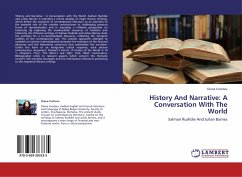
Diana CroitoruHistory And Narrative: A Conversation With The World24,99 €
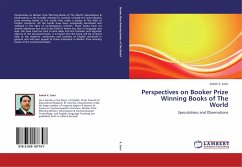
Ashok K. SainiPerspectives on Booker Prize Winning Books of The World52,99 €
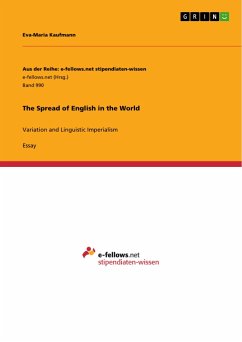
Eva-Maria KaufmannThe Spread of English in the World17,95 €
Mohammed Al-ShormaniL2 Acquisition in the Arab World52,99 €-
-
-
English today is a truly global language which plays an important role in international communication, trade, diplomacy, sport, science, technology and culture. One of the consequences of the global predominance of English is that non-native speakers of E
Produktdetails
- Produktdetails
- Verlag: Continnuum-3PL
- Seitenzahl: 226
- Erscheinungstermin: 25. März 2006
- Englisch
- Abmessung: 234mm x 156mm x 12mm
- Gewicht: 351g
- ISBN-13: 9780826489067
- ISBN-10: 0826489060
- Artikelnr.: 21793303
- Herstellerkennzeichnung
- Libri GmbH
- Europaallee 1
- 36244 Bad Hersfeld
- gpsr@libri.de
- Verlag: Continnuum-3PL
- Seitenzahl: 226
- Erscheinungstermin: 25. März 2006
- Englisch
- Abmessung: 234mm x 156mm x 12mm
- Gewicht: 351g
- ISBN-13: 9780826489067
- ISBN-10: 0826489060
- Artikelnr.: 21793303
- Herstellerkennzeichnung
- Libri GmbH
- Europaallee 1
- 36244 Bad Hersfeld
- gpsr@libri.de
Rani Rubdy is an independent researcher.
Introduction - Rani Rubdy and Mario Saraceni
Part I: Conceptualising EIL
1. An interview with Tom McArthur Rani Rubdy and Mario Saraceni
2. Global intelligibility and local diversity: possibility or paradox?
Jennifer Jenkins, King's College London
3. English as a lingua franca in the expanding circle: what it isn't
Barbara Seidlhofer, Vienna University
4. Defining the 'successful bilingual speaker' of English Luke Prodromou,
freelance teacher
5. Which model of English: Native-speaker, nativised or lingua franca? Andy
Kirkpatrick, Curtin University of Technology, Perth.
6. World Englishes or English as a lingua franca? A view from the
perspective of non-Anglo Englishes Peter Tan, Vincent Ooi and Andy Chiang,
National University of Singapore.
7. Standard English in the World Anthea Fraser Gupta, University of Leeds.
Part II: Pedagogical Implications of EIL
8. EIL curriculum development Sandra McKay, San Francisco State University
9. A multi-dimensional approach to teaching English for the world Brian
Tomlinson, Leeds Metropolitan University
10. Teaching EIL - teaching international or intercultural English? What
teachers should know Nicos Sifakis, Hellenic Open University
11. English as an international language, world Englishes and their
conditions of (im)possibility Ruanni Tupas, National University of
Singapore
12. English in the world does not mean English everywhere: the case for
multilingualism in the ELT/ ESL profession Michael Joseph and Esther
Ramani, University of the North, S Africa
13. An interview with Suresh Canagarajah Rani Rubdy and Mario Saraceni
Part I: Conceptualising EIL
1. An interview with Tom McArthur Rani Rubdy and Mario Saraceni
2. Global intelligibility and local diversity: possibility or paradox?
Jennifer Jenkins, King's College London
3. English as a lingua franca in the expanding circle: what it isn't
Barbara Seidlhofer, Vienna University
4. Defining the 'successful bilingual speaker' of English Luke Prodromou,
freelance teacher
5. Which model of English: Native-speaker, nativised or lingua franca? Andy
Kirkpatrick, Curtin University of Technology, Perth.
6. World Englishes or English as a lingua franca? A view from the
perspective of non-Anglo Englishes Peter Tan, Vincent Ooi and Andy Chiang,
National University of Singapore.
7. Standard English in the World Anthea Fraser Gupta, University of Leeds.
Part II: Pedagogical Implications of EIL
8. EIL curriculum development Sandra McKay, San Francisco State University
9. A multi-dimensional approach to teaching English for the world Brian
Tomlinson, Leeds Metropolitan University
10. Teaching EIL - teaching international or intercultural English? What
teachers should know Nicos Sifakis, Hellenic Open University
11. English as an international language, world Englishes and their
conditions of (im)possibility Ruanni Tupas, National University of
Singapore
12. English in the world does not mean English everywhere: the case for
multilingualism in the ELT/ ESL profession Michael Joseph and Esther
Ramani, University of the North, S Africa
13. An interview with Suresh Canagarajah Rani Rubdy and Mario Saraceni
Introduction - Rani Rubdy and Mario Saraceni
Part I: Conceptualising EIL
1. An interview with Tom McArthur Rani Rubdy and Mario Saraceni
2. Global intelligibility and local diversity: possibility or paradox?
Jennifer Jenkins, King's College London
3. English as a lingua franca in the expanding circle: what it isn't
Barbara Seidlhofer, Vienna University
4. Defining the 'successful bilingual speaker' of English Luke Prodromou,
freelance teacher
5. Which model of English: Native-speaker, nativised or lingua franca? Andy
Kirkpatrick, Curtin University of Technology, Perth.
6. World Englishes or English as a lingua franca? A view from the
perspective of non-Anglo Englishes Peter Tan, Vincent Ooi and Andy Chiang,
National University of Singapore.
7. Standard English in the World Anthea Fraser Gupta, University of Leeds.
Part II: Pedagogical Implications of EIL
8. EIL curriculum development Sandra McKay, San Francisco State University
9. A multi-dimensional approach to teaching English for the world Brian
Tomlinson, Leeds Metropolitan University
10. Teaching EIL - teaching international or intercultural English? What
teachers should know Nicos Sifakis, Hellenic Open University
11. English as an international language, world Englishes and their
conditions of (im)possibility Ruanni Tupas, National University of
Singapore
12. English in the world does not mean English everywhere: the case for
multilingualism in the ELT/ ESL profession Michael Joseph and Esther
Ramani, University of the North, S Africa
13. An interview with Suresh Canagarajah Rani Rubdy and Mario Saraceni
Part I: Conceptualising EIL
1. An interview with Tom McArthur Rani Rubdy and Mario Saraceni
2. Global intelligibility and local diversity: possibility or paradox?
Jennifer Jenkins, King's College London
3. English as a lingua franca in the expanding circle: what it isn't
Barbara Seidlhofer, Vienna University
4. Defining the 'successful bilingual speaker' of English Luke Prodromou,
freelance teacher
5. Which model of English: Native-speaker, nativised or lingua franca? Andy
Kirkpatrick, Curtin University of Technology, Perth.
6. World Englishes or English as a lingua franca? A view from the
perspective of non-Anglo Englishes Peter Tan, Vincent Ooi and Andy Chiang,
National University of Singapore.
7. Standard English in the World Anthea Fraser Gupta, University of Leeds.
Part II: Pedagogical Implications of EIL
8. EIL curriculum development Sandra McKay, San Francisco State University
9. A multi-dimensional approach to teaching English for the world Brian
Tomlinson, Leeds Metropolitan University
10. Teaching EIL - teaching international or intercultural English? What
teachers should know Nicos Sifakis, Hellenic Open University
11. English as an international language, world Englishes and their
conditions of (im)possibility Ruanni Tupas, National University of
Singapore
12. English in the world does not mean English everywhere: the case for
multilingualism in the ELT/ ESL profession Michael Joseph and Esther
Ramani, University of the North, S Africa
13. An interview with Suresh Canagarajah Rani Rubdy and Mario Saraceni