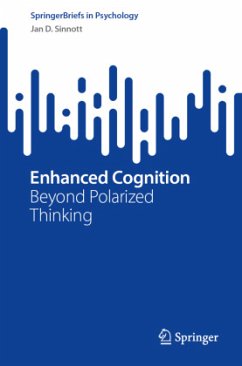
38,99 €
inkl. MwSt.
Versandkostenfrei*Erscheint vorauss. März 2027
Melden Sie sich
hier
hier
für den Produktalarm an, um über die Verfügbarkeit des Produkts informiert zu werden.

19 °P sammeln
Andere Kunden interessierten sich auch für
 Enhanced Cognition38,99 €
 Horizontal and Vertical Racial/Ethnic Discrimination38,99 €
 A History of Psychology in Ten Questions137,99 €
 Vygotsky L.S.33,99 €
 From Clouds to the Brain159,99 €
 A History of Psychology in Ten Questions38,99 €
 Hyper-Work76,99 €



This book analyzes and offers strategies for overcoming polarized thinking across a broad range of subjects, such as culture, politics, biology, social relations, religion and the physical world. Tracing how cognition can lead to either/or thinking, it reveals the nature of binary world views. This kind of thinking is trapped in cortical binaries that result in emotional struggles and limited views rather than a wider perspective on life. It promotes awareness of what can be cognitive limitations involving the fear of openness to experience and the waging battles that might be avoided. A timely publication, this volume fosters understanding and clarity of thinking to key issues of our time, including political divisions, climate change, and spirituality. It will be relevant to personality, clinical, and social psychologists as well as professionals in psychiatry and social work.