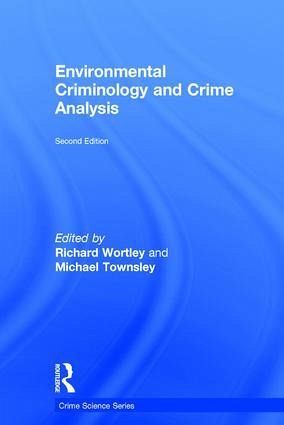
This book brings together key contributions to environmental criminology from leading figures in the field to comprehensively define the field and synthesize its concepts and ideas. It offers a fresh and exciting approach to understanding crime.
This book brings together key contributions to environmental criminology from leading figures in the field to comprehensively define the field and synthesize its concepts and ideas. It offers a fresh and exciting approach to understanding crime.
Richard Wortley is a Professor of Crime Science, and Director of the Jill Dando Institute of Security and Crime Science at University College London, UK. Michael Townsley is an Associate Professor in the School of Criminology and Criminal Justice, Griffith University, Australia.
Inhaltsangabe
Preface to the second edition 1. Introduction (Richard Worley and Michael Townsley) Part I: Understanding the Crime Event 2. The rational choice perspective (Derek B. Cornish and Ronald V. Clarke) 3. Situational Precipitators of Crime (Richard Wortley) 4. The Routine Activity Approach (Marcus Felson) 5. The Geometry of Crime and Crime Pattern Theory (Paul J. Brantingham, Patricia L. Brantingham and Martin A. Andresen) Part II: Analysing Crime Patterns 6. Crime Scripts (Benoit Leclerc) 7. Offender Mobility (Michael Townsley) 8. Geographic Profiling (D. Kim Rossmo and Sacha Rombouts) 9. Repeat Victimisation (Ken Pease and Graham Farrell) 10. Crime Mapping and Spatial Analysis (Shane D. Johnson) Part III: Preventing and Controlling Crime 11. Problem-oriented policing (Michael S. Scott, John E. Eck, Johannes Knutsson and Herman Goldstein) 12. Crime prevention through environmental design (Rachel Armitage) 13. Situational Crime Prevention (Ronald V. Clarke) 14. Designing products against crime (Paul Ekblom) 15. Broken Windows (Michael Wagers, William Sousa and George Kelling)
Preface to the second edition 1. Introduction (Richard Worley and Michael Townsley) Part I: Understanding the Crime Event 2. The rational choice perspective (Derek B. Cornish and Ronald V. Clarke) 3. Situational Precipitators of Crime (Richard Wortley) 4. The Routine Activity Approach (Marcus Felson) 5. The Geometry of Crime and Crime Pattern Theory (Paul J. Brantingham, Patricia L. Brantingham and Martin A. Andresen) Part II: Analysing Crime Patterns 6. Crime Scripts (Benoit Leclerc) 7. Offender Mobility (Michael Townsley) 8. Geographic Profiling (D. Kim Rossmo and Sacha Rombouts) 9. Repeat Victimisation (Ken Pease and Graham Farrell) 10. Crime Mapping and Spatial Analysis (Shane D. Johnson) Part III: Preventing and Controlling Crime 11. Problem-oriented policing (Michael S. Scott, John E. Eck, Johannes Knutsson and Herman Goldstein) 12. Crime prevention through environmental design (Rachel Armitage) 13. Situational Crime Prevention (Ronald V. Clarke) 14. Designing products against crime (Paul Ekblom) 15. Broken Windows (Michael Wagers, William Sousa and George Kelling)
Es gelten unsere Allgemeinen Geschäftsbedingungen: www.buecher.de/agb
Impressum
www.buecher.de ist ein Internetauftritt der buecher.de internetstores GmbH
Geschäftsführung: Monica Sawhney | Roland Kölbl | Günter Hilger
Sitz der Gesellschaft: Batheyer Straße 115 - 117, 58099 Hagen
Postanschrift: Bürgermeister-Wegele-Str. 12, 86167 Augsburg
Amtsgericht Hagen HRB 13257
Steuernummer: 321/5800/1497
USt-IdNr: DE450055826