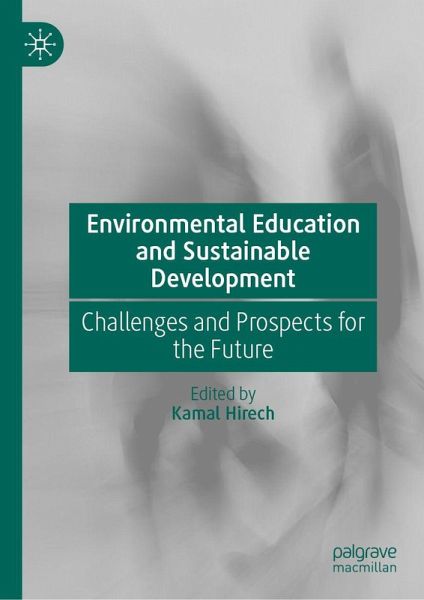
This book explores innovative approaches to environmental education and sustainable development through diverse pedagogical experiences worldwide. It covers key themes such as teacher training in ecological values, environmental education competencies, the use of immersive technologies (virtual and augmented reality), green guidance, and family and community involvement. The chapters highlight the role of ethics, public policy, interdisciplinarity, higher education, and educational clubs in promoting eco-responsible behavior. Case studies and quantitative analyses enrich the volume, addressing…mehr
This book explores innovative approaches to environmental education and sustainable development through diverse pedagogical experiences worldwide. It covers key themes such as teacher training in ecological values, environmental education competencies, the use of immersive technologies (virtual and augmented reality), green guidance, and family and community involvement. The chapters highlight the role of ethics, public policy, interdisciplinarity, higher education, and educational clubs in promoting eco-responsible behavior. Case studies and quantitative analyses enrich the volume, addressing current global challenges such as climate change, climate justice, and educational resilience.
Artikelnr. des Verlages: 89537864, 978-3-032-05759-4
Seitenzahl: 441
Erscheinungstermin: Januar 2026
Englisch
Abmessung: 210mm x 148mm
ISBN-13: 9783032057594
ISBN-10: 3032057590
Artikelnr.: 75152581
Herstellerkennzeichnung
Springer-Verlag GmbH
Tiergartenstr. 17
69121 Heidelberg
ProductSafety@springernature.com
Autorenporträt
Kamal Hirech is Professor at the Higher School of Education and Training, Mohammed Premier University, Morocco. He specializes in environmental education, green learning, and green technologies. He has contributed to numerous international projects focused on sustainability, the integration of green technologies, and renewable energy. As a member of the MENA Regional Network on Climate Change (MENA RNCC), he actively participates in global events such as COP29, promoting education as a key driver for climate action and sustainable development.
Inhaltsangabe
1. The Initial Teacher Training and Ecological Values: From a Cognitive Approach to a Psychoeducational Approach.- 2. Introducing Environmental Education Skills: Analysis of Stakeholders' Perceptions.- 3. ECTA approach to teaching environmental content.- 4. Opportunities and Challenges in Integrating Augmented and Virtual Reality in Environmental Education.- 5. Green Guidance: Reconciling individual career pathways and sustainability challenges. Exploratory Study with Guidance Counselors.- 6. Learning Science in Family Spaces: Engaging Maghrebi Mothers and Children for a Sustainable Future.- 7. Environmental Education and Climate Change Awareness: Toward Sustainable Change.- 8. Challenges And Potential Improvements In Implementing Environmental Education Amid Climate Change.- 9. The role of schools in educating learners on waste management during health crises: The case of the COVID-19 pandemic.- 10. Environmental Ethics and Behavioral Change: Legal rule vs Education.- 11. Generation Z s Attitudes on Global Climate Justice: a Case Study.- 12. Blue Education: Shaping the Future of Environmental Education.- 13. Promoting Community Engagement and Environmental Awareness through Educational Initiatives.- 14. Environmental Education and Communication: Challenges and Opportunities.- 15. Policy and Global Perspectives in Supporting Green Education.- 16. Future Prospects and Advancing Research in Environmental Education and Sustainable Development.- 17. Interdisciplinary Education for Social Sustainability: Smoking Prevention from an Educational Perspective.- 18. Interdependence Approach to Sustainability Education in Gulf Cooperation Countries.- 19. Environmental education through clubs and climate resilience: A statistical analysis of activation factors.- 20. The Role of Educational Institutions in Promoting Awareness of Sustainable Development Issues: A Systematic Review.
1. The Initial Teacher Training and Ecological Values: From a Cognitive Approach to a Psychoeducational Approach.- 2. Introducing Environmental Education Skills: Analysis of Stakeholders' Perceptions.- 3. ECTA approach to teaching environmental content.- 4. Opportunities and Challenges in Integrating Augmented and Virtual Reality in Environmental Education.- 5. Green Guidance: Reconciling individual career pathways and sustainability challenges. Exploratory Study with Guidance Counselors.- 6. Learning Science in Family Spaces: Engaging Maghrebi Mothers and Children for a Sustainable Future.- 7. Environmental Education and Climate Change Awareness: Toward Sustainable Change.- 8. Challenges And Potential Improvements In Implementing Environmental Education Amid Climate Change.- 9. The role of schools in educating learners on waste management during health crises: The case of the COVID-19 pandemic.- 10. Environmental Ethics and Behavioral Change: Legal rule vs Education.- 11. Generation Z s Attitudes on Global Climate Justice: a Case Study.- 12. Blue Education: Shaping the Future of Environmental Education.- 13. Promoting Community Engagement and Environmental Awareness through Educational Initiatives.- 14. Environmental Education and Communication: Challenges and Opportunities.- 15. Policy and Global Perspectives in Supporting Green Education.- 16. Future Prospects and Advancing Research in Environmental Education and Sustainable Development.- 17. Interdisciplinary Education for Social Sustainability: Smoking Prevention from an Educational Perspective.- 18. Interdependence Approach to Sustainability Education in Gulf Cooperation Countries.- 19. Environmental education through clubs and climate resilience: A statistical analysis of activation factors.- 20. The Role of Educational Institutions in Promoting Awareness of Sustainable Development Issues: A Systematic Review.
Es gelten unsere Allgemeinen Geschäftsbedingungen: www.buecher.de/agb
Impressum
www.buecher.de ist ein Internetauftritt der buecher.de internetstores GmbH
Geschäftsführung: Monica Sawhney | Roland Kölbl | Günter Hilger
Sitz der Gesellschaft: Batheyer Straße 115 - 117, 58099 Hagen
Postanschrift: Bürgermeister-Wegele-Str. 12, 86167 Augsburg
Amtsgericht Hagen HRB 13257
Steuernummer: 321/5800/1497
USt-IdNr: DE450055826