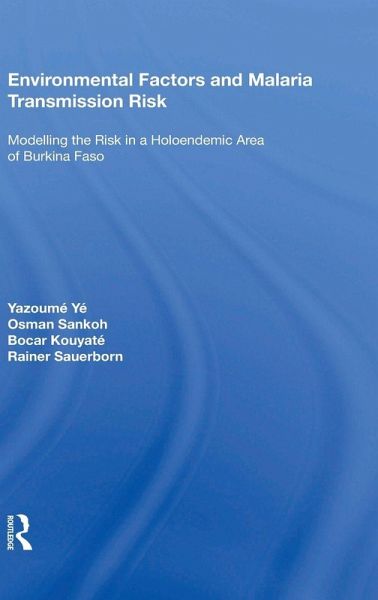
The fifth Millennium Development target of reducing infant mortality by two thirds by the year 2015 can only be achieved if mortality due to malaria is significantly reduced. This book addresses this issue by developing a dynamic malaria transmission model at a local (district) scale using appropriate environmental factors.
Yazoumé Yé African Population and Health Research Centre, Kenya. Osman Sankoh INDEPTH Network, Ghana. Bocar Kouyaté Centre National de Recherche et de Formation sur le Paludisme, Burkina Faso. Rainer Sauerborn University of Heidelberg, Germany.
Inhaltsangabe
Contents: Preface Part 1 Introduction What is malaria? How is it transmitted? Malaria epidemiology and economic burden Risk factors for malarial transmission Fighting malaria Rationale of the study Study questions and objectives Conceptual framework. Part 2 Population, Material and Methods: Study design Study sites Malaria infection survey Entomological survey Weather data Data processing Data analysis Ethical considerations. Part 3 Results: Characteristics of the study population Outcome of follow up Fever and p. faciparum infection status Weather variation in the 4 sites Effect of weather on p. falciparum infection Mosquito population dynamics Weather-based dynamic model of malaria transmission. Part 4 Discussion and Conclusions: Discussion Conclusion References Annexes: Index.
Es gelten unsere Allgemeinen Geschäftsbedingungen: www.buecher.de/agb
Impressum
www.buecher.de ist ein Internetauftritt der buecher.de internetstores GmbH
Geschäftsführung: Monica Sawhney | Roland Kölbl | Günter Hilger
Sitz der Gesellschaft: Batheyer Straße 115 - 117, 58099 Hagen
Postanschrift: Bürgermeister-Wegele-Str. 12, 86167 Augsburg
Amtsgericht Hagen HRB 13257
Steuernummer: 321/5800/1497
USt-IdNr: DE450055826