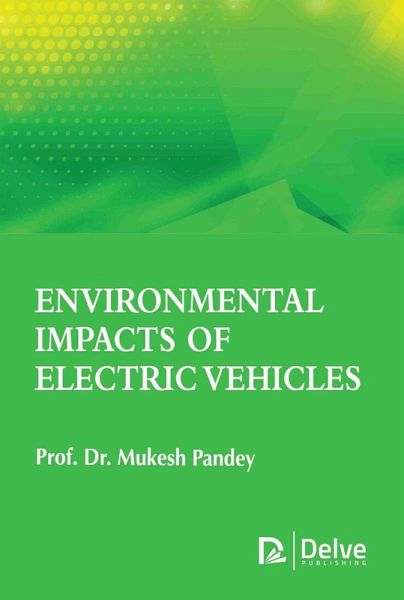
Electric vehicles promise cleaner transport by reducing emissions, yet their production, battery life and recycling raise significant environmental challenges. The narrative balances emission benefits with concerns over resource extraction and waste, offering practical insights into sustainable progress.
Electric vehicles promise cleaner transport by reducing emissions, yet their production, battery life and recycling raise significant environmental challenges. The narrative balances emission benefits with concerns over resource extraction and waste, offering practical insights into sustainable progress.
Prof. Dr. Mukesh Pandey is multi-skilled professional with around 30 years of rich exposure and versatile experience in Industries, Administration, Academics, Research domains and institution building. He received his B.E. from SATI Vidisha, M.Tech. from N.I.T. Bhopal and Ph.D. from RGPV, Bhopal. He played an instrumental role in the establishment of Rajiv Gandhi Technical University Bhopal, Madhya Pradesh since it's inception in 1999. He served as Rector (Pro Vice Chancellor), Director SoEEM & Dean of Faculty of Energy Technology. He has looked after as Coordinator for establishing IIIT, Bhopal (under PPP Mode by MHRD). He held various administrative positions as Director (R&D), Coordinator of RGPV- NBA Nodal Centre, Dy. Registrar, Member of Engineering Accreditation Evaluation Committee [EAEC] and Moderation Committee of NBA(National Board of Accreditation). Professor Pandey works in the area of Renewable Energy and Environment having focus on Solar Thermal Energy and he has developed an Energy Technology Park at RGPV, Bhopal by making use of the renewable energy resources; Solar Roof Top Plant on University Building, Energy Systems, Solar Thin Film systems, Solar wind Hybrid System, Bio-Diesel Reactor, CO2 Carbon Sequestration Unit, Dual Rotor Wind Turbine etc. Professor Pandey has an iconic track record of quality teaching, innovation and research he has been Principal Investigator of many Govt. Funded Projects by DST, MNRE, MPCST, AICTE etc including Principal Investigator of Innovative & Breakthrough Technology based 30KW CL-CSP SOLAR international R&D PROJECT (India-Japan Joint Venture Project) installed in RGPV campus. He has also facilitated as Reviewer for many national and international journals of repute and associated with many academic and research organizations at various levels. Over the past several years he has taught M.Tech. and Ph.D. Research Scholars in the areas of Energy, Environment, Direct Energy Conversion and Integrated Energy Systems and has been key-note speaker and resource person at several International and National Conferences and programmes.
Inhaltsangabe
Chapter 1 Introduction to Electric Vehicles Chapter 2 Life Cycle Assessment (LCA) of Electric Vehicles Chapter 3 Manufacturing and Supply Chain Impacts Chapter 4 Battery Production and Environmental Concerns Chapter 5 Energy Consumption and Carbon Footprint Chapter 6 End-of-Life and Recycling of EV Batteries Chapter 7 Impacts on Air Quality and Human Health Chapter 8 Water and Resource Use in EV Production Chapter 9 Environmental Impacts of EV Charging Infrastructure Chapter 10 Policy, Regulation, and Environmental Standards
Chapter 1 Introduction to Electric Vehicles Chapter 2 Life Cycle Assessment (LCA) of Electric Vehicles Chapter 3 Manufacturing and Supply Chain Impacts Chapter 4 Battery Production and Environmental Concerns Chapter 5 Energy Consumption and Carbon Footprint Chapter 6 End-of-Life and Recycling of EV Batteries Chapter 7 Impacts on Air Quality and Human Health Chapter 8 Water and Resource Use in EV Production Chapter 9 Environmental Impacts of EV Charging Infrastructure Chapter 10 Policy, Regulation, and Environmental Standards
Es gelten unsere Allgemeinen Geschäftsbedingungen: www.buecher.de/agb
Impressum
www.buecher.de ist ein Internetauftritt der buecher.de internetstores GmbH
Geschäftsführung: Monica Sawhney | Roland Kölbl | Günter Hilger
Sitz der Gesellschaft: Batheyer Straße 115 - 117, 58099 Hagen
Postanschrift: Bürgermeister-Wegele-Str. 12, 86167 Augsburg
Amtsgericht Hagen HRB 13257
Steuernummer: 321/5800/1497
USt-IdNr: DE450055826