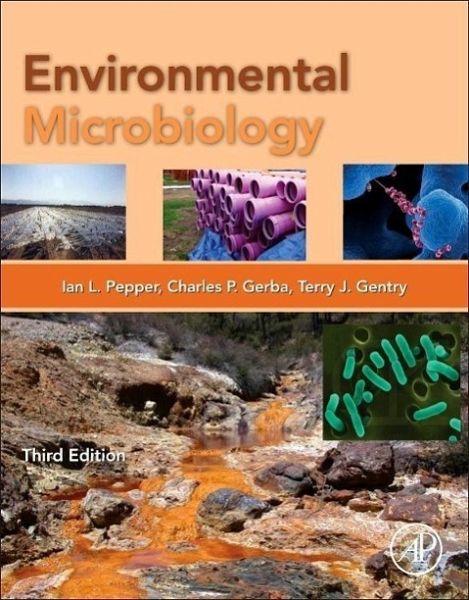
Designed for advanced undergraduate students, graduate students, and environmental professionals, this book builds upon the tremendous success of the previous editions with a comprehensive and up-to-date discussion of environmental microbiology as a discipline that has greatly expanded in scope and interest over the past several decades. From terrestrial and aquatic ecosystems to urban and indoor environments, this edition relates environmental microbiology to a variety of life science, ecology, and environmental science topics including biogeochemical cycling, bioremediation, environmental…mehr
Designed for advanced undergraduate students, graduate students, and environmental professionals, this book builds upon the tremendous success of the previous editions with a comprehensive and up-to-date discussion of environmental microbiology as a discipline that has greatly expanded in scope and interest over the past several decades. From terrestrial and aquatic ecosystems to urban and indoor environments, this edition relates environmental microbiology to a variety of life science, ecology, and environmental science topics including biogeochemical cycling, bioremediation, environmental transmission of pathogens, microbial risk assessment, and drinking water treatment and reuse. The final chapter highlights several emerging issues including microbial remediation of marine oil spills, microbial contributions to global warming, impact of climate change on microbial infectious disease, and the development of antibiotic-resistant bacteria.
Dr. Ian Pepper is a Regents Professor at the University of Arizona and also the Director of the University of Arizona Water and Energy Sustainable Technology Center (WEST). He is an environmental microbiologist whose research has focused on the fate and transport of microbial pathogens in air, water, soils and municipal wastes. His expertise has been recognized by membership on six National Academy of Sciences Committees. Dr. Pepper is a Fellow of the American Association for the Advancement of Science, the American Academy of Microbiology, the Soil Science Society of America, and the American Society of Agronomy. He is the author or co-author of seven textbooks and over 200 peer-reviewed journal articles.
Inhaltsangabe
1. Introduction to Environmental Microbiology 2. Microorganisms Found in the Environment 3. Bacterial Growth 4. Earth Environments 5. Aeromicrobiology 6. Aquatic Environments 7. Extreme Environments 8. Environmental Sample Collection and Processing 9. Microscopic Techniques 10. Cultural Methods 11. Physiological Methods 12. Immunological Methods 13. Nucleic Acid-Based Methods of Detection 14. Microbial Source Tracking 15. Microbial Transport in the Subsurface 16. Biogeochemical Cycling 17. Micoorganisms and Organic Pollutants 18. Microorganisms and Metal Pollutants 19. Microbial Diversity and Interactions in Natural Ecosystems 20. Microbial Communitation: Bacteria-Bacteria and Bacteria-Host 21. Bioinformation and "Omic" Approaches to Characterization/Microbial Communities 22. Environmentally Transmitted Pathogens 23. Indicator Microorganisms 24. Risk Assessment 25. Municipal Wastewater Treatment 26. Land Application of Organic Residuals: Municipal Biosolids and Animal Manures 27. Recycled Water Treatment and Reuse 28. Drinking Water Treatment and Distribution 29. Disinfection 30. Domestic and Indoor Microbiology 31. Global Emerging Microbial Issues in the Anthropocene Era
1. Introduction to Environmental Microbiology 2. Microorganisms Found in the Environment 3. Bacterial Growth 4. Earth Environments 5. Aeromicrobiology 6. Aquatic Environments 7. Extreme Environments 8. Environmental Sample Collection and Processing 9. Microscopic Techniques 10. Cultural Methods 11. Physiological Methods 12. Immunological Methods 13. Nucleic Acid-Based Methods of Detection 14. Microbial Source Tracking 15. Microbial Transport in the Subsurface 16. Biogeochemical Cycling 17. Micoorganisms and Organic Pollutants 18. Microorganisms and Metal Pollutants 19. Microbial Diversity and Interactions in Natural Ecosystems 20. Microbial Communitation: Bacteria-Bacteria and Bacteria-Host 21. Bioinformation and "Omic" Approaches to Characterization/Microbial Communities 22. Environmentally Transmitted Pathogens 23. Indicator Microorganisms 24. Risk Assessment 25. Municipal Wastewater Treatment 26. Land Application of Organic Residuals: Municipal Biosolids and Animal Manures 27. Recycled Water Treatment and Reuse 28. Drinking Water Treatment and Distribution 29. Disinfection 30. Domestic and Indoor Microbiology 31. Global Emerging Microbial Issues in the Anthropocene Era
Rezensionen
"One of the techniques used to make this a successful text is that chapters are written by experts in conjunction with one of the editors, thus presenting authoritative material at a similar complexity and style across chapters." --Quarterly Review of Biology
Es gelten unsere Allgemeinen Geschäftsbedingungen: www.buecher.de/agb
Impressum
www.buecher.de ist ein Internetauftritt der buecher.de internetstores GmbH
Geschäftsführung: Monica Sawhney | Roland Kölbl | Günter Hilger
Sitz der Gesellschaft: Batheyer Straße 115 - 117, 58099 Hagen
Postanschrift: Bürgermeister-Wegele-Str. 12, 86167 Augsburg
Amtsgericht Hagen HRB 13257
Steuernummer: 321/5800/1497
USt-IdNr: DE450055826