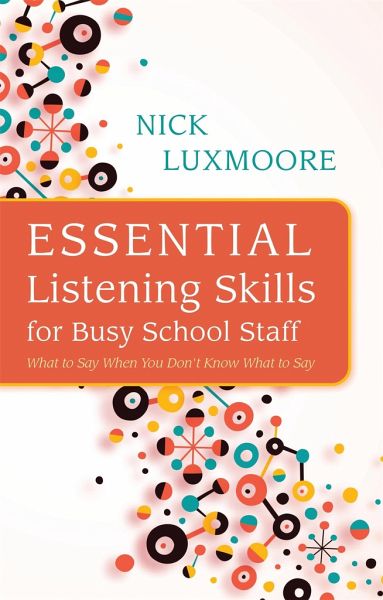
Nick Luxmoore
Essential Listening Skills for Busy School Staff
What to Say When You Don't Know What to Say
Nick Luxmoore
Essential Listening Skills for Busy School Staff
What to Say When You Don't Know What to Say
- Broschiertes Buch
- Merkliste
- Auf die Merkliste
- Bewerten Bewerten
- Teilen
- Produkt teilen
- Produkterinnerung
- Produkterinnerung
An accessible book giving guidance on how to listen and respond effectively in order to provide support for those who need it.
Andere Kunden interessierten sich auch für
O Z TylerStaff Study17,99 €
Joseph MurphyEssential Lessons for School Leaders13,99 €
Dan FeigelsonRadical Listening26,99 €
Theories of School Counseling for the 21st Century71,99 €
The Art of Becoming Indispensable48,99 €
Ron Avi AstorWelcoming Practices57,99 €
Youth at Risk65,99 €-
-
-
An accessible book giving guidance on how to listen and respond effectively in order to provide support for those who need it.
Produktdetails
- Produktdetails
- Verlag: Jessica Kingsley Publishers
- Seitenzahl: 96
- Erscheinungstermin: 21. September 2014
- Englisch
- Abmessung: 216mm x 141mm x 10mm
- Gewicht: 136g
- ISBN-13: 9781849055659
- ISBN-10: 1849055653
- Artikelnr.: 40888644
- Herstellerkennzeichnung
- Libri GmbH
- Europaallee 1
- 36244 Bad Hersfeld
- gpsr@libri.de
- Verlag: Jessica Kingsley Publishers
- Seitenzahl: 96
- Erscheinungstermin: 21. September 2014
- Englisch
- Abmessung: 216mm x 141mm x 10mm
- Gewicht: 136g
- ISBN-13: 9781849055659
- ISBN-10: 1849055653
- Artikelnr.: 40888644
- Herstellerkennzeichnung
- Libri GmbH
- Europaallee 1
- 36244 Bad Hersfeld
- gpsr@libri.de
Nick Luxmoore
1. Introduction. 2. Yes, but. There's never enough time! What if I'm not
the right person to help? As a listener, what exactly am I trying to
achieve? How do I show that I understand? What if I can't help? What if I
get upset myself? As a listener, what exactly do I say? What if I don't
know what to say? What if someone asks for advice? Should I talk about my
own experiences? Is it okay to hug a person? What if I don't like someone?
What if they get angry with me? What if someone doesn't want to talk? What
if they can't say what they feel? What about confidentiality? What if
someone just wants attention? What if they're really clingy? 3. Helping
people. Who are struggling with family relationships. Who need to talk
about death. Who are stubborn. Who talk of suicide. Who lack self-esteem.
Who are angry. Who are being bullied. Who say they're depressed. Who
self-harm. Who want to talk about sex. Who can't see the point of life. Who
don't care about anything? 4. Conversations that can't be avoided. With
students. With parents. With colleagues. 5. Who listens to the listeners?
6. A checklist. Index.
the right person to help? As a listener, what exactly am I trying to
achieve? How do I show that I understand? What if I can't help? What if I
get upset myself? As a listener, what exactly do I say? What if I don't
know what to say? What if someone asks for advice? Should I talk about my
own experiences? Is it okay to hug a person? What if I don't like someone?
What if they get angry with me? What if someone doesn't want to talk? What
if they can't say what they feel? What about confidentiality? What if
someone just wants attention? What if they're really clingy? 3. Helping
people. Who are struggling with family relationships. Who need to talk
about death. Who are stubborn. Who talk of suicide. Who lack self-esteem.
Who are angry. Who are being bullied. Who say they're depressed. Who
self-harm. Who want to talk about sex. Who can't see the point of life. Who
don't care about anything? 4. Conversations that can't be avoided. With
students. With parents. With colleagues. 5. Who listens to the listeners?
6. A checklist. Index.
1. Introduction. 2. Yes, but. There's never enough time! What if I'm not
the right person to help? As a listener, what exactly am I trying to
achieve? How do I show that I understand? What if I can't help? What if I
get upset myself? As a listener, what exactly do I say? What if I don't
know what to say? What if someone asks for advice? Should I talk about my
own experiences? Is it okay to hug a person? What if I don't like someone?
What if they get angry with me? What if someone doesn't want to talk? What
if they can't say what they feel? What about confidentiality? What if
someone just wants attention? What if they're really clingy? 3. Helping
people. Who are struggling with family relationships. Who need to talk
about death. Who are stubborn. Who talk of suicide. Who lack self-esteem.
Who are angry. Who are being bullied. Who say they're depressed. Who
self-harm. Who want to talk about sex. Who can't see the point of life. Who
don't care about anything? 4. Conversations that can't be avoided. With
students. With parents. With colleagues. 5. Who listens to the listeners?
6. A checklist. Index.
the right person to help? As a listener, what exactly am I trying to
achieve? How do I show that I understand? What if I can't help? What if I
get upset myself? As a listener, what exactly do I say? What if I don't
know what to say? What if someone asks for advice? Should I talk about my
own experiences? Is it okay to hug a person? What if I don't like someone?
What if they get angry with me? What if someone doesn't want to talk? What
if they can't say what they feel? What about confidentiality? What if
someone just wants attention? What if they're really clingy? 3. Helping
people. Who are struggling with family relationships. Who need to talk
about death. Who are stubborn. Who talk of suicide. Who lack self-esteem.
Who are angry. Who are being bullied. Who say they're depressed. Who
self-harm. Who want to talk about sex. Who can't see the point of life. Who
don't care about anything? 4. Conversations that can't be avoided. With
students. With parents. With colleagues. 5. Who listens to the listeners?
6. A checklist. Index.