
Andere Kunden interessierten sich auch für
 ETHICAL ISSUES IN PEDIATRIC MEDICAL PRACTICE27,99 €
 Patient well-being in intensive care29,99 €
 Investigation of Decubitus Complications in the Intensive Care Unit29,99 €
 Genetic engineering: ethical and legal considerations31,99 €
 Ethical Issues Raised by the SARS Outbreak in Toronto40,99 €
 Socionic vision on Bioethics and Deontology42,99 €
 The Ethical Case for Clinical Ethics Committees32,99 €





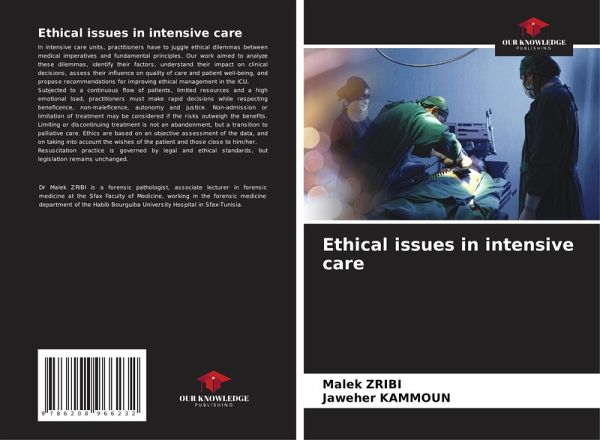
In intensive care units, practitioners have to juggle ethical dilemmas between medical imperatives and fundamental principles. Our work aimed to analyze these dilemmas, identify their factors, understand their impact on clinical decisions, assess their influence on quality of care and patient well-being, and propose recommendations for improving ethical management in the ICU.Subjected to a continuous flow of patients, limited resources and a high emotional load, practitioners must make rapid decisions while respecting beneficence, non-maleficence, autonomy and justice. Non-admission or limitation of treatment may be considered if the risks outweigh the benefits. Limiting or discontinuing treatment is not an abandonment, but a transition to palliative care. Ethics are based on an objective assessment of the data, and on taking into account the wishes of the patient and those close to him/her.Resuscitation practice is governed by legal and ethical standards, but legislation remainsunchanged.