In 1989 the Bulgarian communist regime expelled 360,000 Turks and Muslims to Turkey. It was the single largest ethnic cleansing during the Cold War period in Europe after the winding up the post war 'population transfers' of mainly ethnic Germans in the early 1950s. This expulsion of Turks and Muslims from Bulgaria was the sole mass expulsion that ever breached the Iron Curtain. Not only did the 1989 ethnic cleansing trigger the end of communism in Bulgaria, but was also followed by an unprecedented return of almost half of the expellees. Despite the unprecedented character of this 1989…mehr
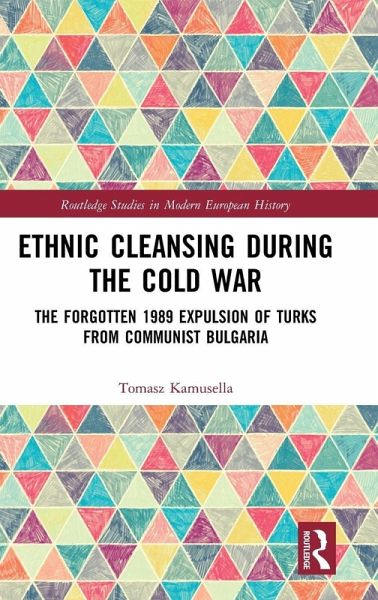
In 1989 the Bulgarian communist regime expelled 360,000 Turks and Muslims to Turkey. It was the single largest ethnic cleansing during the Cold War period in Europe after the winding up the post war 'population transfers' of mainly ethnic Germans in the early 1950s. This expulsion of Turks and Muslims from Bulgaria was the sole mass expulsion that ever breached the Iron Curtain. Not only did the 1989 ethnic cleansing trigger the end of communism in Bulgaria, but was also followed by an unprecedented return of almost half of the expellees. Despite the unprecedented character of this 1989 expulsion and its wide-ranging ramifications, this is the first detailed analysis of these events.
Tomasz Kamusella is Reader in Modern History at the University of St Andrews, Scotland. His monographs include Silesia and Central European Nationalisms (2007), The Politics of Language and Nationalism in Modern Central Europe (2009), Creating Languages in Central Europe During the Last Millennium (2015) and The Un-Polish Poland, 1989 and the Illusion of Regained Historical Continuity (2017). He also co-edited several volumes, for instance, Creating Nationality in Central Europe, 1880-1950 (2016), The Palgrave Handbook of Slavic Languages, Identities and Borders (2016) and The Social and Political History of Southern Africa's Languages (2017).
Inhaltsangabe
Contents List of Figures Foreword Preface List of Acronyms and Abbreviations, and of the Names of Parties and Organizations Mentioned The Bulgarian Governments During and After the Removal of Todor Zhivkov from Office The Heads of State of Bulgaria During and After the Removal of Todor Zhivkov from Office Introduction 1. On Forgetfulness and Its Perils 2. The State of Research on the 1989 Expulsion 3.The 1989 Ethnic Cleansing Through the Lens of the International Press 4. The Ethnic Cleansing's Aftermath and the Regime Change 5. The Official Coming to Terms with the 1989 Ethnic Cleansing 6. Between Language and Millet 7. The Question of Responsibility Conclusion Postscriptum Bibliography Index
Contents; List of Figures; Foreword; Preface; List of Acronyms and Abbreviations, and of the Names of Parties and Organizations Mentioned; The Bulgarian Governments During and After the Removal of Todor Zhivkov from Office; The Heads of State of Bulgaria During and After the Removal of Todor Zhivkov from Office; Introduction; 1. On Forgetfulness and Its Perils; 2. The State of Research on the 1989 Expulsion; 3.The 1989 Ethnic Cleansing Through the Lens of the International Press; 4. The Ethnic Cleansing's Aftermath and the Regime Change; 5. The Official Coming to Terms with the 1989 Ethnic Cleansing; 6. Between Language and Millet; 7. The Question of Responsibility; Conclusion; Postscriptum; Bibliography; Index
Contents List of Figures Foreword Preface List of Acronyms and Abbreviations, and of the Names of Parties and Organizations Mentioned The Bulgarian Governments During and After the Removal of Todor Zhivkov from Office The Heads of State of Bulgaria During and After the Removal of Todor Zhivkov from Office Introduction 1. On Forgetfulness and Its Perils 2. The State of Research on the 1989 Expulsion 3.The 1989 Ethnic Cleansing Through the Lens of the International Press 4. The Ethnic Cleansing's Aftermath and the Regime Change 5. The Official Coming to Terms with the 1989 Ethnic Cleansing 6. Between Language and Millet 7. The Question of Responsibility Conclusion Postscriptum Bibliography Index
Contents; List of Figures; Foreword; Preface; List of Acronyms and Abbreviations, and of the Names of Parties and Organizations Mentioned; The Bulgarian Governments During and After the Removal of Todor Zhivkov from Office; The Heads of State of Bulgaria During and After the Removal of Todor Zhivkov from Office; Introduction; 1. On Forgetfulness and Its Perils; 2. The State of Research on the 1989 Expulsion; 3.The 1989 Ethnic Cleansing Through the Lens of the International Press; 4. The Ethnic Cleansing's Aftermath and the Regime Change; 5. The Official Coming to Terms with the 1989 Ethnic Cleansing; 6. Between Language and Millet; 7. The Question of Responsibility; Conclusion; Postscriptum; Bibliography; Index
Rezensionen
"Kamusella shows the way for a future Bulgaria. The recognition of ethnic cleansing is important not only in terms of historical justice and responsibility but also for the future transformation of Bulgaria into a country attractive for immigrants" - Vasil Paraskevov, Konstantin Preslavsky University, Bulgaria, European History Quarterly
Es gelten unsere Allgemeinen Geschäftsbedingungen: www.buecher.de/agb
Impressum
www.buecher.de ist ein Internetauftritt der buecher.de internetstores GmbH
Geschäftsführung: Monica Sawhney | Roland Kölbl | Günter Hilger
Sitz der Gesellschaft: Batheyer Straße 115 - 117, 58099 Hagen
Postanschrift: Bürgermeister-Wegele-Str. 12, 86167 Augsburg
Amtsgericht Hagen HRB 13257
Steuernummer: 321/5800/1497
USt-IdNr: DE450055826