
Andere Kunden interessierten sich auch für
 Nation-Building in Serbien und Kroatien19,90 €
 Nation-Building and Minority Politics in Post-So - Interests, Influence, and Identities in Estonia and Latvia29,90 €
 Staatszerfall und State-Building in Afghanistan24,90 €
 Sturz ins Chaos19,90 €
 Kiswahili Chetu: The Swahili Language as a Political Stabilizer39,99 €
 Democracy and the Cycle of Legitimacy Crisis in Africa27,99 €
 Ethnicity Conflict in SRI LANKA45,99 €


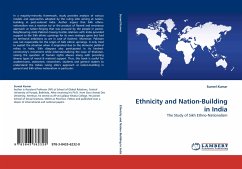
In a majority-minority framework, study provides analysis of various models and approaches adopted by the ruling elite aiming at nation-building in post-colonial India. Author argues that Sikh ethno-nationalism was a reaction to/ or the product of flawed and erroneous approach at nation-forging that was pursued by the people in power. Neighbouring state Pakistan having hostile relations with India provided support to the Sikh ethnic uprisings for its own strategic gains but had no territorial ambitions as are in case of Kashmir. Moreover, Pakistan was not responsible for the origin of Sikh ethnic uprisings. It only tried to exploit the situation when it originated due to the domestic political milieu in India. Sikh diaspora also participated in its kindred-community's movement while internationalizing the issue of Khalistan, raising the question of human rights abuses along with providing diverse types of moral & material support. Thus, this book is useful for academicians, statesmen, researchers, students and general readers to understand the Indian ruling elite's approach at nation-building in general and Sikh ethno-nationalism in particular.